Cardiovascular diseases (CVD) are disorders of the heart and blood vessels. They are the leading cause of death worldwide, claiming approximately 17.9 million lives each year. This article covers the major categories of cardiovascular disease, from the underlying pathology of atherosclerosis through the specific conditions that affect the heart and circulation.
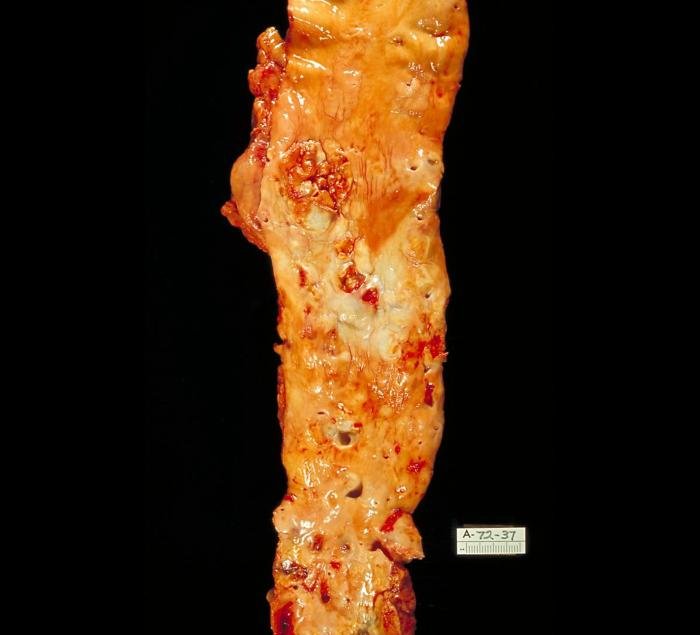
Atherosclerosis
Atherosclerosis is the progressive buildup of plaques within arterial walls. It is a chronic inflammatory disease that begins with endothelial injury and progresses over decades before becoming symptomatic.
Pathophysiology
The process begins when the vascular endothelium is injured by mechanical stress (hypertension), chemical toxins (smoking), metabolic abnormalities (hyperglycemia, hyperlipidemia), or inflammatory mediators. Injured endothelial cells become more permeable, allowing low-density lipoprotein (LDL) particles to infiltrate the intima. Once trapped, LDL undergoes oxidative modification.
Oxidized LDL triggers a cascade of events: endothelial cells express adhesion molecules that recruit circulating monocytes. These monocytes enter the intima, differentiate into macrophages, and engulf oxidized LDL via scavenger receptors, becoming foam cells. The accumulation of foam cells forms a fatty streak — the earliest visible atherosclerotic lesion.
Over time, smooth muscle cells migrate from the media into the intima, proliferate, and produce extracellular matrix (collagen, elastin). A fibrous cap forms over the lipid-rich core, creating a mature atherosclerotic plaque. The plaque may remain stable for years or become vulnerable to rupture.
Plaque rupture exposes the highly thrombogenic core to the blood, triggering platelet activation and coagulation cascade activation. The resulting thrombus can partially or completely occlude the artery, causing acute coronary syndromes, stroke, or limb ischemia.
Major Risk Factors
Modifiable risk factors: Hypertension, hyperlipidemia, smoking, diabetes mellitus, obesity, physical inactivity, unhealthy diet, and excessive alcohol consumption.
Non-modifiable risk factors: Age (men >45, women >55), male sex, family history of premature CVD, and genetic predisposition.
The INTERHEART study identified nine modifiable risk factors that account for over 90% of the population-attributable risk of myocardial infarction worldwide, with abnormal lipids and smoking being the most powerful.
Coronary Artery Disease
Coronary artery disease (CAD) is the most common form of heart disease. It results from atherosclerotic narrowing of the coronary arteries that supply the myocardium.
Stable Angina
Stable angina occurs when myocardial oxygen demand exceeds supply during exertion or stress. Patients experience retrosternal chest pressure or heaviness that may radiate to the left arm, jaw, or back. Symptoms are relieved by rest or nitroglycerin. The characteristic ECG finding during pain is ST-segment depression, reflecting subendocardial ischemia.
Acute Coronary Syndromes
Acute coronary syndromes (ACS) encompass unstable angina, non-ST-elevation myocardial infarction (NSTEMI), and ST-elevation myocardial infarction (STEMI). The distinction is based on ECG findings and cardiac biomarker levels.
Unstable angina. Angina that is new, occurs at rest, or is increasing in frequency or severity. Cardiac biomarkers are normal.
NSTEMI. Myocardial infarction without ST-segment elevation on ECG. Cardiac biomarkers (troponin, CK-MB) are elevated, indicating myocardial necrosis. The infarction typically affects the subendocardium.
STEMI. Transmural myocardial infarction with ST-segment elevation on ECG. It is a medical emergency requiring immediate reperfusion — either primary percutaneous coronary intervention (PCI, angioplasty with stenting) within 90 minutes or fibrinolytic therapy within 30 minutes if PCI is not available.
The classic symptom of ACS is prolonged chest pain (>20 minutes), often described as crushing, squeezing, or pressure. Associated symptoms include dyspnea, diaphoresis, nausea, and radiation to the left arm or jaw. Women, older adults, and people with diabetes are more likely to present with atypical symptoms such as shortness of breath, fatigue, or epigastric discomfort.
Heart Failure
Heart failure is a clinical syndrome in which the heart cannot pump enough blood to meet the body’s metabolic demands. It affects approximately 64 million people worldwide and carries a prognosis worse than most cancers.
Heart failure is classified by ejection fraction (EF), as this determines treatment approach:
Heart failure with reduced ejection fraction (HFrEF). EF ≤40%. The left ventricle is dilated and contracts poorly. Common causes include coronary artery disease, hypertension, and dilated cardiomyopathy. First-line pharmacotherapy includes beta-blockers, ACE inhibitors or ARNI (sacubitril/valsartan), and mineralocorticoid receptor antagonists.
Heart failure with preserved ejection fraction (HFpEF). EF ≥50%. The ventricle has normal contractile function but is stiff and does not fill properly (diastolic dysfunction). It is strongly associated with hypertension, obesity, diabetes, and aging. Treatment is more challenging, focusing on managing comorbidities and diuretics for volume overload.
Heart failure with mid-range ejection fraction (HFmrEF). EF 41–49%. This intermediate group shares features of both HFrEF and HFpEF.
Symptoms of heart failure include dyspnea (especially on exertion and when lying flat, orthopnea), paroxysmal nocturnal dyspnea, fatigue, peripheral edema, jugular venous distension, and pulmonary crackles. The New York Heart Association (NYHA) classification grades severity from class I (no limitation) to class IV (symptoms at rest).
Arrhythmias
Cardiac arrhythmias are abnormalities of heart rate, rhythm, or conduction. They range from benign to life-threatening.
Atrial fibrillation (AF). The most common sustained arrhythmia, affecting 2–3% of the population. The atria fibrillate at 300–600 times per minute, and the ventricular response is irregularly irregular. AF increases the risk of stroke fivefold due to thrombus formation in the left atrial appendage. Management includes rate control (beta-blockers, calcium channel blockers), rhythm control (antiarrhythmics, cardioversion, catheter ablation), and anticoagulation (warfarin or direct oral anticoagulants) based on CHA₂DS₂-VASc score.
Supraventricular tachycardia (SVT). A rapid regular tachycardia originating above the ventricles, most commonly due to atrioventricular nodal reentrant tachycardia (AVNRT) or accessory pathway-mediated tachycardia (Wolff-Parkinson-White syndrome). Vagal maneuvers (Valsalva, carotid sinus massage) may terminate it; adenosine is the first-line drug.
Ventricular tachycardia (VT). A rapid, potentially life-threatening arrhythmia originating in the ventricles. Sustained VT causes hemodynamic compromise and can degenerate into ventricular fibrillation (VF). VF is the most common initial rhythm in cardiac arrest, producing a chaotic, uncoordinated quivering of the ventricles with no cardiac output. Immediate defibrillation is the only effective treatment.
Valvular Heart Disease
Valvular disease can involve any of the four heart valves and may cause stenosis (failure to open fully) or regurgitation (failure to close fully). Rheumatic heart disease remains the leading cause worldwide, while age-related degenerative disease is most common in developed nations.
Aortic stenosis. The most common valvular disease in older adults. Progressive calcification of a congenital bicuspid valve or a trileaflet valve causes left ventricular outflow obstruction. Symptoms include angina, syncope, and heart failure. Once symptoms develop, survival without valve replacement is 2–3 years. Treatment is surgical or transcatheter aortic valve replacement (TAVR).
Mitral regurgitation. Leakage of the mitral valve during systole, causing blood to flow back into the left atrium. Causes include mitral valve prolapse, ischemic heart disease (posterior papillary muscle rupture or dysfunction), and annular dilation from heart failure. Symptoms are those of heart failure. Surgical repair is preferred over replacement when possible.
Hypertension
Hypertension is persistently elevated arterial blood pressure, defined as systolic BP ≥130 mmHg or diastolic BP ≥80 mmHg (ACC/AHA guidelines). It affects approximately 45% of adults worldwide and is the leading modifiable risk factor for CVD, stroke, and kidney disease.
Most hypertension is essential (primary), meaning no single identifiable cause is found. Factors contributing to essential hypertension include increased sympathetic activity, renin-angiotensin-aldosterone system activation, sodium retention, and vascular remodeling. Secondary hypertension (approximately 5–10%) has identifiable causes: renal artery stenosis, chronic kidney disease, primary aldosteronism, pheochromocytoma, and sleep apnea.
Chronic hypertension damages arteries throughout the body, accelerating atherosclerosis, causing left ventricular hypertrophy, and damaging the kidneys (nephrosclerosis). Most patients are asymptomatic, which is why hypertension is called the silent killer. Treatment begins with lifestyle modification (DASH diet, sodium reduction, exercise, weight loss) and progresses to pharmacotherapy.
Peripheral Artery Disease
Peripheral artery disease (PAD) is atherosclerotic narrowing of the arteries supplying the lower limbs. It affects approximately 8–12% of the population over 60. The classic symptom is intermittent claudication — calf, thigh, or buttock pain that occurs with walking and is relieved by rest. Critical limb ischemia presents with rest pain, non-healing ulcers, or gangrene.
The ankle-brachial index (ABI) is the diagnostic test: a ratio of ankle to brachial systolic blood pressure <0.90 indicates PAD. Management includes risk factor modification, supervised exercise therapy, antiplatelet therapy (aspirin or clopidogrel), and revascularization for disabling symptoms or limb-threatening ischemia.
Stroke
Stroke is a neurological deficit caused by interruption of blood supply to the brain. It is the second-leading cause of death worldwide and a leading cause of disability.
Ischemic stroke (87%). Caused by thrombotic or embolic occlusion of a cerebral artery. Large artery atherosclerosis, cardioembolism (especially atrial fibrillation), and small vessel disease are the most common mechanisms. Treatment of acute ischemic stroke includes intravenous thrombolysis (tissue plasminogen activator, tPA) within 4.5 hours of symptom onset and endovascular thrombectomy for large vessel occlusions.
Hemorrhagic stroke (13%). Caused by rupture of a blood vessel in the brain. Intracerebral hemorrhage (typically from hypertension) and subarachnoid hemorrhage (typically from aneurysm rupture) require different management approaches focused on blood pressure control, reversal of anticoagulation, and surgical evacuation or aneurysm clipping/coiling.
Venous Thromboembolism
Venous thromboembolism (VTE) encompasses deep vein thrombosis (DVT) and pulmonary embolism (PE). DVT typically occurs in the deep veins of the lower extremities. The thrombus can dislodge and travel to the pulmonary circulation, causing PE — a life-threatening condition.
Risk factors include surgery, immobilization, cancer, pregnancy, oral contraceptives, and inherited thrombophilias (Factor V Leiden, prothrombin gene mutation). Prevention with prophylactic anticoagulation is standard in hospitalized patients. Treatment is anticoagulation — initially with heparin or direct oral anticoagulants, followed by extended anticoagulation for at least 3 months.
Summary
Cardiovascular diseases encompass a wide spectrum of conditions united by shared risk factors and underlying pathology. Atherosclerosis is the common thread linking coronary artery disease, peripheral artery disease, and many strokes. Heart failure and arrhythmias represent the functional consequences of heart muscle injury. Hypertension serves as both a disease and a major risk factor for all other CVD. Prevention through lifestyle modification and risk factor control remains the most effective strategy, but acute treatment — from thrombolysis to defibrillation to revascularization — can be dramatically effective when delivered promptly.