The human nervous system is the body’s master control and communication network. It receives sensory input from the environment and the body’s interior, processes and integrates that information, and generates appropriate motor and autonomic responses. Understanding its organization is the first step toward grasping every other aspect of neurology and neuroscience.
Structural Divisions: CNS and PNS
The nervous system is divided structurally into two principal components:
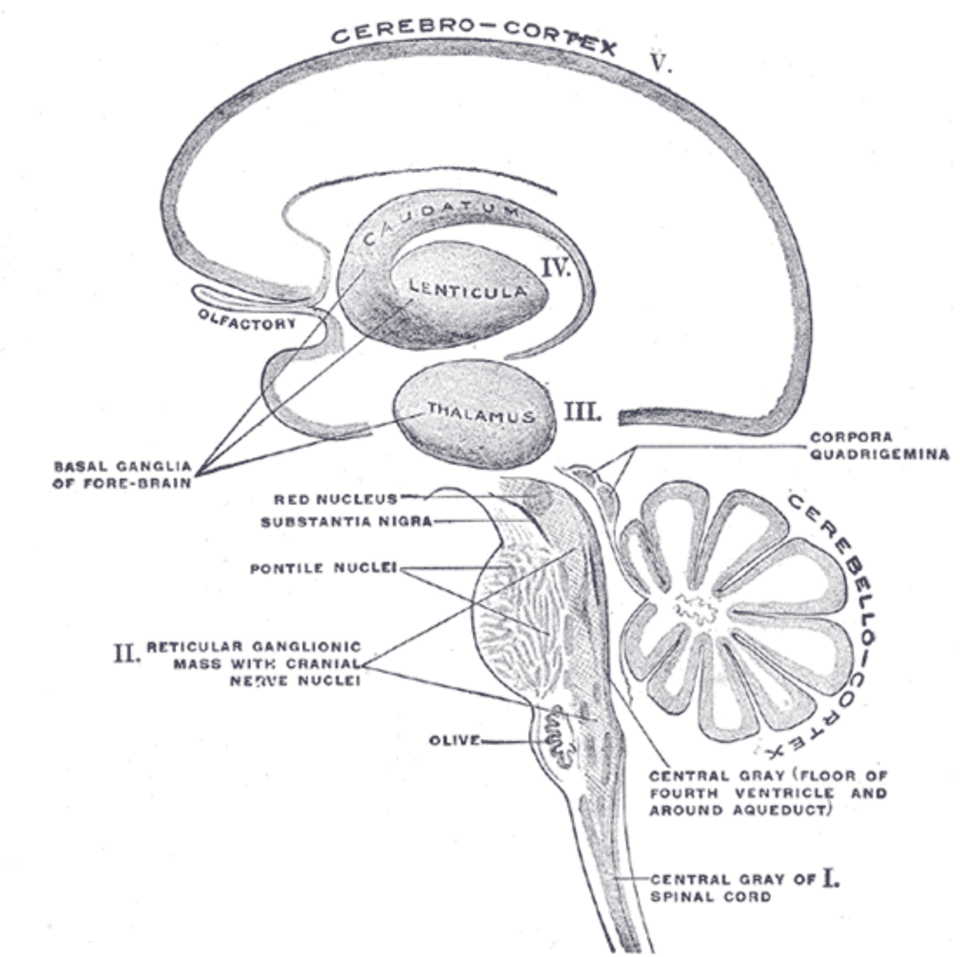
Central Nervous System (CNS). The CNS consists of the brain and spinal cord. It is the integrative and command center, where sensory information is processed, memories are stored, thoughts are generated, and decisions are made. The brain occupies the cranial cavity, while the spinal cord runs within the vertebral canal. Both are protected by bone, meninges, and cerebrospinal fluid.
Peripheral Nervous System (PNS). The PNS comprises all neural tissue outside the CNS — the cranial nerves, spinal nerves, ganglia, and sensory receptors. It serves as the communication lines that carry information toward the CNS (afferent pathways) and away from the CNS to effectors such as muscles and glands (efferent pathways).
Functional Divisions: Sensory, Motor, and Integration
Functionally, the nervous system performs three overlapping operations:
- Sensory input. Receptors throughout the body detect changes in the internal and external environment (stimuli) and convert them into electrical signals. These signals travel along afferent neurons to the CNS.
- Integration. The CNS processes sensory information, compares it with past experience, and determines an appropriate response. Integration occurs at every level of the CNS, from simple spinal reflexes to complex cortical processing.
- Motor output. Efferent neurons carry signals from the CNS to effectors — skeletal muscles (somatic motor system) or smooth muscle, cardiac muscle, and glands (autonomic motor system).
Neurons: The Functional Units
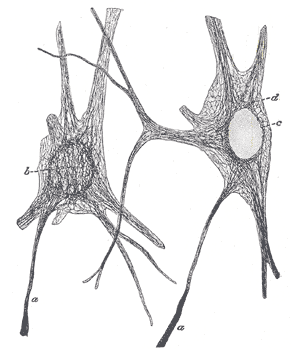
The neuron is the fundamental signaling cell of the nervous system. A typical neuron has three main regions:
Cell body (soma). The soma contains the nucleus and most of the cell’s organelles. It is the metabolic center of the neuron, synthesizing proteins and neurotransmitters. Clusters of cell bodies in the CNS are called nuclei; in the PNS they are called ganglia.
Dendrites. These branched, tapering processes extend from the cell body and receive signals from other neurons or sensory receptors. The branching pattern of dendrites determines how many inputs a neuron can integrate — some neurons receive tens of thousands of synaptic contacts.
Axon. The axon is a single, elongated process that conducts action potentials away from the cell body toward other neurons, muscles, or glands. Axons vary in length from a few millimeters (within the brain) to over a meter (from the spinal cord to the foot). Most axons in the PNS are wrapped in a myelin sheath formed by Schwann cells; in the CNS, oligodendrocytes perform this role.
Neuron Classification
Neurons are classified in three main ways:
By structure (number of processes):
- Multipolar neurons — one axon, multiple dendrites (most common; motor neurons and interneurons)
- Bipolar neurons — one axon, one dendrite (special sense organs: retina, olfactory epithelium)
- Pseudounipolar neurons — a single process that splits into two branches (sensory neurons in dorsal root ganglia)
By function:
- Sensory (afferent) neurons — carry information toward the CNS
- Motor (efferent) neurons — carry commands away from the CNS to effectors
- Interneurons — connect neurons within the CNS; they account for over 99% of all neurons and form the complex circuits underlying thought, memory, and coordination
By neurotransmitter released:
- Cholinergic — release acetylcholine (neuromuscular junctions, autonomic ganglia)
- Glutamatergic — release glutamate (major excitatory neurotransmitter in the brain)
- GABAergic — release GABA (major inhibitory neurotransmitter in the brain)
- Dopaminergic, serotonergic, noradrenergic — modulate mood, arousal, and movement
Neuroglia: The Supporting Cells
Neurons cannot function without the support of neuroglial cells (glia), which outnumber neurons by roughly ten to one. Glia provide structural support, insulation, nutrient supply, and immune defense.
Astrocytes. Star-shaped cells that maintain the blood-brain barrier, regulate the chemical environment around neurons, recycle neurotransmitters, and respond to injury by forming scar tissue.
Oligodendrocytes. Produce myelin sheaths around axons in the CNS. A single oligodendrocyte can myelinate up to 50 axons.
Microglia. The resident immune cells of the CNS. They constantly surveil the brain for pathogens, cellular debris, and signs of injury.
Ependymal cells. Line the ventricles of the brain and the central canal of the spinal cord. Their cilia help circulate cerebrospinal fluid.
Schwann cells. The myelinating cells of the PNS. Each Schwann cell myelinates a single axon. They also play a critical role in nerve regeneration after injury.
Satellite cells. Surround neuron cell bodies in PNS ganglia, regulating the microenvironment.
The Peripheral Nervous System in Detail
The PNS is subdivided into two functional systems:
Somatic Nervous System (SNS). The SNS controls voluntary movement and transmits conscious sensory information. Its motor component consists of a single neuron whose cell body lies in the CNS and whose axon extends directly to skeletal muscle fibers. Its sensory component relays touch, pain, temperature, position, and vibration from the body surface, joints, and muscles.
Autonomic Nervous System (ANS). The ANS regulates involuntary functions — heart rate, blood pressure, digestion, respiration, body temperature, and glandular secretion. It uses a two-neuron chain (preganglionic and postganglionic) and is divided into three branches: sympathetic (fight or flight), parasympathetic (rest and digest), and enteric (the gut’s intrinsic nervous system).
Reflexes: The Fastest Neural Responses
A reflex is a rapid, involuntary, stereotyped response to a stimulus. The simplest neural circuit that produces a reflex is the reflex arc, which typically includes five components:
- Receptor — detects the stimulus
- Sensory neuron — transmits the afferent signal
- Integration center — usually one or more synapses in the CNS
- Motor neuron — carries the efferent command
- Effector — the muscle or gland that carries out the response
The patellar reflex (knee-jerk) is a classic monosynaptic reflex: tapping the patellar tendon stretches the quadriceps muscle spindles, activating sensory neurons that synapse directly on motor neurons in the spinal cord, causing the quadriceps to contract. More complex reflexes, such as the withdrawal reflex, involve interneurons and produce coordinated responses across multiple muscles.
Development and Plasticity
The nervous system develops from the neural tube and neural crest, which form from the ectoderm during the third week of embryonic development. The neural tube gives rise to the CNS; the neural crest gives rise to most of the PNS.
Throughout life, the nervous system retains the ability to change in response to experience — a property called neuroplasticity. Synaptic connections are strengthened or weakened based on activity (long-term potentiation and depression). After injury, surviving neurons can sprout new connections, although the regenerative capacity of the CNS is limited compared to the PNS.
Summary
The nervous system is organized hierarchically: the CNS (brain and spinal cord) serves as the central integrator, while the PNS carries information to and from the periphery. Neurons are the signaling cells, supported by a diverse array of glial cells. The system is divided functionally into sensory, integrative, and motor components, with the motor system further split into somatic (voluntary) and autonomic (involuntary) divisions. This organizational framework provides the foundation for understanding the structure and function of each component explored in the articles that follow.