The lymphatic system is a network of vessels, tissues, and organs that maintains fluid balance, absorbs dietary fats, and defends the body against infection. It works in close partnership with the cardiovascular and immune systems.
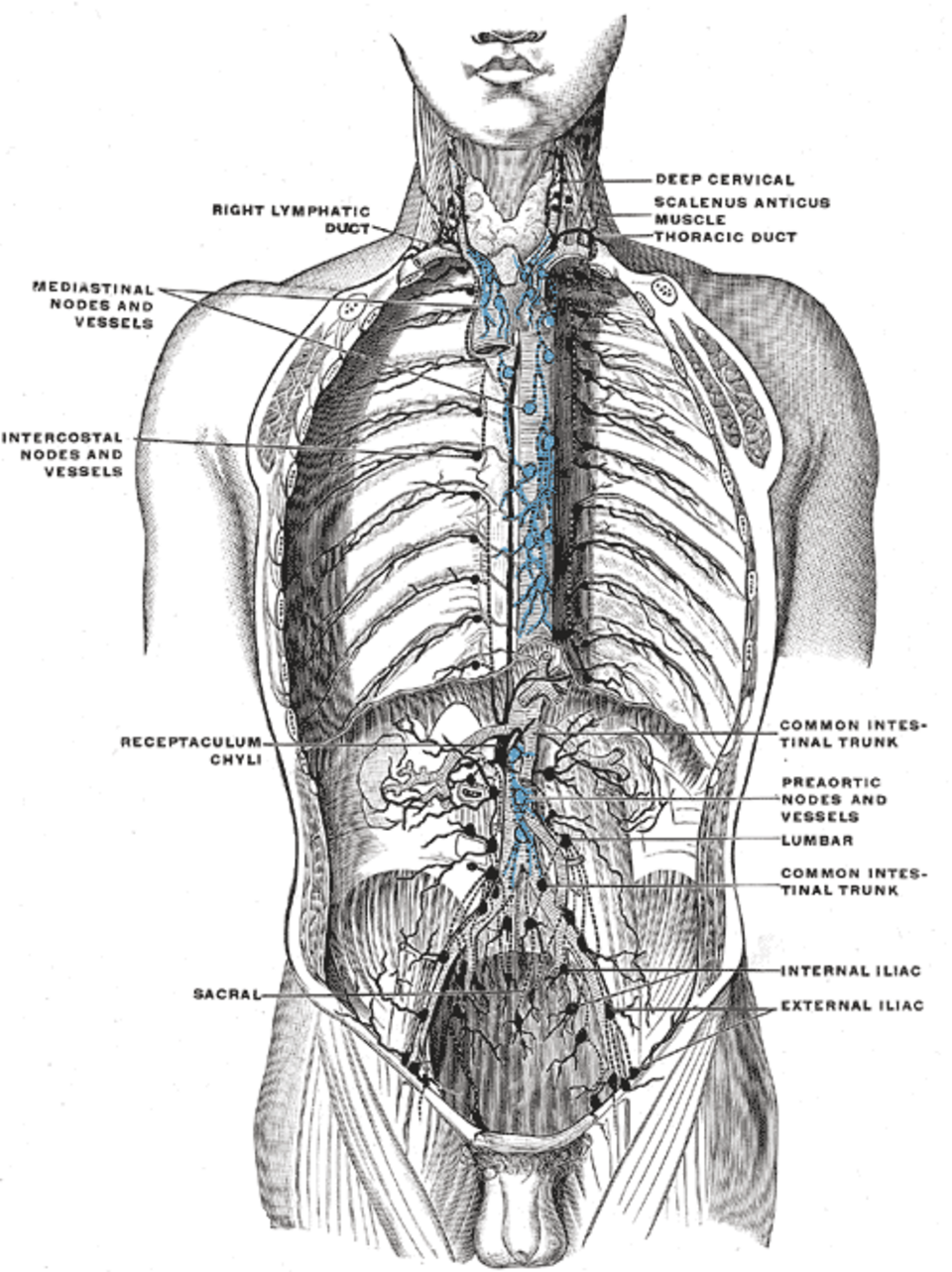
Components of the Lymphatic System
The lymphatic system consists of lymph (the fluid), lymphatic vessels (the conduits), and lymphatic tissues and organs (the filtration and response sites).
Lymph
Lymph is the interstitial fluid that enters lymphatic capillaries. It is a clear, watery fluid containing proteins, electrolytes, cellular waste, and immune cells (primarily lymphocytes). Approximately 2–4 liters of lymph per day are returned to the bloodstream. Without this return, plasma volume would collapse within hours.
Lymphatic Vessels
Lymphatic capillaries. The smallest lymphatic vessels, formed by a single layer of overlapping endothelial cells. Unlike blood capillaries, they have a discontinuous basement membrane and are anchored to the surrounding connective tissue by anchoring filaments. When interstitial pressure rises, these filaments pull the capillaries open, creating gaps between endothelial cells that allow large molecules (proteins, cellular debris, pathogens) to enter. This is why lymphatic capillaries are often called the body’s “second circulation.”
Collecting vessels. Larger lymphatic vessels that have valves (like veins) to prevent backflow. They pass through lymph nodes at intervals, where the lymph is filtered and surveyed by immune cells.
Lymphatic trunks. Major collecting vessels that drain large regions:
- Lumbar trunks — drain the lower limbs, pelvis, and abdomen
- Intestinal trunk — drains the digestive tract (carries chyle, the milky lymph containing absorbed fats)
- Bronchomediastinal trunks — drain the thoracic wall and lungs
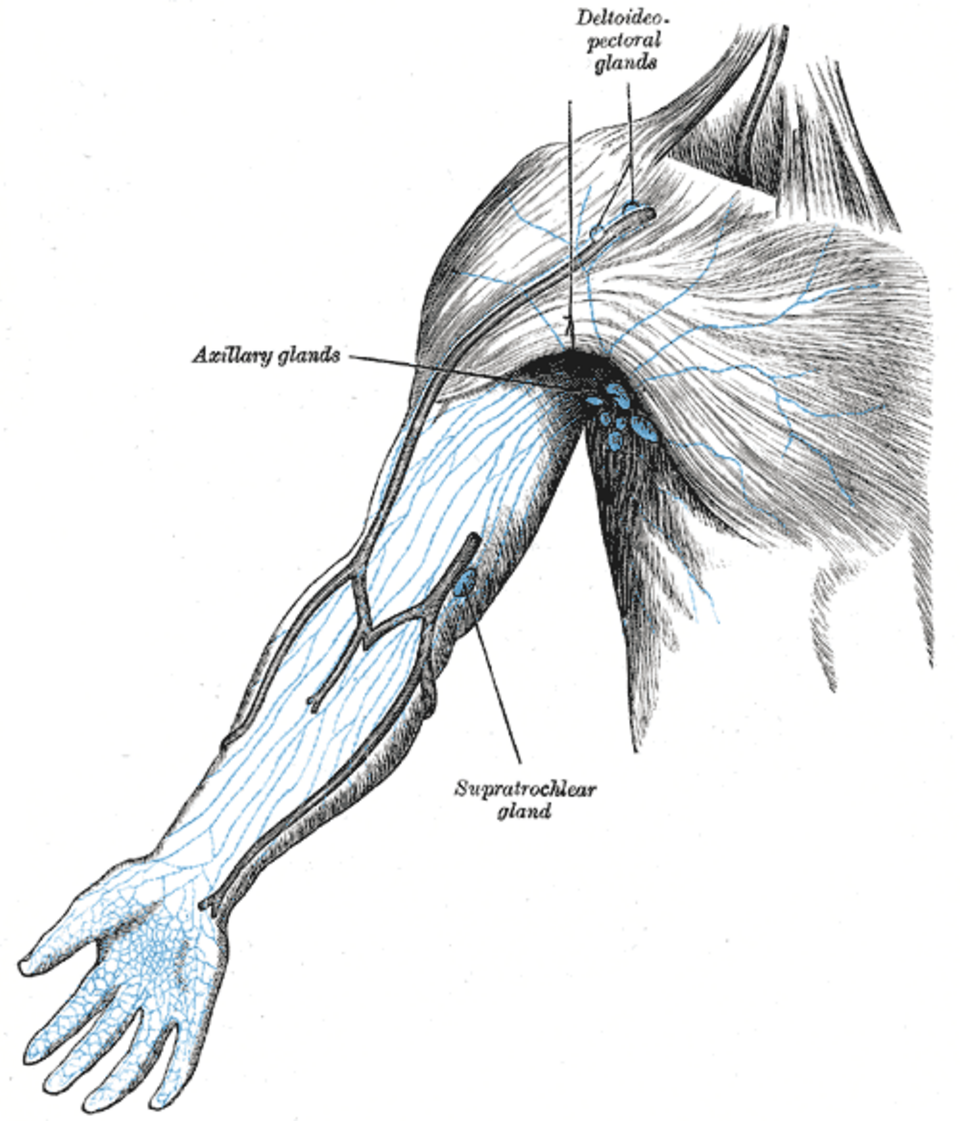
- Subclavian trunks — drain the upper limbs
- Jugular trunks — drain the head and neck
Lymphatic ducts. Two large ducts return lymph to the venous system:
- Thoracic duct. The largest lymphatic vessel, approximately 38–45 cm long. It begins at the cisterna chyli (anterior to L1–L2) and ascends through the aortic hiatus of the diaphragm into the thorax, where it runs behind the esophagus and between the aorta and azygos vein. It empties into the left subclavian vein at the junction with the left internal jugular vein. The thoracic duct drains lymph from the entire body except the right upper quadrant (right side of the head, neck, thorax, and right upper limb).
- Right lymphatic duct. A short vessel (about 1–2 cm) that drains the right upper quadrant into the right subclavian vein.
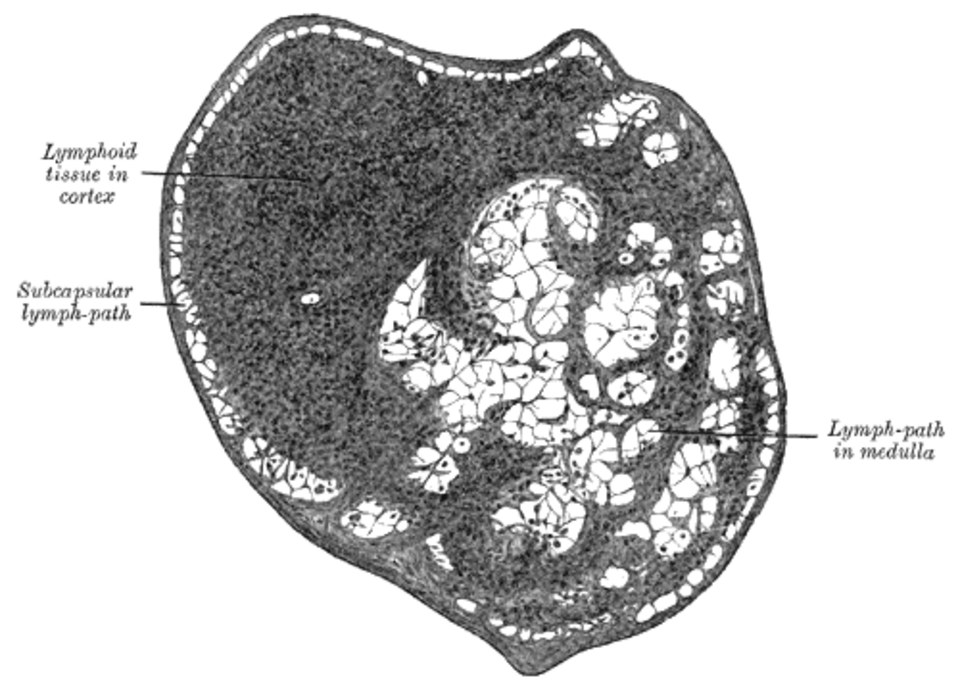
Lymph Nodes
Lymph nodes are small, bean-shaped structures (1–25 mm) that filter lymph and serve as sites of immune activation. There are approximately 600–700 lymph nodes in the human body, organized in clusters along the lymphatic vessels.
Structure
Each lymph node has:
- Capsule. A dense connective tissue covering. Trabeculae extend inward from the capsule, dividing the node into compartments.
- Cortex. The outer region, containing lymphoid follicles with germinal centers. B cells proliferate and differentiate here in response to antigen.
- Paracortex. The T-cell zone, located between the cortex and medulla. It contains high endothelial venules (HEVs) through which T cells enter from the blood.
- Medulla. The inner region, containing medullary cords (plasma cells and macrophages) and medullary sinuses where lymph flows before exiting.
- Hilum. The indented region where blood vessels enter/exit and efferent lymphatic vessels emerge.
Lymph Flow Through a Node
Afferent lymphatic vessels enter the node at multiple points through the capsule. Lymph percolates through the subcapsular sinus, then through cortical and medullary sinuses, where it is exposed to macrophages and dendritic cells. Efferent lymphatic vessels exit at the hilum. This slow flow (hours) ensures thorough immune surveillance.
Major Lymph Node Groups
| Group | Location | Drains |
|---|---|---|
| Cervical | Neck | Head and neck |
| Axillary | Axilla | Upper limb, breast, thoracic wall |
| Inguinal | Groin | Lower limb, abdominal wall |
| Mediastinal | Mediastinum | Thoracic organs |
| Mesenteric | Mesentery | Gastrointestinal tract |
| Para-aortic | Along aorta | Abdomen, pelvis |
Spleen
The spleen is the largest lymphoid organ, located in the left upper quadrant of the abdomen, protected by the 9th–11th ribs. It is approximately 12 cm long, 7 cm wide, and weighs about 150 g. The spleen has two functional compartments:
White pulp. Lymphoid tissue surrounding central arterioles. It contains B-cell follicles (with germinal centers) and T-cell zones (periarteriolar lymphatic sheaths, PALS). The white pulp is the site of immune activation, where antigens from the blood are presented to lymphocytes.
Red pulp. The remainder of the spleen, consisting of splenic sinuses (venous channels) and splenic cords (cords of Billroth, containing macrophages and red blood cells). The red pulp filters the blood, removing old or abnormal red blood cells (culling), removing intracellular inclusions such as Howell-Jolly bodies (pitting), and recycling iron from heme.
The spleen also serves as a reservoir for platelets (approximately one-third of total body platelets) and can contract during hemorrhage. It is also a site of extramedullary hematopoiesis (blood cell production outside the marrow) when the bone marrow is compromised.
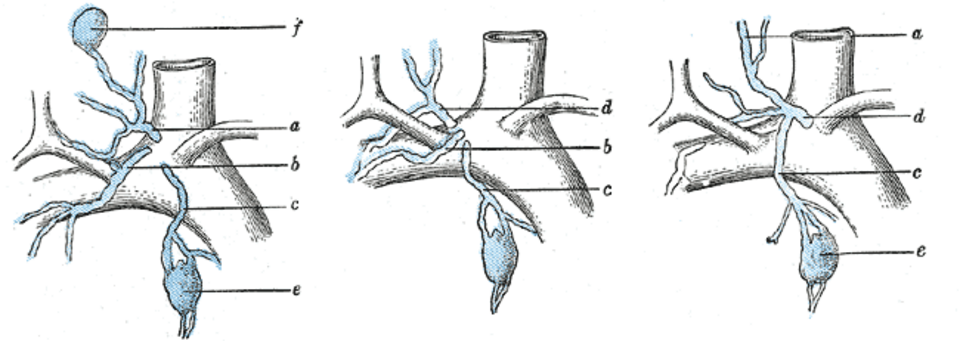
Thymus
The thymus is a bilobed organ located in the superior mediastinum, behind the sternum. It is large in children (weighing 20–50 g at birth) and undergoes progressive involution with age, being largely replaced by adipose tissue in adults.
The thymus is the primary lymphoid organ for T-cell development. Each lobe is divided into lobules by connective tissue septa. Each lobule has:
- Cortex. The outer region, densely packed with developing T cells (thymocytes) and thymic epithelial cells. This is where T-cell receptor rearrangement and positive selection occur.
- Medulla. The inner region, less densely packed. It contains Hassall corpuscles (concentric whorls of epithelial cells) whose function is to produce thymic stromal lymphopoietin for regulatory T-cell development. Negative selection (elimination of self-reactive T cells) occurs at the corticomedullary junction.
Only about 2–5% of developing thymocytes survive selection and exit the thymus as mature, self-tolerant T cells.
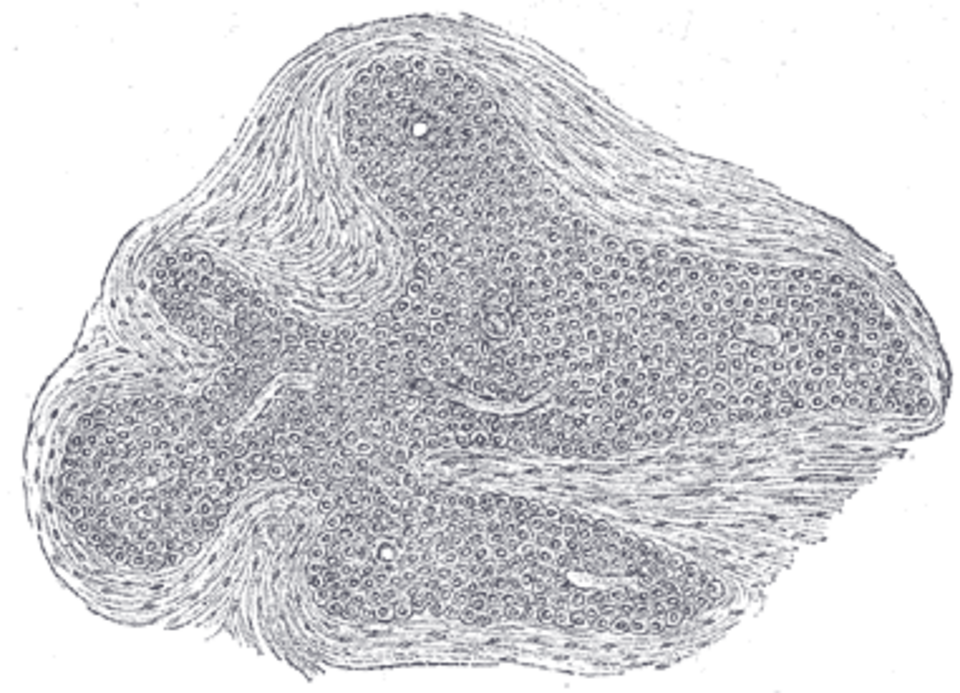
Tonsils
The tonsils are aggregations of lymphoid tissue at the entrance to the pharynx, forming Waldeyer ring. They are strategically positioned to encounter inhaled and ingested pathogens:
- Palatine tonsils (the “tonsils”). Paired, located in the tonsillar fossa between the palatoglossal and palatopharyngeal arches. They are the largest tonsils and the most commonly inflamed.
- Pharyngeal tonsil (adenoid). Located in the nasopharynx, on the posterior wall. It is prominent in children and typically atrophies in adults.
- Lingual tonsil. Located at the base of the tongue.
- Tubal tonsils. Located near the pharyngeal openings of the auditory (Eustachian) tubes.
Each tonsil has crypts (invaginations of the surface epithelium) that trap pathogens. Beneath the epithelium, lymphoid follicles (B-cell zones) and interfollicular areas (T-cell zones) mount immune responses.
Mucosa-Associated Lymphoid Tissue (MALT)
MALT is lymphoid tissue in the mucous membranes that line the respiratory, gastrointestinal, and urogenital tracts. It contains approximately 50% of the body’s lymphocytes. Key components include:
Gut-associated lymphoid tissue (GALT). Includes Peyer patches in the ileum, the appendix, and isolated lymphoid follicles throughout the intestine. M cells (microfold cells) overlying Peyer patches sample luminal antigens and deliver them to underlying dendritic cells and lymphocytes.
Bronchus-associated lymphoid tissue (BALT). Lymphoid aggregates in the bronchial mucosa, important for respiratory immune defense.
Nasal-associated lymphoid tissue (NALT). Lymphoid tissue in the nasal passages.
Immune Cells
B lymphocytes (B cells). Develop in the bone marrow. When activated by antigen, they differentiate into plasma cells (which produce antibodies) and memory B cells (which provide long-term immunity). B cells are the cornerstone of humoral immunity.
T lymphocytes (T cells). Develop in the thymus. They mediate cellular immunity. Subtypes include:
- CD4+ helper T cells. Activate B cells, macrophages, and CD8+ T cells. They are the primary target of HIV.
- CD8+ cytotoxic T cells. Kill virus-infected cells and tumor cells.
- Regulatory T cells (Tregs). Suppress immune responses, preventing autoimmunity.
Natural killer (NK) cells. Innate lymphoid cells that kill tumor cells and virus-infected cells without prior sensitization.
Dendritic cells. Professional antigen-presenting cells that capture antigens in tissues, migrate to lymph nodes, and present them to T cells. They are the most potent activators of naive T cells.
Macrophages. Phagocytic cells that engulf pathogens and debris. They also present antigens and produce cytokines. Macrophages are found in virtually every tissue (Kupffer cells in the liver, alveolar macrophages in the lungs, microglia in the brain, osteoclasts in bone).
Lymphatic Circulation
The lymphatic system has no central pump. Lymph is propelled by:
- Extrinsic forces. Contraction of skeletal muscles, arterial pulsations, respiratory movements, and peristalsis compress lymphatic vessels, and valves prevent backflow.
- Intrinsic forces. Lymphatic vessels have smooth muscle in their walls that contracts rhythmically (lymphangions) at 10–20 contractions per minute.
Summary
The lymphatic system maintains fluid homeostasis by returning interstitial fluid to the bloodstream, absorbs dietary fats from the intestine, and provides immune surveillance throughout the body. Lymph nodes filter lymph and activate immune responses; the spleen filters blood; the thymus produces T cells; tonsils and MALT survey mucosal surfaces. Understanding lymphatic anatomy is essential for comprehending how the body defends against infection, why nodes enlarge in disease, and how cancer spreads through lymphatics.