Introduction
Traditional Chinese medicine (TCM) is one of the world’s oldest continuously practiced medical systems, with written records spanning more than two millennia. For the student approaching TCM for the first time, the greatest challenge is not memorizing the details — though there are many — but learning to think within a completely different framework of physiology and pathology. TCM does not conceptualize the body in terms of anatomy and biochemistry as Western medicine does. Instead, it describes the body as an energetic system in which qi (vital energy), blood, and body fluids circulate through channels called meridians, and health depends on the dynamic balance of opposing forces — yin and yang — and the harmonious interaction of five elemental phases. For patients, this translates into treatments that may seem unfamiliar — needles inserted at points far from the site of symptoms, herbal formulas with ten or more ingredients, and dietary recommendations based on thermal energy rather than caloric content. For the clinician integrating TCM into practice, the central clinical pearl is that TCM excels where conventional medicine often struggles: chronic conditions, functional disorders, pain syndromes, and conditions with strong stress or emotional components.

Foundational Theories: Yin-Yang and the Five Elements
Yin-yang theory is the conceptual bedrock of TCM. The student must understand that yin and yang are not substances or entities but qualities in dynamic relationship. Yin describes the cool, dark, passive, structural, and interior aspects of the body: the physical substance of organs, the fluids, the blood, the lower body, and the front surface. Yang describes the warm, bright, active, functional, and exterior aspects: the energy that powers organ function, the protective immune barrier (wei qi), the upper body, and the back surface. Health is not a static state of balance but a dynamic equilibrium — yin and yang are constantly shifting in response to diet, weather, emotion, activity, and time of day. Disease arises when one aspect becomes relatively excess or deficient.
A patient with a yin-deficient pattern might report night sweats, hot flashes, dry mouth, a red tongue with little coating, and a thin rapid pulse — the picture is one of insufficient cooling, moistening substance. A patient with yang deficiency, by contrast, feels cold, especially in the lower back and limbs, has copious clear urine, a pale swollen tongue, and a deep slow pulse. These patterns are not diagnoses in the Western sense — they describe the functional state of the person and guide treatment. From the teacher’s perspective, the most common error beginners make is treating yin-yang as a rigid binary rather than a continuous spectrum. A patient can have both yin deficiency and yang deficiency (dual deficiency of qi and blood is common), or yin deficiency with excess heat.
The Zang-Fu Organ System
TCM organs are not identical to anatomical organs. The Lung (Fei) in TCM governs qi and respiration, disperses defensive qi to the skin surface, and regulates water passages — its sphere of influence includes the respiratory system but also the immune barrier and fluid metabolism. The Kidney (Shen) stores jing (essence), governs birth, growth, reproduction, and aging, and rules water metabolism and the bones. The Liver (Gan) is responsible for the smooth flow of qi throughout the body, stores blood, and governs the tendons — a Liver disharmony can manifest as menstrual irregularities, muscle tension, eye problems, or emotional irritability.
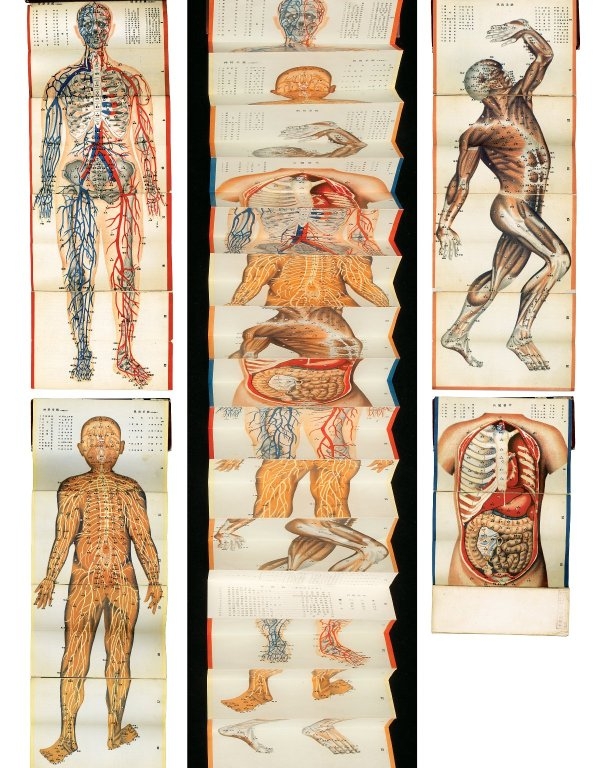
For the patient, understanding that TCM views the body as an interconnected energy system explains many otherwise puzzling aspects of treatment. An acupuncturist treating a headache might insert needles in the foot (Liver channel, Large Intestine channel) because the headache is understood as Liver yang rising, and points on the lower extremities can redirect yang energy downward. A TCM herbal formula for acne might contain ingredients that “clear heat” and “resolve dampness” — concepts that map imperfectly but usefully onto the biological processes of inflammation and sebum production. The system is internally consistent and clinically predictive, even if its theoretical vocabulary is radically different from biomedicine.
Diagnostic Methods
TCM diagnosis rests on four pillars: inspection, auscultation/olfaction, inquiry, and palpation. Among these, tongue and pulse diagnosis are the most distinctive and require the most practice to master. The tongue is viewed as a visible map of the internal organs — the tip corresponds to the Heart and Lung, the middle to the Spleen and Stomach, the sides to the Liver and Gallbladder, and the root to the Kidney. A normal tongue is pale red with a thin white coating. A pale tongue suggests deficiency or cold; a red tongue suggests heat; a purple or dark tongue suggests blood stasis. The coating’s color, thickness, and moisture provide additional information: yellow coating indicates heat, thick greasy coating indicates phlegm-dampness, and peeled or geographic tongue suggests yin deficiency.
Pulse diagnosis is even more subtle. The practitioner palpates three positions on each wrist (cun, guan, chi) at three levels of pressure (superficial, middle, deep). Each position corresponds to a pair of organs. Twenty-eight pulse qualities are described in classical texts. A floating pulse (just below the skin) indicates exterior patterns like the common cold. A deep pulse (requiring heavy pressure) indicates interior pathology. A slippery pulse (smooth, rolling) suggests phlegm or pregnancy. A wiry pulse (tense, taut like a guitar string) is characteristic of Liver disharmony and pain. A thin pulse (fine, small) indicates deficiency.
Pattern Differentiation
Pattern differentiation (bian zheng) is the bridge between diagnosis and treatment. The practitioner synthesizes information from the four examinations to identify the patient’s current pattern of disharmony. The eight principles (ba gang) provide the organizing framework: interior/exterior locates the disease depth, hot/cold identifies the nature of the disharmony, excess/deficiency assesses the body’s state, and yin/yang provides an overarching classification.
Common patterns illustrate how theory translates to clinical presentation. Liver qi stagnation — perhaps the most prevalent pattern in modern practice — presents with irritability, mood swings, chest distension, sighing, a wiry pulse, and symptoms that fluctuate with stress. Treatment involves points like Liver 3 (Taichong) and Pericardium 6 (Neiguan) along with the herbal formula Xiao Yao San (Free and Easy Wanderer). Spleen qi deficiency presents with fatigue, loose stools, poor appetite, abdominal bloating, a pale tongue with teeth marks, and a weak pulse — treated with Stomach 36 (Zusanli) and the formula Bu Zhong Yi Qi Tang. Kidney yin deficiency — common in aging and chronic stress — presents with night sweats, dry mouth, tinnitus, lower back ache, a red peeled tongue, and a thin rapid pulse — treated with Kidney 3 (Taixi) and Liu Wei Di Huang Wan.
Treatment Modalities
Acupuncture is the most widely recognized TCM modality in the West. Hair-thin needles are inserted at specific points on the body’s fourteen main meridians to regulate the flow of qi. The patient typically feels a sensation called de qi — a dull ache, heaviness, or spreading warmth around the needle. This is not pain but the arrival of qi. A typical treatment session lasts thirty to forty-five minutes, with needles retained for about twenty minutes. The evidence for acupuncture is strongest for chronic low back pain, knee osteoarthritis, chronic headache, and postoperative nausea. For back pain and osteoarthritis, meta-analyses show that acupuncture is superior to sham acupuncture and to usual care, with moderate effect sizes that persist at follow-up.
Chinese herbal medicine (fang ji) uses formulas typically containing six to fifteen ingredients that are classed as chief, deputy, assistant, or envoy — a hierarchical structure where the chief ingredient addresses the primary pattern, deputies support the chief, assistants moderate side effects, and envoys harmonize the formula and direct it to the appropriate channel. Formulas are prescribed based on pattern differentiation, not Western diagnosis. Yin Qiao San is used for wind-heat type common cold (fever, sore throat, yellow phlegm). Gui Zhi Tang is used for wind-cold type (chills, body aches, clear phlegm). Xiao Yao San treats Liver qi stagnation with depression and PMS. Each formula is a carefully balanced pharmacological intervention developed through centuries of empirical refinement.
Tui na (Chinese therapeutic massage) uses techniques including pushing (tui), grasping (na), pressing (an), rubbing (mo), kneading (rou), and rolling (gun) to move qi and blood, relax muscles, and address structural imbalances. Unlike Western massage, tui na is performed through clothing and often includes joint mobilization and gentle traction. It is commonly combined with acupuncture and herbs for musculoskeletal conditions, pediatric disorders, and digestive complaints.
Clinical Applications and Evidence
The evidence base for TCM is complex and uneven. Acupuncture has the strongest research foundation, with robust trials supporting its use for chronic pain, postoperative nausea, chemotherapy-induced nausea, and allergic rhinitis. The National Institute for Health and Care Excellence (NICE) in the UK recommends acupuncture for chronic primary pain and migraines. The evidence for Chinese herbal medicine is more variable — methodological limitations including small sample sizes, lack of standardized formulations, and difficulty with blinding weaken the conclusions of many studies. However, systematic reviews support specific herbs and formulas for conditions ranging from allergic rhinitis to irritable bowel syndrome.
Conclusion
Traditional Chinese medicine offers a comprehensive theoretical framework and diverse therapeutic modalities that have been refined through more than two thousand years of clinical observation. Its strength lies in its holistic, individualized approach — treating the person rather than the disease, addressing root patterns rather than isolated symptoms, and combining multiple modalities (acupuncture, herbs, diet, movement, manual therapy) in coordinated treatment plans. Acupuncture is now supported by robust evidence for several indications and is increasingly integrated into conventional healthcare settings. Chinese herbal medicine offers a rich pharmacopeia that is gradually being validated by modern research methods. The greatest potential for patient benefit lies not in choosing between TCM and conventional medicine but in thoughtful integration — using the strengths of each system to address the complex, multifactorial health challenges that neither system can adequately manage alone. For the student, mastering TCM requires learning to think in a new language of qi, yin-yang, and patterns. For the patient, it offers a pathway to healing that addresses dimensions of health that conventional medicine often overlooks. And for the clinician, it provides tools that, when used with skill and wisdom, can transform outcomes for some of the most challenging conditions in medicine.
(End of file)