Introduction
Chiropractic is a healthcare profession focused on the diagnosis, treatment, and prevention of mechanical disorders of the musculoskeletal system, particularly the spine. Chiropractors primarily use spinal manipulation and other manual techniques to improve joint function, reduce pain, and enhance nervous system function. Chiropractic is one of the largest regulated complementary and integrative health professions.
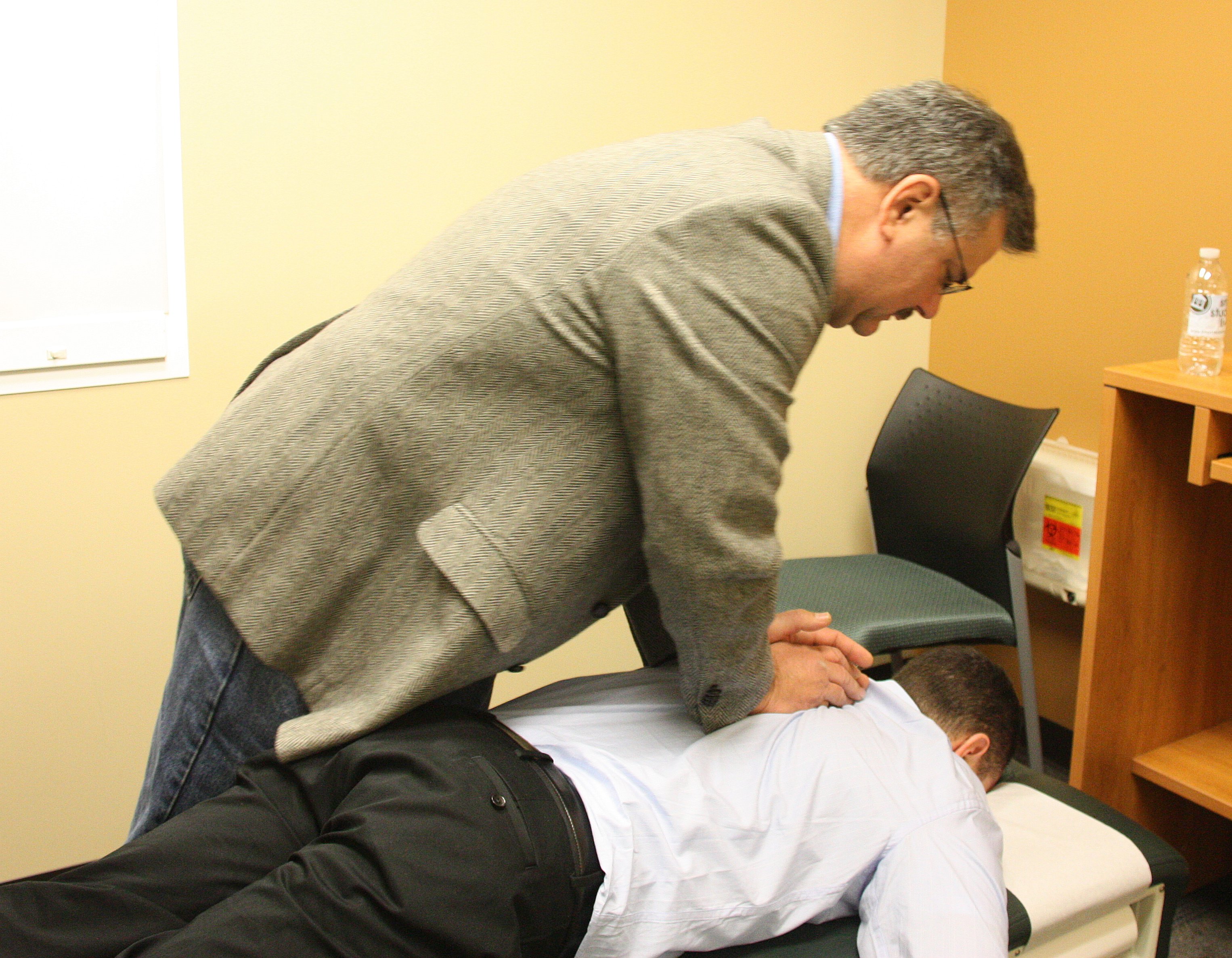
For the student entering the field, it is essential to understand that chiropractic rests on a fascinating intersection of anatomy, neurophysiology, and biomechanics. The spine is not merely a structural column — it is a complex system of joints, nerves, and supporting tissues that must move harmoniously for optimal health. As a teacher often reminds a new cohort: “You are not just treating bones; you are restoring the capacity for movement, and movement is life.” For the patient, chiropractic care offers a drug-free approach to pain management, grounded in hands-on diagnosis and treatment that feels markedly different from a typical medical office visit.
Spinal Anatomy and Function
The Vertebral Column
The human vertebral column consists of 33 vertebrae divided into five regions. The cervical spine contains seven vertebrae (C1–C7) and curves anteriorly in a lordotic shape, permitting flexion and extension of about 110 degrees, rotation of 80 degrees, and lateral flexion of 40 degrees. The thoracic spine has twelve vertebrae (T1–T12) with a posterior kyphotic curve, allowing roughly 30 degrees of rotation but only 20 degrees of flexion and extension — a design that prioritizes stability for rib cage attachment. The lumbar spine bears five vertebrae (L1–L5) in a lordotic curve, providing 60 degrees of flexion and extension and 25 degrees of lateral flexion, making it the workhorse of lower back motion. Below the lumbar spine, the sacrum consists of five fused vertebrae (S1–S5) in a kyphotic curve, with minimal motion occurring only at the sacroiliac joints, where 2 to 4 degrees of nutation and counternutation are possible. The coccyx, or tailbone, comprises four fused vertebrae with variable curvature and very limited function in movement.
Spinal Joints and Their Roles
The spine is a chain of articulations, each designed for specific mechanical roles. The facet joints, or zygapophyseal joints, sit between adjacent vertebrae and guide as well as limit motion in each spinal region. These joints are innervated by the medial branch of the dorsal ramus, making them a primary source of mechanically mediated back pain. The intervertebral discs lie between vertebral bodies, functioning as shock absorbers that distribute compressive loads. Only the outer third of the annulus fibrosus receives nerve supply via the sinuvertebral nerve, which explains why early disc degeneration may go unnoticed until the annulus is irritated. The sacroiliac joints connect the sacrum to the ilium and are innervated by lateral branches from L4 to S2; they permit a few degrees of motion essential for gait. The atlanto-occipital joint between C0 and C1 is responsible for the nodding “yes” motion and is innervated by the C1 suboccipital nerve. The atlantoaxial joint between C1 and C2 provides the rotational “no” movement, supplied by the C2 greater occipital nerve. Understanding these innervation patterns is critical for both the student learning to palpate and the clinician determining the source of a patient’s complaint.
Subluxation Theory and Contemporary Models
The Historical Subluxation Model
Chiropractic was founded on the concept of the vertebral subluxation — a misalignment of vertebrae that supposedly causes nerve interference and, through that mechanism, produces disease throughout the body. The traditional model identifies five components of the subluxation complex: kinesiopathology (abnormal motion), neuropathophysiology (nerve dysfunction), myopathology (muscle changes), histopathology (tissue changes), and pathophysiology (systemic effects). The causes were memorized by generations of students as the “three Ts”: trauma, toxins, and thoughts. While this model gave the profession a distinctive identity, it has been a source of both internal debate and external criticism for more than a century.
The Contemporary Biopsychosocial Approach
Today, the evidence-informed chiropractor operates within a biopsychosocial model. The measurable effects of spinal manipulation include improved joint mobility and reduced pain, but the mechanism is not mechanical “realignment” of bones pressing on nerves. Rather, the thrust stimulates mechanoreceptors in the joint capsule and paraspinal muscles, triggering afferent input that modulates pain processing at the spinal cord and brainstem levels. This produces muscle relaxation, decreased pain perception, and improved motor control. The clinical approach focuses on what can be measured and verified: pain levels, functional outcomes, and patient-reported improvement. For the teacher explaining this to students, a helpful analogy is that spinal manipulation is less like resetting a dislocated bone and more like rebooting a computer — it does not physically rearrange structures so much as it restores normal signaling and processing.
For the patient, this means that the “pop” or “crack” heard during an adjustment is simply the sound of gas bubbles collapsing in the joint fluid (cavitation), not bones moving dramatically back into place. Therapeutic benefit does not depend on the sound occurring. Many patients find this reassuring — the value of the treatment lies in how you feel afterward, not in what you hear during the adjustment.
Chiropractic Techniques
Diversified Technique
Diversified is the most widely taught and used chiropractic technique, encompassing full-spine high-velocity, low-amplitude (HVLA) thrusts. Assessment relies on static and motion palpation, leg length analysis, and visual inspection. The doctor positions the patient in a specific orientation — prone, supine, or side-lying — depending on the spinal region being adjusted. Each segment receives a precisely directed, quick thrust of low amplitude. The hallmark of Diversified is its adaptability: it can be applied to any joint in the body, and the specific contact point and line of drive are tailored to each individual’s presentation. While cavitation is often heard, the therapeutic effect does not depend on it.
Gonstead Technique
The Gonstead system is distinguished by its rigorous analytic framework: visualization, motion palpation, static palpation, X-ray analysis, and instrumentation using the Nervoscope, a device that measures skin temperature differentials along the spine. The Gonstead practitioner aims for maximum specificity, contacting a single vertebra with a precisely placed contact point. Patients are positioned differently for each spinal region — side-lying for lumbar adjustments, for instance — and the specialized Gonstead table, with adjustable chest, pelvic, and head pieces, allows the doctor to position both themselves and the patient for optimal mechanical advantage. Full-spine standing X-rays are used to analyze vertebral alignment, disc height, and joint integrity, though the evidence for routine X-ray use in chiropractic has been questioned in recent years.
Activator Method
The Activator Method employs a spring-loaded, hand-held instrument that delivers a low-force, high-speed impulse lasting about 0.3 milliseconds. Assessment involves leg length analysis and muscle testing following a specific protocol. The instrument has four force settings for different body areas, allowing the practitioner to adjust the intensity of the impulse. This technique is particularly indicated for pediatric and geriatric patients, individuals with acute pain who cannot tolerate manual thrusting, and patients who simply prefer a low-force approach. For the student, the Activator is an excellent tool for learning joint assessment because the protocol forces a systematic approach to the examination.
Flexion-Distraction
Flexion-distraction is a gentle, repetitive technique performed on a specialized table that allows segmental or regional flexion of the spine. The primary indication is disc pathology — herniation, bulge, or degenerative disc disease — as well as lumbar stenosis and facet syndrome. The mechanism of action is compelling from a biomechanical perspective: flexion increases the intervertebral disc space, reduces intradiscal pressure, and mobilizes the facet joints. Patients with radicular symptoms often experience dramatic relief, as the increased foraminal space reduces nerve root compression. For the teacher, this technique provides an excellent opportunity to discuss the relationship between posture, intradiscal pressure, and nerve root irritation.
Other Techniques
Several other techniques deserve mention. The Thompson drop-table technique uses a segmented table with drop mechanisms that fall 1 to 2 inches during the thrust, allowing lighter force delivery. Sacro-occipital technique (SOT) categorizes patients into three categories based on sacral base analysis and addresses cranial, spinal, and extremity complaints. Applied kinesiology uses muscle testing to assess organ and meridian function, though it remains controversial with limited evidence support. The Cox technique is a low-force, distraction-based method specifically for disc conditions. The Webster technique focuses on sacral analysis and adjustment during pregnancy, particularly for correcting breech presentation, though evidence for this specific indication is still developing.
Evidence for Spinal Manipulation
Low Back Pain
The evidence base for spinal manipulation in low back pain ranges from moderate to strong depending on the clinical presentation. For acute low back pain lasting less than four weeks, evidence is moderate with a small-to-moderate effect size (0.4–0.8 standardized mean difference). Guidelines from the American College of Physicians list spinal manipulation as a first-line therapy option alongside other non-pharmacologic approaches. For subacute pain (4 to 12 weeks), evidence is moderate with a moderate effect size, and manipulation is recommended. For chronic low back pain lasting longer than twelve weeks, the evidence is strong, with a moderate effect size (0.5 SMD) comparable to exercise therapy. The evidence for lumbar radiculopathy or sciatica is limited, with small-to-moderate effects suggesting manipulation may be helpful as an adjunct. For post-surgical back pain, evidence is limited but suggests potential benefit, and for acute exacerbations of chronic low back pain, evidence is moderate and manipulation is recommended.
Neck Pain
Cervical spine manipulation and mobilization are supported by moderate evidence for acute neck pain with a moderate effect size, and strong evidence for chronic neck pain, again with a moderate effect. Cervicogenic headache responds particularly well, with strong evidence showing moderate-to-large effects. Cervical radiculopathy has only limited evidence, though moderate effects have been observed in some studies. Whiplash-associated disorder shows moderate evidence with small-to-moderate effects. The teacher should emphasize that mobilization (low-velocity, passive movement within the patient’s range of motion) carries lower risk than high-velocity manipulation and may be equally effective for many neck conditions.
Other Conditions
Tension-type headache responds to spinal manipulation with moderate evidence showing superiority over sham treatment. For migraine, evidence is limited but some patients experience reduced frequency and intensity. Extremity joint conditions including shoulder, hip, and knee complaints have moderate evidence for manipulation and mobilization, while evidence for elbow and ankle is less robust. Infant colic has conflicting evidence, and current guidelines do not recommend chiropractic for this condition. Asthma shows insufficient evidence with no benefit over sham. Hypertension has no consistent evidence. Menstrual pain may have short-term relief, but data are limited. Scoliosis management through chiropractic alone is not supported, and manipulation is not a substitute for bracing or surgical intervention.
Safety and Adverse Events
Common minor adverse events occur relatively frequently but resolve quickly. Local discomfort or soreness affects 10 to 30 percent of patients, typically appearing within 24 hours of treatment and lasting 1 to 2 days. Headache occurs in 5 to 15 percent of patients, resolving within 24 hours. Fatigue is reported by 2 to 10 percent, and muscle spasm by 1 to 5 percent. These effects are generally mild and self-limiting. Patients should be advised to stay hydrated, apply ice if needed, and avoid strenuous activity for the remainder of the day after an adjustment.
Serious adverse events are extremely rare. Cervical artery dissection, discussed above, is the most significant risk. Cauda equina syndrome is exceedingly rare, with an estimated incidence below 1 in 1,000,000 lumbar manipulations, and is typically associated with manipulation in patients who have a pre-existing large disc herniation. Screening for red flags — saddle anesthesia, bowel or bladder dysfunction, bilateral progressive leg weakness — is essential before any lumbar manipulation. Rib fracture is very rare and primarily a concern in patients with osteoporosis. Stroke is linked to cervical manipulation but is extremely rare and may be coincidental rather than causal in many cases.
Contraindications to Spinal Manipulation
Absolute contraindications include cauda equina syndrome, acute fracture or dislocation, malignancy involving the spine, spinal cord compression, acute myelopathy, significant aortic aneurysm, active infection such as osteomyelitis or discitis, and instability such as os odontoideum or severe rheumatoid arthritis-related instability. Relative contraindications require technique modification: osteoporosis (adjust force and use low-force techniques), inflammatory arthropathies such as ankylosing spondylitis or rheumatoid arthritis, coagulopathy or anticoagulation therapy, pregnancy (modify technique and avoid specific positions), vascular disease including abdominal aortic aneurysm or dissection history, high-grade spondylolisthesis (grade 3 or 4), connective tissue disorders such as Ehlers-Danlos or Marfan syndrome, and previous spinal surgery (avoid the surgical level).
Integration with Conventional Care
Chiropractic integration into mainstream healthcare has advanced considerably. Multidisciplinary clinics place chiropractors alongside medical providers, as seen in Veterans Administration hospitals and academic medical centers. Collaborative referral models allow primary care providers to refer patients directly to chiropractors, particularly for low back pain. Integrative medicine centers such as the Mayo Clinic and Cleveland Clinic include chiropractic as part of their service offerings. Direct access to chiropractors is available in all 50 US states, meaning patients can seek care without a medical referral. Importantly, chiropractic is included in major clinical practice guidelines, including those from the American College of Physicians for low back pain.
Education and Regulation
Chiropractic education requires completion of a four-year accredited chiropractic college program after a minimum of 90 undergraduate credits, though most students now enter with a bachelor’s degree. Graduates receive the Doctor of Chiropractic (DC) degree. Licensure requires passing National Board exams and meeting individual state requirements. Scope of practice varies by state — some allow chiropractors to perform acupuncture, provide physiotherapy, or offer nutritional counseling. Residencies are available in VA hospitals, sports medicine, radiology, and research. Specialty certifications include orthopedics, neurology, radiology, sports medicine, and pediatrics.
Conclusion
Chiropractic care, particularly spinal manipulation, is an evidence-based treatment for musculoskeletal conditions, especially low back and neck pain. The profession has evolved from its historical subluxation model toward an evidence-informed, biopsychosocial approach integrated with mainstream healthcare. Patients should choose chiropractors who practice within evidence-based guidelines and maintain open communication with their medical providers. For the student, the field offers a rewarding blend of hands-on diagnostic skill, biomechanical knowledge, and patient-centered care that continues to evolve as research refines our understanding of what manual therapy can and cannot achieve.