Botanical Overview
Japanese Horseradish (Wasabia japonica) belongs to the Brassicaceae family. While not among the most extensively documented medicinal plants, this species has recorded uses that warrant attention from researchers and practitioners. The mustard family (Brassicaceae) includes herbs with alternate leaves and four-petaled flowers arranged in cross-like clusters. The fruits are typically elongated capsules called siliques. Most species produce glucosinolates and isothiocyanates, pungent sulfur-containing compounds with anticancer and antimicrobial properties.
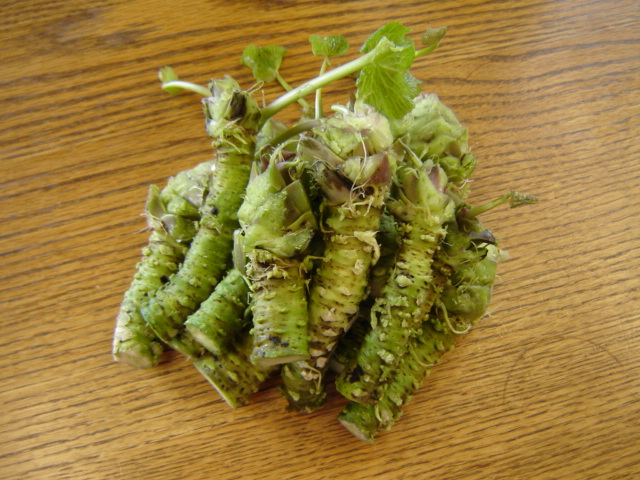
General Description
The plant is native to Japan, the Russian Far East including Sakhalin, and the Korean Peninsula. It grows naturally along stream beds in mountain river valleys in Japan.
Family Context
The Brassicaceae family is widely distributed in temperate regions. Notable medicinal members include:
- Radish — 63 documented uses
- Shepherd’s Purse — 49 documented uses
- Berro — 45 documented uses
- Garden Cress — 39 documented uses
Geographic Distribution
Japanese Horseradish has been recorded in China, Japan, South Korea, Norway, and Taiwan.
Traditional Uses
Japanese Horseradish has been traditionally used for pain and inflammation.
Pain and inflammation.
- Anodyne
For pain and inflammation, preparations are applied both topically as compresses and taken internally. A warm poultice draws blood to the area and promotes healing, while internal preparations address systemic inflammation.
Active Compounds
Phytochemical research has identified 10 compounds in this species, including a diverse array of phytochemical classes (see the Complete Chemical Inventory below for the full list).