Botanical Overview
Commonly known as European Nettle, this species belongs to the Urticaceae family. Traditional healers across continents have independently recognized the medicinal value of this species, leading to one of the most extensive ethnobotanical records available. This species belongs to the Urticaceae family, a group of flowering plants.
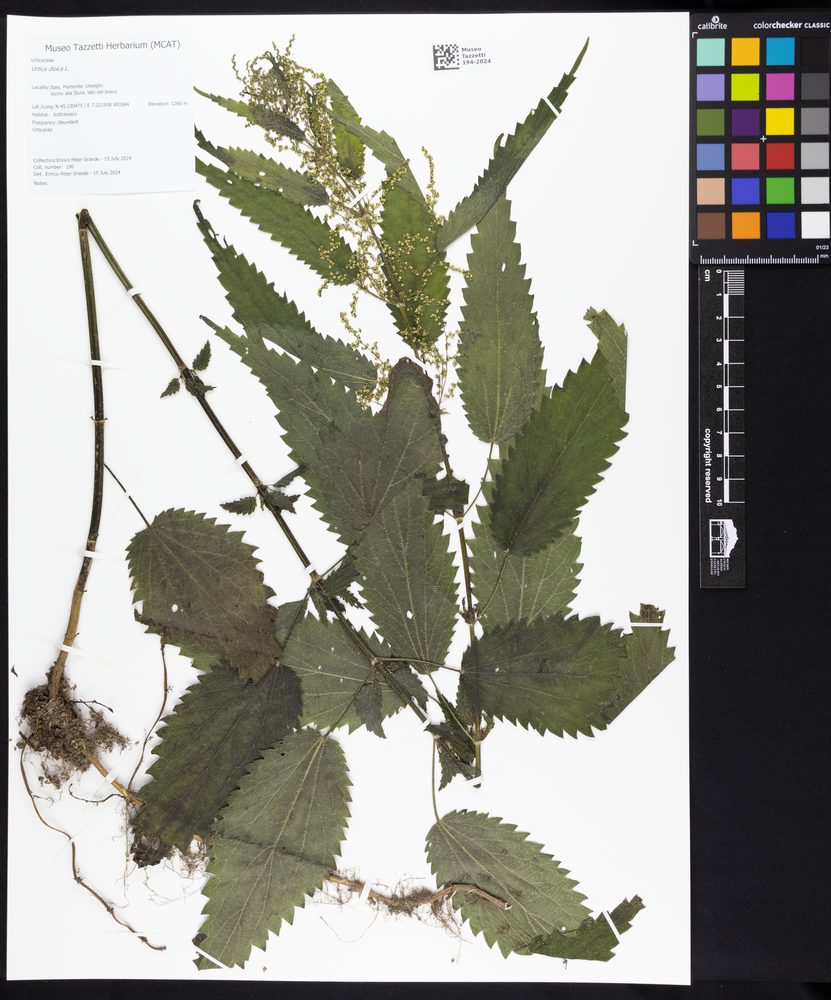
General Description
Originally native to Europe, much of temperate Asia and western North Africa, it is now found worldwide. The species is divided into six subspecies, five of which have many hollow stinging hairs called trichomes on the leaves and stems, which act like hypodermic needles, injecting histamine and other chemicals that produce a stinging sensation upon contact (“contact urticaria”, a form of contact dermatitis). The plant has a long history of use as a source for traditional medicine, food, tea, and textile raw material in ancient (such as Saxon) and modern societies.
Family Context
The Urticaceae family is widely distributed. Notable medicinal members include:
- Ramie — 20 documented uses
Traditional Uses
European Nettle has been traditionally used for digestive health, respiratory conditions, and skin and wound care, among other applications.
Digestive health.
- Vermifuge
For digestive complaints, the herb is typically prepared as a tea or decoction taken before meals. The bitter compounds stimulate digestive secretions and improve nutrient absorption. Some traditions use the powdered root or leaves in small doses as a stomachic tonic.
Respiratory conditions.
- Asthma
- Bronchitis
- Catarrh
Respiratory conditions are addressed through steam inhalation of the herb’s vapors or internal use as a warm tea. The hot infusion acts as an expectorant, helping to loosen phlegm and clear congestion. Some traditions combine it with honey for coughs.
Skin and wound care.
- Burn
For skin conditions, the fresh or dried plant is applied topically as a poultice, wash, or compress. A strong decoction can be used to clean wounds and sores. The antimicrobial properties help prevent infection while promoting tissue repair.
Active Compounds
Phytochemical research has identified 30 compounds in this species, including a diverse array of phytochemical classes (see the Complete Chemical Inventory below for the full list).
The identified compounds include the following categories:
- Flavonoid: antioxidant compounds that protect cells from oxidative damage
- Sterol: cholesterol-like compounds with anti-inflammatory properties
- Alkaloid: nitrogenous compounds with diverse pharmacological activities