Spanish Marjoram

Botanical Overview

Spanish Marjoram (Thymus mastichina) belongs to the Lamiaceae family. Limited but reliable traditional records indicate this plant has recognized medicinal applications in one or more healing traditions. The mint family (Lamiaceae) includes aromatic herbs and shrubs with square stems, opposite leaves, and two-lipped flowers. Many species produce essential oils in glandular trichomes on their leaves and stems. This family is one of the most important sources of culinary and medicinal herbs worldwide.
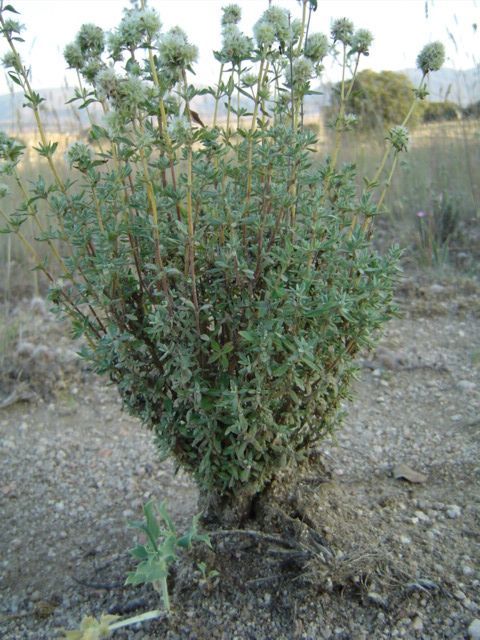
General Description

It is endemic to the central Iberian Peninsula in Spain and Portugal. The perennial herb, with white flowers, can reach a height of 50 centimetres (1+1⁄2 ft). Uses: Oil from the flower is used in some pain relieving lotion. Such as Aleve X.

ⓘ Information
Description adapted from Wikipedia (CC BY-SA 4.0).

Family Context

The Lamiaceae family is large and widely distributed. Notable medicinal members include:

  • Basil — 86 documented uses
  • Rosemary — 60 documented uses
  • Agbo — 54 documented uses
  • Sage — 49 documented uses

Geographic Distribution

Spanish Marjoram has been recorded in 10 countries and territories worldwide, including Austria, Belgium, Brazil, Spain, France, and others.

Active Compounds

Phytochemical research has identified 30 compounds in this species, including a diverse array of phytochemical classes (see the Complete Chemical Inventory below for the full list).

The identified compounds include the following categories:

  • Alkaloid: nitrogenous compounds with diverse pharmacological activities
ⓘ Information
Information on this page is compiled from Dr. Duke’s Phytochemical and Ethnobotanical Databases (USDA ARS), a public domain resource. Consult a healthcare professional before using any herbal preparation.

Distribution and Conservation

Reported distribution: Austria, Belgium, Brazil, Spain, France, Morocco, Netherlands, Portugal, United States, Unknown.

Complete Use Records

CategoryCultural Context
SpiceMediterranean
SclerosisEurope

Complete Chemical Inventory

CompoundFormulaMW
1,8-CINEOLEC₁₀H₁₈O154.25 Da
3-TERPINEN-1-OLC₁₀H₁₈O154.25 Da
3-TERPINEN-1-YL-ACETATE
ACETIC-ACIDC₂H₄O₂60.05 Da
ALLO-AROMADENDRENEC₁₅H₂₄204.35 Da
ALPHA-GURJUNENEC₁₅H₂₄204.35 Da
ALPHA-PINENEC₁₀H₁₆136.23 Da
ALPHA-TERPINENEC₁₀H₁₆136.23 Da
ALPHA-TERPINEOLC₁₀H₁₈O154.25 Da
ALPHA-TERPINYL-ACETATEC₁₂H₂₀O₂196.29 Da
ALPHA-THUJENEC₁₀H₁₆136.23 Da
AROMADENDRENEC₁₅H₂₄204.35 Da
BETA-BOURBONENEC₁₅H₂₄204.35 Da
BETA-GURJUNENEC₁₅H₂₄204.35 Da
BETA-PINENEC₁₀H₁₆136.23 Da
BORNEOLC₁₀H₁₈O154.25 Da
BORNYL-ACETATEC₁₂H₂₀O₂196.29 Da
CAMPHENEC₁₀H₁₆136.23 Da
CAMPHORC₁₀H₁₆O152.23 Da
CARYOPHYLLENEC₁₅H₂₄204.35 Da
CARYOPHYLLENE-OXIDEC₁₅H₂₄O220.35 Da
CIS-BETA-TERPINEOLC₁₀H₁₈O154.25 Da
CIS-BETA-TERPINYL-ACETATE
CIS-NEROLIDOLC₁₅H₂₆O222.37 Da
COPAENEC₁₅H₂₄204.35 Da
DELTA-CADINENEC₁₅H₂₄204.35 Da
DELTA-TERPINEOLC₁₀H₁₈O154.25 Da
ELEMOLC₁₅H₂₆O222.37 Da
GAMMA-CADINENEC₁₅H₂₄204.35 Da
GAMMA-TERPINENEC₁₀H₁₆136.23 Da

Data from PubChem (NIH/NLM, public domain).


References & Further Reading

External Research Links

Data Sources