Botanical Overview
Thonningia sanguinea belongs to the Balanophoraceae family. While not among the most extensively documented medicinal plants, this species has recorded uses that warrant attention from researchers and practitioners. This species belongs to the Balanophoraceae family, a group of flowering plants.
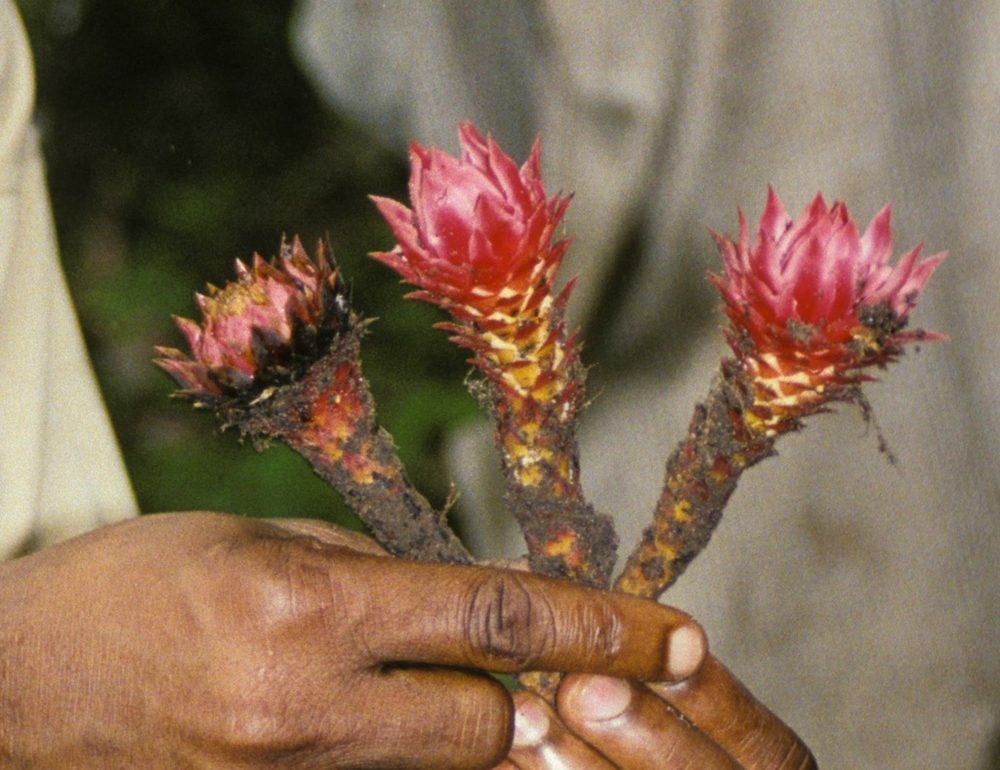
General Description
It is distributed throughout much of southern and western Africa, particularly the tropical regions. Common names for the plant include ground pineapple. A familiar plant to humans, it has an extremely long list of common names in many African languages. Many names are inspired by the resemblance of the plant’s inflorescence to a pineapple or palm tree. Some of the names can be translated as pineapple of the bush, duiker’s kolanut, and crown of the ground.
Geographic Distribution
Thonningia sanguinea has been recorded in 10 countries and territories worldwide, including Benin, Congo (DRC), Ivory Coast, Cameroon, Gabon, and others.
Traditional Uses
Thonningia sanguinea has been traditionally used for digestive health, respiratory conditions, and skin and wound care.
Digestive health.
- Vermifuge
- Dysentery
For digestive complaints, the herb is typically prepared as a tea or decoction taken before meals. The bitter compounds stimulate digestive secretions and improve nutrient absorption. Some traditions use the powdered root or leaves in small doses as a stomachic tonic.
Respiratory conditions.
- Asthma
- Bronchitis
Respiratory conditions are addressed through steam inhalation of the herb’s vapors or internal use as a warm tea. The hot infusion acts as an expectorant, helping to loosen phlegm and clear congestion. Some traditions combine it with honey for coughs.
Skin and wound care.
- Skin
For skin conditions, the fresh or dried plant is applied topically as a poultice, wash, or compress. A strong decoction can be used to clean wounds and sores. The antimicrobial properties help prevent infection while promoting tissue repair.
Active Compounds
Phytochemical research has identified 2 compounds in this species: thonningianin-a, thonningianin-b.