Botanical Overview
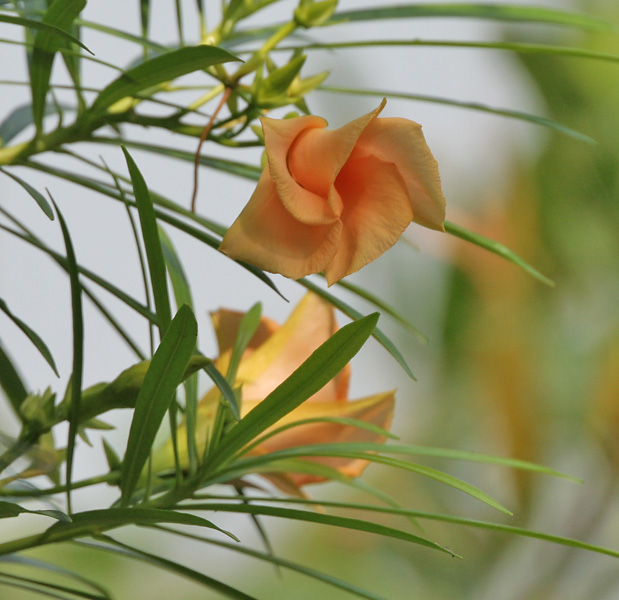
Yellow oleander (Thevetia neriifolia) belongs to the Apocynaceae family. Limited but reliable traditional records indicate this plant has recognized medicinal applications in one or more healing traditions. The dogbane family (Apocynaceae) includes herbs, shrubs, vines, and trees with milky sap containing alkaloids and cardiac glycosides. The flowers are typically five-petaled and often showy with a tubular corolla. Many species in this family are highly toxic but also source of important cardiac medications.
General Description
It is a relative of Nerium oleander and thus is known by the common name yellow oleander.
Family Context
The Apocynaceae family is primarily tropical and subtropical. Notable medicinal members include:
- Alstonia scholaris — 42 documented uses
- Madagascar Periwinkle — 40 documented uses
- Oleander — 30 documented uses
- African Snakeroot — 28 documented uses
Active Compounds
Phytochemical research has identified 21 compounds in this species, including a diverse array of phytochemical classes (see the Complete Chemical Inventory below for the full list).
The identified compounds include the following categories:
- Flavonoid: antioxidant compounds that protect cells from oxidative damage