Botanical Overview
Mountain Germander (Teucrium montanum) is a species in the Lamiaceae family. The mint family (Lamiaceae) includes aromatic herbs and shrubs with square stems, opposite leaves, and two-lipped flowers. Many species produce essential oils in glandular trichomes on their leaves and stems. This family is one of the most important sources of culinary and medicinal herbs worldwide. Although comprehensive ethnobotanical records are limited, phytochemical studies have identified 14 compounds in this species, suggesting potential medicinal value.
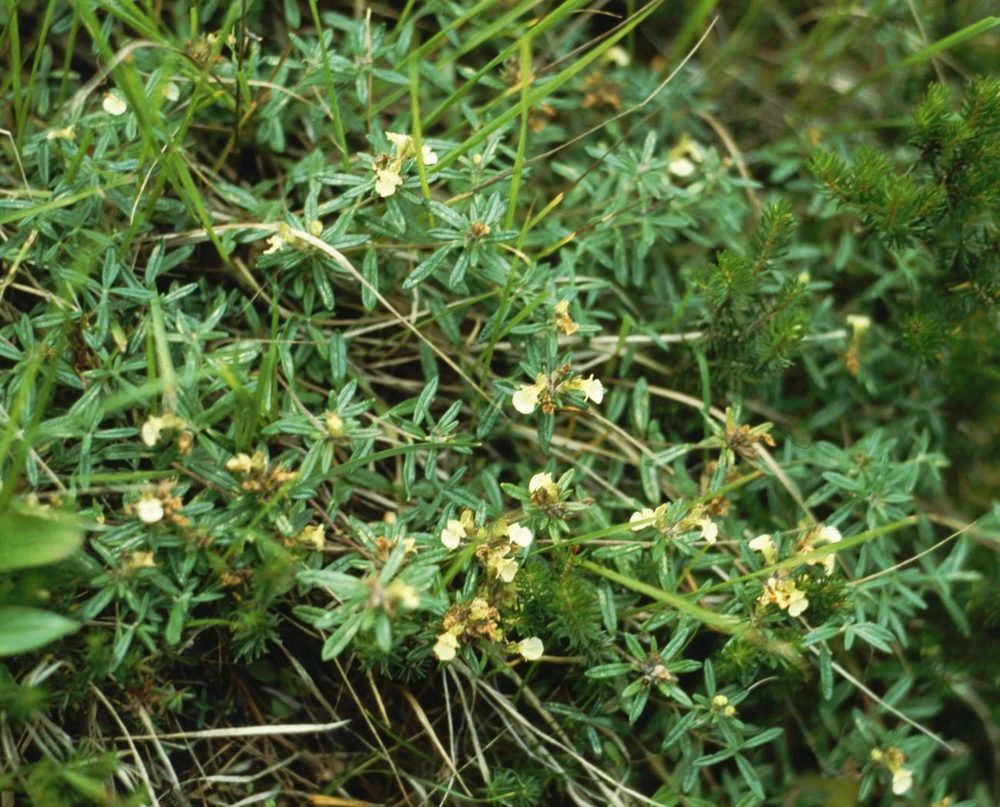
General Description
It forms shrubs about a foot high, with small leaves no more than an inch across, and petals blooming yellowish white. On south-facing mountain slopes, it can be found as far up as 2400 meters in the Alps. The plant was known to the ancient Greeks, one of several plants named χαμαίπιτυς, as mentioned by Pliny the Elder in his Latin work Historia Naturalis.
Family Context
The Lamiaceae family is large and widely distributed. Notable medicinal members include:
- Basil — 86 documented uses
- Rosemary — 60 documented uses
- Agbo — 54 documented uses
- Sage — 49 documented uses
Geographic Distribution
Mountain Germander has been recorded in 10 countries and territories worldwide, including Austria, Switzerland, Germany, Spain, France, and others.
Active Compounds
Phytochemical research has identified 14 compounds in this species, including a diverse array of phytochemical classes (see the Complete Chemical Inventory below for the full list).
The identified compounds include the following categories:
- Alkaloid: nitrogenous compounds with diverse pharmacological activities
- Tannin: astringent compounds that tighten tissues and resist infection
- Saponin: soap-like compounds with immune-modulating activity
Research Status
Although this species has documented phytochemical constituents, its ethnobotanical and clinical documentation remains incomplete. Further ethnobotanical and pharmacological research may reveal additional therapeutic applications for this species.