Botanical Overview
Field Germander (Teucrium botrys) belongs to the Lamiaceae family. Limited but reliable traditional records indicate this plant has recognized medicinal applications in one or more healing traditions. The mint family (Lamiaceae) includes aromatic herbs and shrubs with square stems, opposite leaves, and two-lipped flowers. Many species produce essential oils in glandular trichomes on their leaves and stems. This family is one of the most important sources of culinary and medicinal herbs worldwide.
General Description
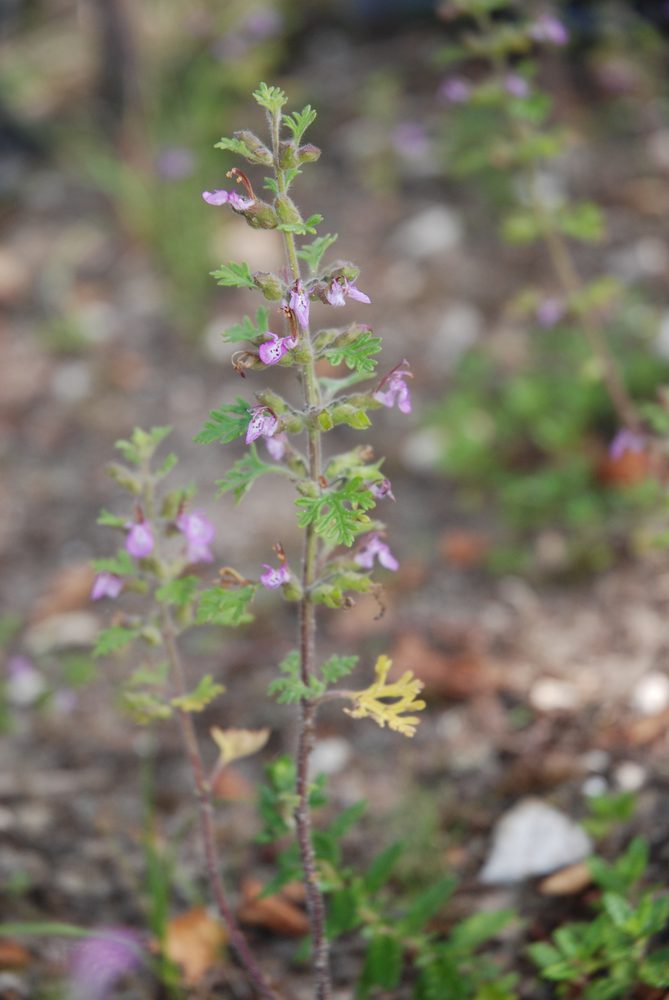
It was noted by Carl Linnaeus in 1753 and is classified as part of the genus Teucrium in the family Lamiaceae. It has oval, but deeply cut leaves, which appear almost pinnate in form. Its flowers are two-lipped but with the upper lip diminutive. They are pink to purple and form from the stem at the base of the leaves, in whorls. It is in flower in the northern hemisphere from June to October. It prefers limy soils and bare stony ground. It is native to Western Europe, especially France and Germany. It has been introduced into north-eastern North America.
Family Context
The Lamiaceae family is large and widely distributed. Notable medicinal members include:
- Basil — 86 documented uses
- Rosemary — 60 documented uses
- Agbo — 54 documented uses
- Sage — 49 documented uses
Geographic Distribution
Field Germander has been recorded in 10 countries and territories worldwide, including Austria, Belgium, Switzerland, Czech Republic, Germany, and others.
Active Compounds
Phytochemical research has identified 4 compounds in this species, including a diverse array of phytochemical classes (see the Complete Chemical Inventory below for the full list).
The identified compounds include the following categories:
- Alkaloid: nitrogenous compounds with diverse pharmacological activities