Botanical Overview
Fish Poison Bean (Tephrosia vogelii) belongs to the Fabaceae family. While not among the most extensively documented medicinal plants, this species has recorded uses that warrant attention from researchers and practitioners. The legume family (Fabaceae) includes trees, shrubs, and herbs that produce pods (legumes) and form nitrogen-fixing root nodules through symbiosis with bacteria. The flowers are typically pea-shaped with five petals. This large family provides food staples, timber, and numerous medicinal species.
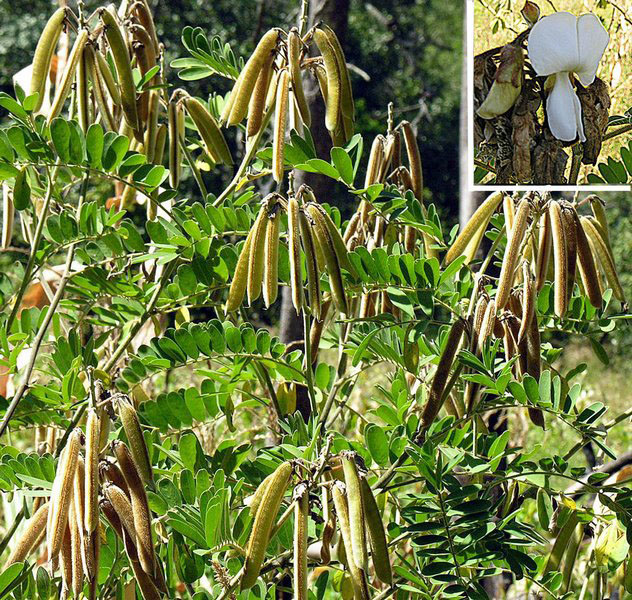
General Description
It is a herb or small tree that is native to tropical Africa and has also been used in tropical America as well as South and Southeast Asia. It is commonly used to deter pests and diseases, specifically fleas and ticks on animals. It is not suitable for livestock or human consumption because it is not highly nutritious and can be poisonous for fish and some other animals. Since it is a nitrogen-fixing plant, it can be intercropped with other plants and used as a source of green manure. Tephrosia vogelii is commonly known as the “fish bean”, “fish-poison bean”, or “vogel’s tephrosia”. It is a small tree used by farmers in numerous countries in Africa to get rid of pests on livestock, control pests in cultivated fields as an organic pesticide, improves soil fertility, as a medicine for skin diseases and internal worms, and for storage of crops. The use of “Tephrosia leaf extract as a low cost acaricide is spreading to farmers in central Kenya” and has been very successful in terms of its results.
Family Context
The Fabaceae family is large and globally distributed. Notable medicinal members include:
- Soybean — 76 documented uses
- Crab’s Eye — 73 documented uses
- Tamarind — 59 documented uses
- Common Indigo — 51 documented uses
Geographic Distribution
Fish Poison Bean has been recorded in 10 countries and territories worldwide, including Angola, Bolivia, Congo (DRC), Cameroon, Ethiopia, and others.
Traditional Uses
Fish Poison Bean has been traditionally used for digestive health, skin and wound care, and reproductive health.
Digestive health.
- Purgative
For digestive complaints, the herb is typically prepared as a tea or decoction taken before meals. The bitter compounds stimulate digestive secretions and improve nutrient absorption. Some traditions use the powdered root or leaves in small doses as a stomachic tonic.
Skin and wound care.
- Skin
- Sore
For skin conditions, the fresh or dried plant is applied topically as a poultice, wash, or compress. A strong decoction can be used to clean wounds and sores. The antimicrobial properties help prevent infection while promoting tissue repair.
Reproductive health.
- Abortifacient
In traditional contexts, reproductive health applications typically involve internal preparations such as teas or decoctions. The herb may be taken at specific times during the menstrual cycle.
Active Compounds
Phytochemical research has identified 10 compounds in this species, including a diverse array of phytochemical classes (see the Complete Chemical Inventory below for the full list).
The identified compounds include the following categories:
- Flavonoid: antioxidant compounds that protect cells from oxidative damage