Botanical Overview
Purple Tephrosia (Tephrosia purpurea) is a flowering plant in the Fabaceae family. The traditional uses of this species reflect its genuine medicinal value, validated by generations of practical experience. The legume family (Fabaceae) includes trees, shrubs, and herbs that produce pods (legumes) and form nitrogen-fixing root nodules through symbiosis with bacteria. The flowers are typically pea-shaped with five petals. This large family provides food staples, timber, and numerous medicinal species.
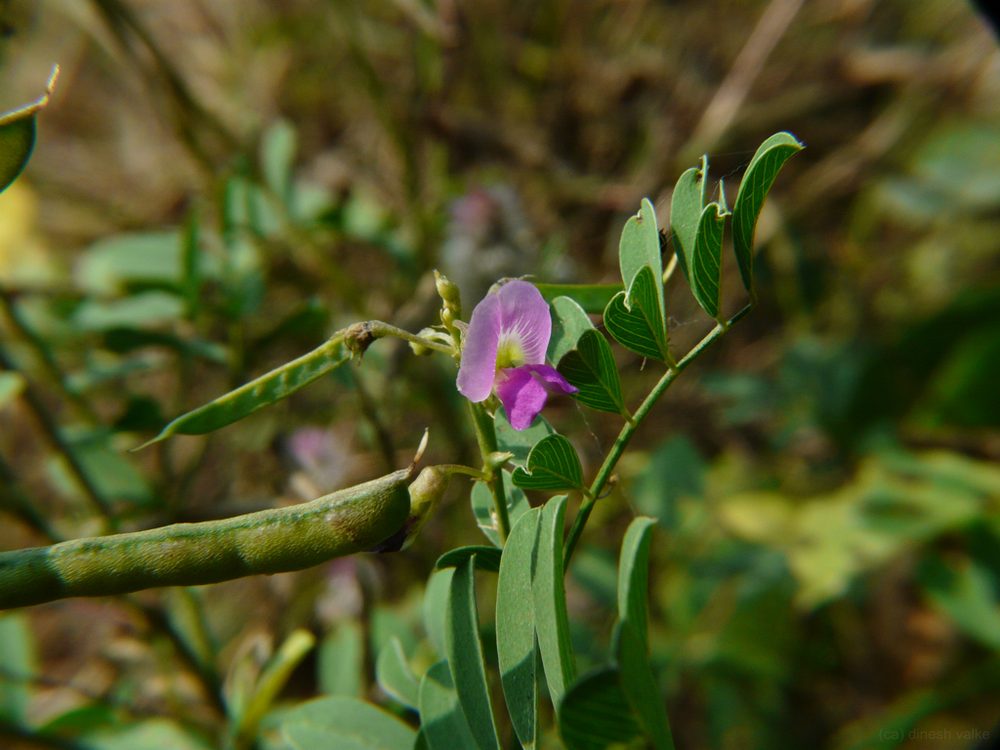
General Description
It grows in poor soils as a common wasteland weed and has a pantropical distribution. It is a type of legume native to south-western Asia (the Levant, Arabian Peninsula, Socotra, Iran, Pakistan, India and Sri Lanka) and north-eastern Africa (Egypt, Sudan, Ethiopia, Eritrea, Djibouti, Somalia). The leaflets of the plant are obovate-oblong and equal-sided, and of a silky texture. The fruits (legumes) are typically 1 to 2 in (25 to 51 mm) long and contain six or seven brownish seeds. The species typically grows in areas where the soils are relatively deep, especially in semi-arid and wadi areas, and on terraces and slight inclines and hills. Tephrosia purpurea is known to be toxic to goats. Although it has been used in Oman and the United Arab Emirates to treat bronchitis, cough, earache, nasal congestion and wounds and bone fractures, as of 1993 its wider impact on humans had not been assessed. It can be used to make indigo-like dyes, and the leaves and those of other plants are used to make hot drinks by the Bedouin in parts of Sinai and the Negev.
Family Context
The Fabaceae family is large and globally distributed. Notable medicinal members include:
- Soybean — 76 documented uses
- Crab’s Eye — 73 documented uses
- Tamarind — 59 documented uses
- Common Indigo — 51 documented uses
Geographic Distribution
Purple Tephrosia has been recorded in 10 countries and territories worldwide, including Australia, Brazil, China, India, Madagascar, and others.
Traditional Uses
Purple Tephrosia has been traditionally used for digestive health, respiratory conditions, and skin and wound care, among other applications.
Digestive health.
- Colic
- Diarrhea
- Dyspepsia
- Laxative
For digestive complaints, the herb is typically prepared as a tea or decoction taken before meals. The bitter compounds stimulate digestive secretions and improve nutrient absorption. Some traditions use the powdered root or leaves in small doses as a stomachic tonic.
Respiratory conditions.
- Cough
- Asthma
- Bronchitis
Respiratory conditions are addressed through steam inhalation of the herb’s vapors or internal use as a warm tea. The hot infusion acts as an expectorant, helping to loosen phlegm and clear congestion. Some traditions combine it with honey for coughs.
Skin and wound care.
- Eruption
- Skin
- Itch
- Eczema
- Scabies
For skin conditions, the fresh or dried plant is applied topically as a poultice, wash, or compress. A strong decoction can be used to clean wounds and sores. The antimicrobial properties help prevent infection while promoting tissue repair.
Active Compounds
Phytochemical research has identified 20 compounds in this species, including a diverse array of phytochemical classes (see the Complete Chemical Inventory below for the full list).
The identified compounds include the following categories:
- Sterol: cholesterol-like compounds with anti-inflammatory properties