Botanical Overview
Dandelion (Taraxacum officinale) is a flowering plant in the Asteraceae family. The traditional uses of this species reflect its genuine medicinal value, validated by generations of practical experience. The daisy family (Asteraceae) is one of the largest plant families, characterized by composite flower heads (capitula) that contain many small florets surrounded by bracts. Plants range from tiny alpine herbs to large tropical trees. The family includes many medicinally important species with bitter compounds and essential oils.
General Description
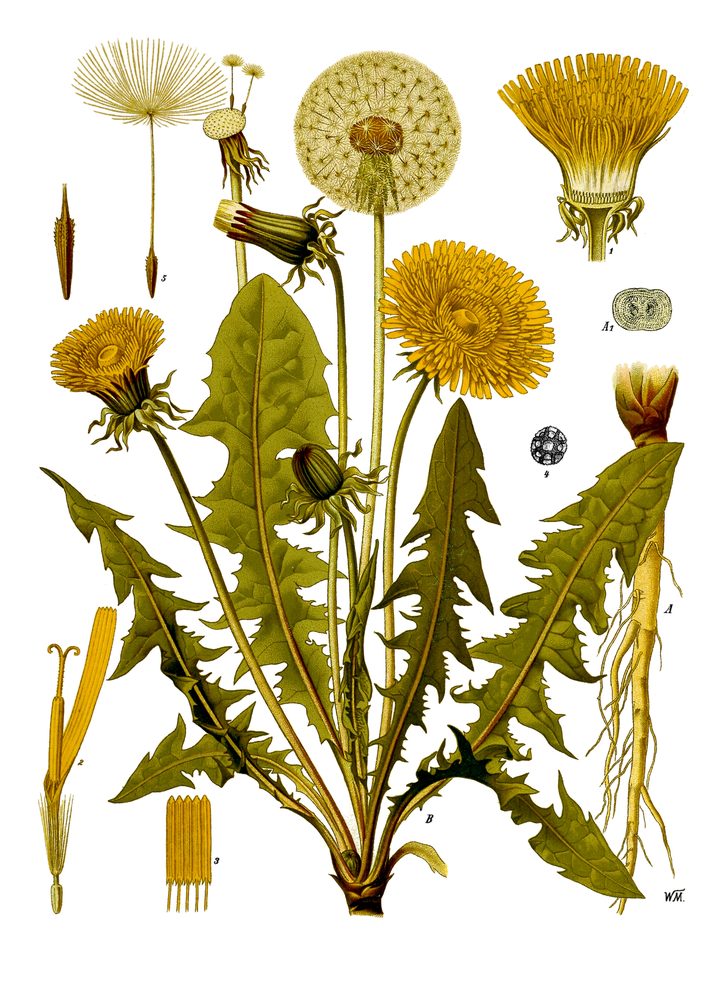
The common dandelion is well-known for its yellow flower heads that turn into round balls of many silver-tufted fruit, which disperse in the wind. These balls are sometimes called “clocks” or “blowballs”. Originally native to Eurasia, as a result of its hardiness and easy propagation, the dandelion has become widely established across several continents. It has been introduced to southern Africa, the Americas, Australia, and New Zealand. It grows in temperate regions of the world in areas with moist soils. They are able to grow in a variety of environments and are tolerant of crowding, extreme temperatures, and low moisture. The dandelion is often considered a weed, especially in lawns, but it is increasingly being recognised in its native regions as useful for attracting birds and pollinating insects. In one study, it ranked as the fourth most important source of pollen. Although dandelion pollen is considered to be an early food resource for some emerging pollinators in spring, it has also been found to lack certain essential nutrients and can lead to declining brood health for bees. The leaves, flowers, and roots are sometimes used as food and in herbal medicine.
Family Context
The Asteraceae family is extremely large and diverse. Notable medicinal members include:
- Yarrow — 63 documented uses
- Gobo — 63 documented uses
- Mugwort — 55 documented uses
- Sunflower — 52 documented uses
Geographic Distribution
Dandelion has been recorded in 10 countries and territories worldwide, including Belgium, Canada, Czech Republic, Germany, France, and others.
Traditional Uses
Dandelion has been traditionally used for digestive health, respiratory conditions, and urinary tract health, among other applications.
Digestive health.
- Dyspepsia
- Laxative
- Stomachic
For digestive complaints, the herb is typically prepared as a tea or decoction taken before meals. The bitter compounds stimulate digestive secretions and improve nutrient absorption. Some traditions use the powdered root or leaves in small doses as a stomachic tonic.
Respiratory conditions.
- Catarrh
Respiratory conditions are addressed through steam inhalation of the herb’s vapors or internal use as a warm tea. The hot infusion acts as an expectorant, helping to loosen phlegm and clear congestion. Some traditions combine it with honey for coughs.
Urinary tract health.
- Diuretic
- Kidney
Urinary tract applications typically involve drinking the herb as a mild tea, which increases urine production and helps flush the urinary system. It may be combined with other demulcent herbs to soothe irritated tissues.
Active Compounds
Phytochemical research has identified 30 compounds in this species, including a diverse array of phytochemical classes (see the Complete Chemical Inventory below for the full list).
The identified compounds include the following categories:
- Flavonoid: antioxidant compounds that protect cells from oxidative damage
- Sterol: cholesterol-like compounds with anti-inflammatory properties
- Alkaloid: nitrogenous compounds with diverse pharmacological activities