Botanical Overview
Wild Marigold (Tagetes minuta) is a flowering plant in the Asteraceae family. The traditional uses of this species reflect its genuine medicinal value, validated by generations of practical experience. The daisy family (Asteraceae) is one of the largest plant families, characterized by composite flower heads (capitula) that contain many small florets surrounded by bracts. Plants range from tiny alpine herbs to large tropical trees. The family includes many medicinally important species with bitter compounds and essential oils.
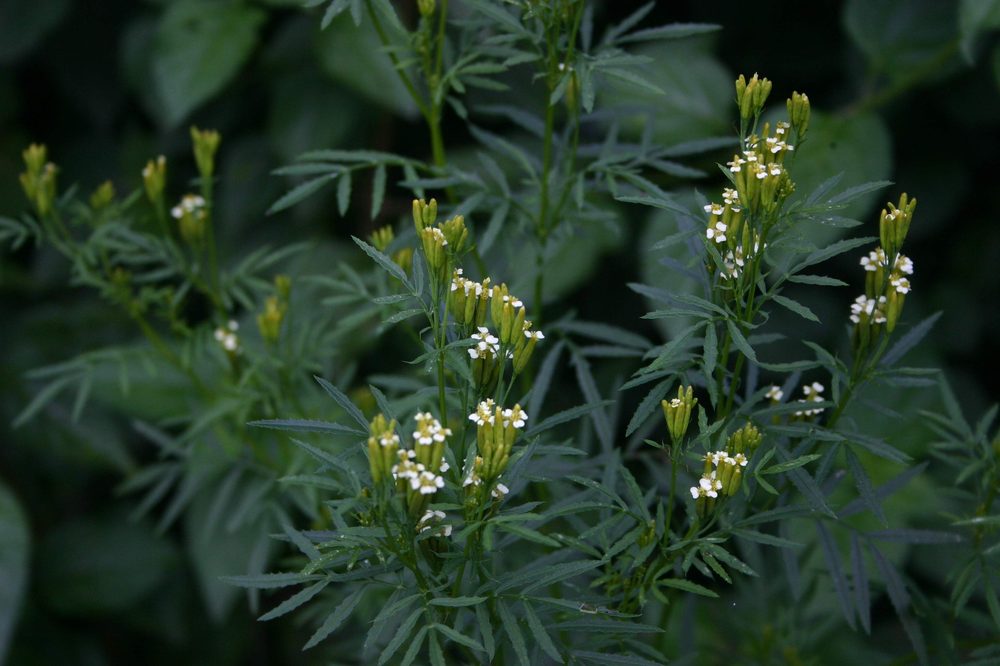
General Description
Since Spanish colonization, it has been introduced around the world, and has become naturalized in Europe, Asia, Australasia, North America, and Africa. Tagetes minuta has numerous local names that vary by region. In the Andes it is known as Huacatay or Wacatay, and in other regions it is common as chinchilla, chiquilla, chilca, zuico, suico, or anisillo. Other names include Muster John Henry, southern marigold, khakibos, stinking roger, wild marigold, and black mint. It is called the Quechua terms huacatay in Peru or wakataya in Bolivia. It is used as a culinary herb in Peru, Ecuador, and parts of Chile and Bolivia. It is commonly sold in Latin grocery stores in a bottled, paste format as black mint paste.
Family Context
The Asteraceae family is extremely large and diverse. Notable medicinal members include:
- Yarrow — 63 documented uses
- Gobo — 63 documented uses
- Mugwort — 55 documented uses
- Sunflower — 52 documented uses
Geographic Distribution
Wild Marigold has been recorded in 10 countries and territories worldwide, including Argentina, Australia, Brazil, Spain, France, and others.
Traditional Uses
Wild Marigold has been traditionally used for digestive health, urinary tract health, and pain and inflammation, among other applications.
Digestive health.
- Stomachic
- Carminative
- Dyspepsia
- Purgative
- Vermifuge
For digestive complaints, the herb is typically prepared as a tea or decoction taken before meals. The bitter compounds stimulate digestive secretions and improve nutrient absorption. Some traditions use the powdered root or leaves in small doses as a stomachic tonic.
Urinary tract health.
- Diuretic
Urinary tract applications typically involve drinking the herb as a mild tea, which increases urine production and helps flush the urinary system. It may be combined with other demulcent herbs to soothe irritated tissues.
Pain and inflammation.
- Inflammation
- Swelling
For pain and inflammation, preparations are applied both topically as compresses and taken internally. A warm poultice draws blood to the area and promotes healing, while internal preparations address systemic inflammation.
Active Compounds
Phytochemical research has identified 30 compounds in this species, including a diverse array of phytochemical classes (see the Complete Chemical Inventory below for the full list).
The identified compounds include the following categories:
- Alkaloid: nitrogenous compounds with diverse pharmacological activities