Botanical Overview
Arrow Poison (Strophanthus divaricatus) is a species in the Apocynaceae family. The dogbane family (Apocynaceae) includes herbs, shrubs, vines, and trees with milky sap containing alkaloids and cardiac glycosides. The flowers are typically five-petaled and often showy with a tubular corolla. Many species in this family are highly toxic but also source of important cardiac medications. Although comprehensive ethnobotanical records are limited, phytochemical studies have identified 6 compounds in this species, suggesting potential medicinal value.
General Description
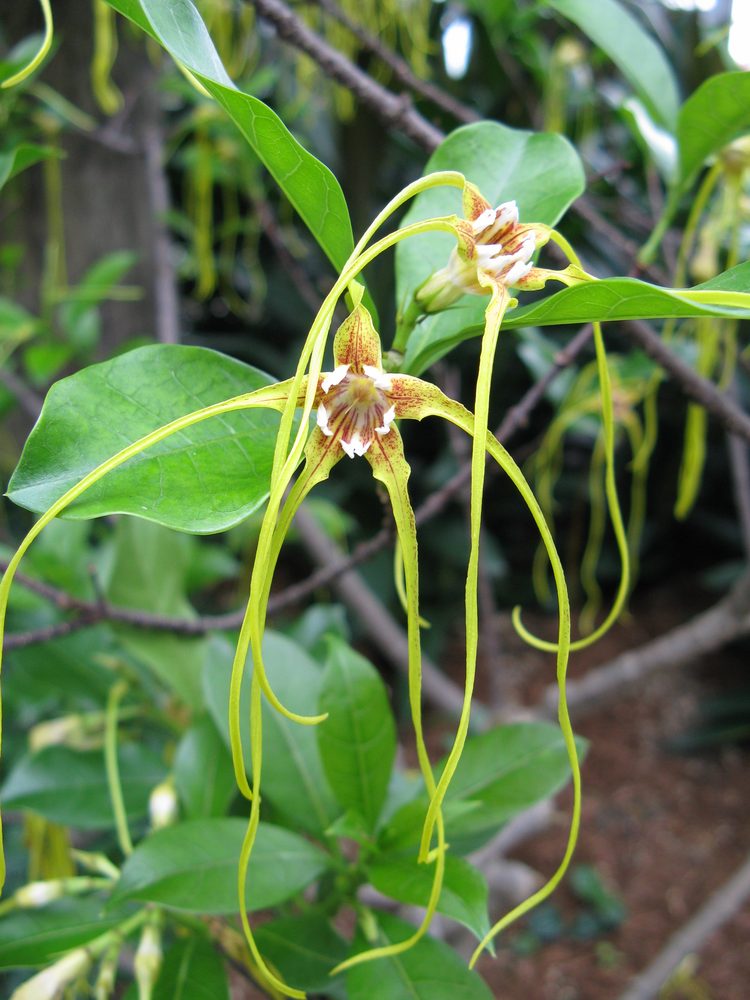
It is a liana or sarmentose shrub growing up to 4. 5 m (15 ft) tall, with a trunk diameter of up to 4 cm (1. 6 in). The specific epithet divaricatus means ‘spreading at a wide angle’. The plant has been used medicinally: as a heart stimulant and in the treatment of snakebites. It is native to southern China and northern Vietnam.
Family Context
The Apocynaceae family is primarily tropical and subtropical. Notable medicinal members include:
- Alstonia scholaris — 42 documented uses
- Madagascar Periwinkle — 40 documented uses
- Oleander — 30 documented uses
- African Snakeroot — 28 documented uses
Active Compounds
Phytochemical research has identified 6 compounds in this species, including a diverse array of phytochemical classes (see the Complete Chemical Inventory below for the full list).
The identified compounds include the following categories:
- Flavonoid: antioxidant compounds that protect cells from oxidative damage
Research Status
Although this species has documented phytochemical constituents, its ethnobotanical and clinical documentation remains incomplete. Further ethnobotanical and pharmacological research may reveal additional therapeutic applications for this species.