Botanical Overview
Strongylodon macrobotrys is a species in the Fabaceae family. The legume family (Fabaceae) includes trees, shrubs, and herbs that produce pods (legumes) and form nitrogen-fixing root nodules through symbiosis with bacteria. The flowers are typically pea-shaped with five petals. This large family provides food staples, timber, and numerous medicinal species. Phytochemical data for this species are limited at present.
General Description
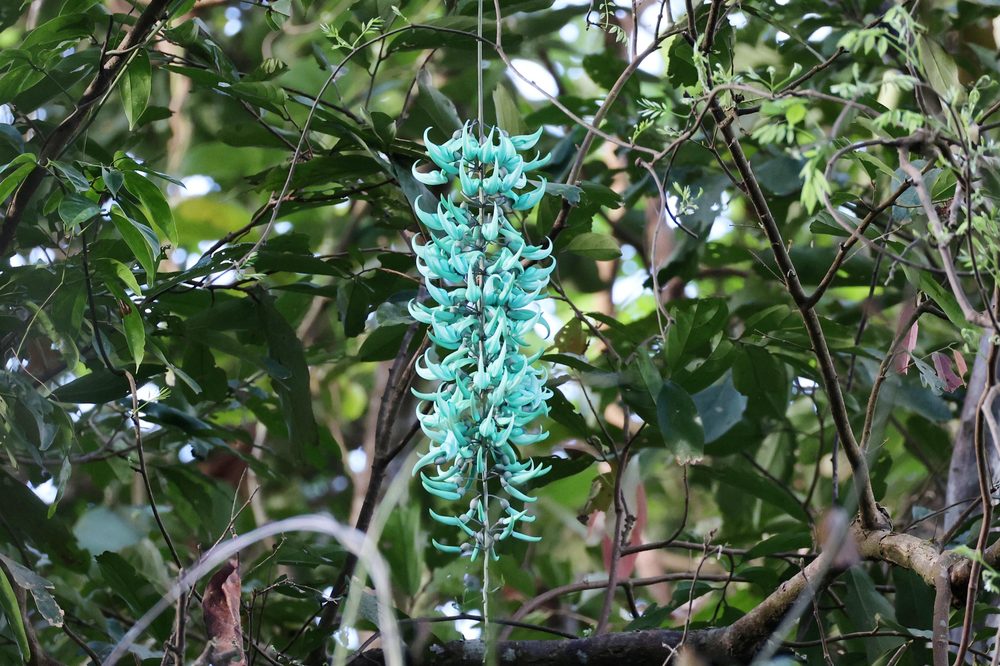
It is a popular ornamental plant known for its cascading clusters of vibrant turquoise or greenish-blue claw-shaped flowers. Cultivating jade vine requires a tropical environment, making it a popular choice in botanical gardens and conservatories. The plant’s striking appearance and limited distribution contribute to its allure among plant enthusiasts worldwide.
Family Context
The Fabaceae family is large and globally distributed. Notable medicinal members include:
- Soybean — 76 documented uses
- Crab’s Eye — 73 documented uses
- Tamarind — 59 documented uses
- Common Indigo — 51 documented uses
Geographic Distribution
Strongylodon macrobotrys has been recorded in 10 countries and territories worldwide, including Australia, Brazil, China, Colombia, Costa Rica, and others.
Active Compounds
Phytochemical research has identified 2 compounds in this species: genistein, hydroxygenistein.
Research Status
Although this species has documented phytochemical constituents, its ethnobotanical and clinical documentation remains incomplete. Systematic pharmacological studies are needed to validate the traditional uses attributed to this species.