Botanical Overview
Karaya (Sterculia urens) belongs to the Sterculiaceae family. Limited but reliable traditional records indicate this plant has recognized medicinal applications in one or more healing traditions. The sterculia family (Sterculiaceae) includes trees and shrubs with alternate leaves, often with stellate hairs. The flowers have five sepals and petals, and the fruits are typically capsules or follicles. Many species produce mucilaginous substances and have traditional uses as demulcents.
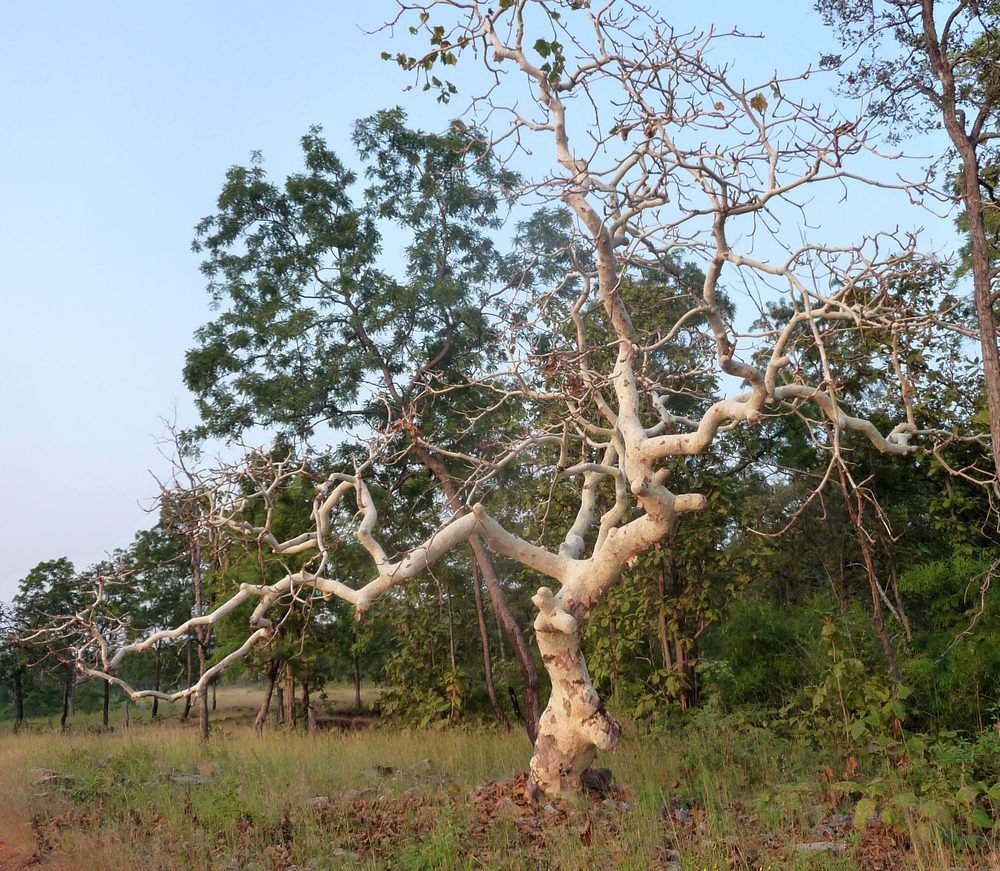
General Description
It is native to India and has been introduced into Burma. A small to medium-sized tree with a pale-coloured trunk, it is commonly known as the bhutyā (भुत्या) in Marathi (meaning “ghost tree”), kulu, Indian tragacanth, gum karaya, katira, sterculia gum or kateera gum. The specific name urens refers to the stinging hairs present on the flowers.
Family Context
The Sterculiaceae family is widely distributed. Notable medicinal members include:
- Bay Cedar — 30 documented uses
- Cacao — 22 documented uses
- Raichie — 16 documented uses
- Pterospermum acerifolium — 14 documented uses
Geographic Distribution
Karaya has been recorded in 10 countries and territories worldwide, including Bangladesh, Brazil, India, Sri Lanka, Myanmar, and others.
Traditional Uses
Karaya has been traditionally used for skin and wound care.
Skin and wound care.
- Sore
For skin conditions, the fresh or dried plant is applied topically as a poultice, wash, or compress. A strong decoction can be used to clean wounds and sores. The antimicrobial properties help prevent infection while promoting tissue repair.
Active Compounds
Phytochemical research has identified 28 compounds in this species, including a diverse array of phytochemical classes (see the Complete Chemical Inventory below for the full list).
The identified compounds include the following categories:
- Tannin: astringent compounds that tighten tissues and resist infection