Chickweed

Also known as: Common Chickweed

Botanical Overview

Chickweed (Stellaria media) is a flowering plant in the Caryophyllaceae family. The traditional uses of this species reflect its genuine medicinal value, validated by generations of practical experience. This species belongs to the Caryophyllaceae family, a group of flowering plants.
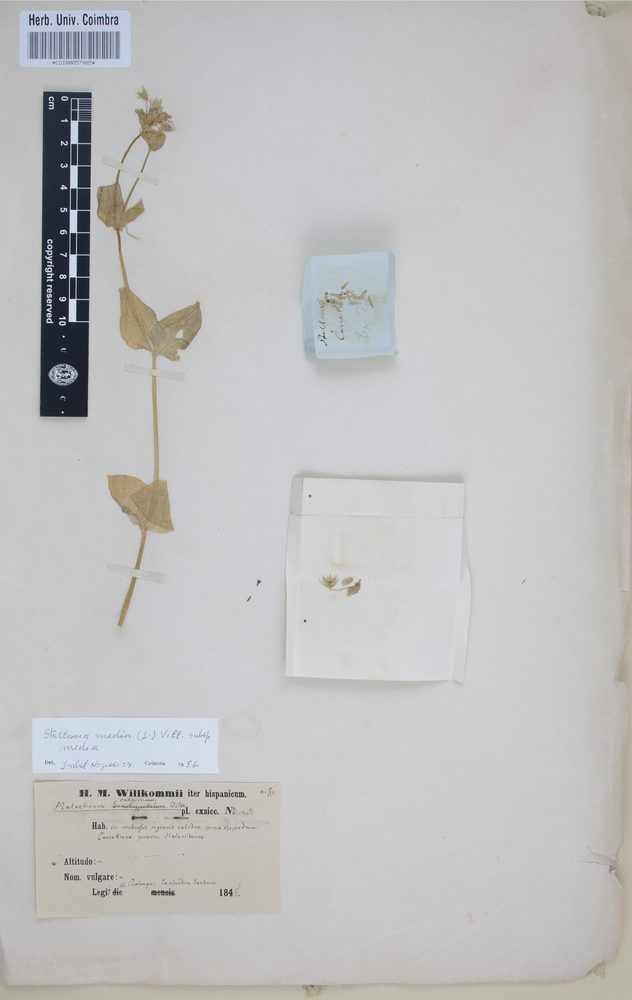
General Description

It is native to Eurasia and naturalized throughout the world, where it is a weed of waste ground, farmland and gardens. It is sometimes grown as a salad crop or for poultry consumption.

ⓘ Information
Description adapted from Wikipedia (CC BY-SA 4.0).

Family Context

The Caryophyllaceae family is widely distributed. Notable medicinal members include:

Geographic Distribution

Chickweed has been recorded in 10 countries and territories worldwide, including Belgium, Germany, Denmark, Finland, France, and others.

Traditional Uses

Chickweed has been traditionally used for respiratory conditions, skin and wound care, and urinary tract health, among other applications.

Respiratory conditions.

  • Expectorant

Respiratory conditions are addressed through steam inhalation of the herb’s vapors or internal use as a warm tea. The hot infusion acts as an expectorant, helping to loosen phlegm and clear congestion. Some traditions combine it with honey for coughs.

Skin and wound care.

  • Skin
  • Eczema
  • Sore

For skin conditions, the fresh or dried plant is applied topically as a poultice, wash, or compress. A strong decoction can be used to clean wounds and sores. The antimicrobial properties help prevent infection while promoting tissue repair.

Urinary tract health.

  • Diuretic

Urinary tract applications typically involve drinking the herb as a mild tea, which increases urine production and helps flush the urinary system. It may be combined with other demulcent herbs to soothe irritated tissues.

Active Compounds

Phytochemical research has identified 30 compounds in this species, including a diverse array of phytochemical classes (see the Complete Chemical Inventory below for the full list).

The identified compounds include the following categories:

  • Alkaloid: nitrogenous compounds with diverse pharmacological activities
ⓘ Information
Information on this page is compiled from Dr. Duke’s Phytochemical and Ethnobotanical Databases (USDA ARS), a public domain resource. Consult a healthcare professional before using any herbal preparation.
⚠ Caution
Traditional records: This plant has documented uses including Poison. Self-medication with herbs carries risks including allergic reactions, drug interactions, and toxicity. Only use under the supervision of a qualified healthcare professional.

Distribution and Conservation

Reported distribution: Belgium, Germany, Denmark, Finland, France, United Kingdom, Netherlands, Poland, Sweden, United States.

Complete Use Records

CategoryCultural Context
ExpectorantSpain, Turkey
PilesElsewhere, US
SkinElsewhere, Iraq
EyeElsewhere, US
CancerUK
DebilityTurkey
DemulcentTurkey
DiureticTurkey
EczemaElsewhere
ErysipelasElsewhere
FractureElsewhere
MucusElsewhere
PoisonElsewhere
RefrigerantTurkey
SoreElsewhere
SpasmIraq
SwellingElsewhere
UrogenitalIraq
FeverIraq
InflammationElsewhere

Complete Chemical Inventory

CompoundFormulaMW
10-HYDROXYDECANOIC ACIDC₁₀H₂₀O₃188.26 Da
10-HYDROXYDOCOSANOIC ACIDC₂₂H₄₄O₃356.6 Da
10-HYDROXYHEXADECANOIC ACIDC₁₆H₃₂O₃272.42 Da
10-HYDROXYOCTADECANOIC ACIDC₁₈H₃₆O₃300.5 Da
11-HYDROXYDOCOSANOIC ACIDC₂₂H₄₄O₃356.6 Da
11-HYDROXYHEXADECANOIC ACIDC₁₆H₃₂O₃272.42 Da
11-HYDROXYICOSANOIC ACIDC₂₀H₄₀O₃328.5 Da
11-HYDROXYOCTADECANOIC ACIDC₁₈H₃₆O₃300.5 Da
11-HYDROXYUNDECANOIC ACIDC₁₁H₂₂O₃202.29 Da
13-HYDROXYHEXADECANOIC ACIDC₁₆H₃₂O₃272.42 Da
2-AMINO-ADIPIC-ACID
2-HYDROXYDOCOSANOIC ACIDC₂₂H₄₄O₃356.6 Da
2-HYDROXYHEXADECANOIC ACIDC₁₆H₃₂O₃272.42 Da
2-HYDROXYTETRACOSANOIC ACIDC₂₄H₄₈O₃384.6 Da
4-HYDROXY-BENZOIC-ACID
5-ACETOXYDOTETRACONT-3-EN-1-OLC₄₄H₈₆O₃663.2 Da
6-7-DIHYDROXYICOSANOIC ACID
6-7-DIMETHYLHEPTACOSANEC₂₉H₆₀408.8 Da
7-HYDROXYHEPTANOCIC ACID
8-HYDROXYNONANOIC ACIDC₉H₁₈O₃174.24 Da
8-HYDROXYOCTANOIC ACIDC₈H₁₆O₃160.21 Da
9,16-DIHYDROXYHEXADECANOIC-ACIDC₁₆H₃₂O₄288.42 Da
9-10-DIHYDROXYOCTADECANOIC ACIDC₁₈H₃₆O₄316.5 Da
9-HYDROXYDECANOIC-ACIDC₁₀H₂₀O₃188.26 Da
9-HYDROXYHEXADECANOIC ACIDC₁₆H₃₂O₃272.42 Da
9-HYDROXYNONANOIC-ACIDC₉H₁₈O₃174.24 Da
9-HYDROXYOCTADECANOIC ACIDC₁₈H₃₆O₃300.5 Da
9-HYDROXYTETRADECANOIC ACIDC₁₄H₂₈O₃244.37 Da
ALUMINUMAl26.981538 Da
APIGENINC₁₅H₁₀O₅270.24 Da

Data from PubChem (NIH/NLM, public domain).


References & Further Reading

External Research Links

Data Sources