Botanical Overview
Cocona (Solanum sessiliflorum) is a species in the Solanaceae family. The nightshade family (Solanaceae) includes herbs, shrubs, and small trees with alternate leaves and star-shaped or trumpet-shaped flowers. The fruits are typically berries or capsules. Many species produce potent alkaloids including tropanes, solanines, and nicotine, making this family both medicinally valuable and potentially toxic. Although comprehensive ethnobotanical records are limited, phytochemical studies have identified 12 compounds in this species, suggesting potential medicinal value.
General Description
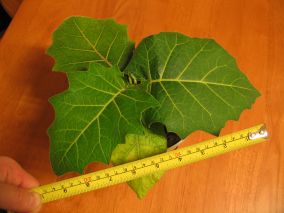
The cocona plant has sturdy branches and huge, serrate and hairy leaves. Cocona closely resembles a number of close relatives, including naranjilla (S. quitoense) and pseudolulo (S. pseudolulo. ) It can be distinguished from those plants by its lack of spines. It will hybridize with those and other close relatives. Cocona also lacks the characteristic purple coloring usually seen in the naranjilla. Its flowers resemble large potato flowers, with light green petals. Cocona is harvested in parts of South America around the Amazon rainforest such as Purús Province in eastern Peru. The fruit of cocona is a red, orange or yellow edible berry. Cocona is native to the Andean region of South America, where it is occasionally cultivated for human consumption. Cocona can also be grown as an indoor ornamental plant in temperate climates, but it seems to be quite sensitive to spider mites, so care should be taken not to keep it in too dry air during winter. Like the naranjilla, coconas are highly sensitive to aphids and nematodes. As subtropical plants, they can endure cool weather, but will be killed or severely damaged by frost. During summer, it can be grown outside or in a cold greenhouse. When grown from seed, coconas can bear fruit in as little as 9 months, or as long as 24. Solanum georgicum and Solanum hyporhodium were (and sometimes still are) included in this species, but they are generally treated as distinct today.
Family Context
The Solanaceae family is widely distributed worldwide. Notable medicinal members include:
- Black Nightshade — 100 documented uses
- Tobacco — 80 documented uses
- Jimsonweed — 66 documented uses
- Hindu Datura — 65 documented uses
Geographic Distribution
Cocona has been recorded in 10 countries and territories worldwide, including Brazil, Colombia, Costa Rica, Ecuador, French Guiana, and others.
Active Compounds
Phytochemical research has identified 12 compounds in this species, including a diverse array of phytochemical classes (see the Complete Chemical Inventory below for the full list).
The identified compounds include the following categories:
- Alkaloid: nitrogenous compounds with diverse pharmacological activities
- Tannin: astringent compounds that tighten tissues and resist infection
Research Status
Although this species has documented phytochemical constituents, its ethnobotanical and clinical documentation remains incomplete. Further ethnobotanical and pharmacological research may reveal additional therapeutic applications for this species.