Botanical Overview
Simaruba Bark (Simarouba amara) is a species in the Simaroubaceae family. The quassia family (Simaroubaceae) includes trees and shrubs with bitter bark, compound leaves, and small, unisexual flowers. The fruits are typically drupes or samaras. Many species contain quassinoids, intensely bitter compounds with antimalarial and anticancer activity. Although comprehensive ethnobotanical records are limited, phytochemical studies have identified 17 compounds in this species, suggesting potential medicinal value.
General Description
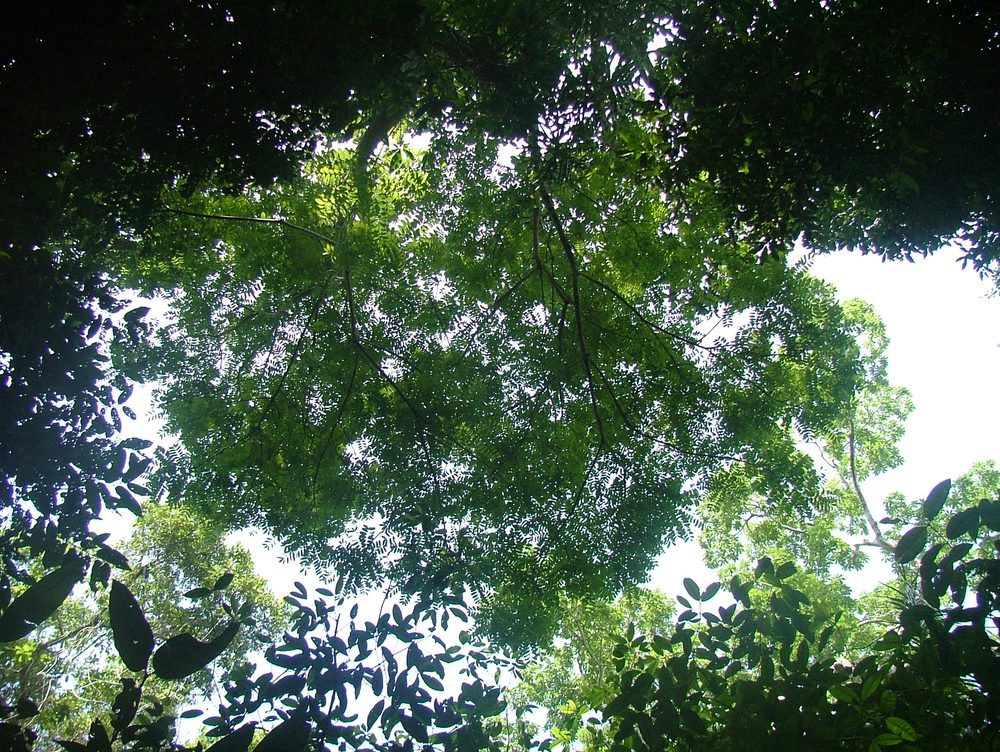
It was first described by Aubl. in French Guiana in 1775 and is one of six species of Simarouba. The tree is evergreen, but produces a new set of leaves once a year. It requires relatively high levels of light to grow and grows rapidly in these conditions, but lives for a relatively short time. In Panama, it flowers during the dry season in February and March, whereas in Costa Rica, where there is no dry season it flowers later, between March and July. As the species is dioecious, the trees are either male or female and only produce male or female flowers. The small yellow flowers are thought to be pollinated by insects, the resulting fruits are dispersed by animals including monkeys, birds and fruit-eating bats and the seeds are also dispersed by leaf cutter ants. Simarouba amara has been studied extensively by scientists in an attempt to understand the tree and also to gain a better understanding of the ecology of the rainforest in general. Many of these studies were conducted on Barro Colorado Island in Panama or at La Selva Biological Station in Costa Rica. Of particular interest is how it competes with other species and with individuals of the same species at different stages in its life cycle. The seedlings are normally limited by the amount of light and nutrients found where they are growing and the saplings are considered relatively light demanding compared to other species. Young individuals are more likely to survive when they grow further away from their parents and when there are few other individuals growing near to them, which may be due to them being able to escape diseases. Plant physiologists have investigated how the leaves of the tree differ depending on their location in the forest canopy finding they are thicker in the canopy and thinner in the understory. They have also measured how the water potential of their leaves changes and when their stomata open and close during the day; the findings suggest that rather than closing their stomata to control water loss, it is controlled by the leaf area instead. Population geneticists have examined the way in which its genes vary, at both the local scale and across its range using microsatellites. It is genetically diverse, indicating gene flow occurs between populations and seeds can be dispersed up to 1 km. The leaves of S. amara are eaten by several species of caterpillar, particularly those in the genus Atteva. Several species of termite and ants live on or around the tree and lianas and epiphytes grow on the tree. The bark of S. amara has been used by people in its range to treat dysentery and diarrhea, as well as other diseases, and was also exported to Europe in the eighteenth century to treat these illnesses. A number of compounds have since been isolated from the bark and have been shown to have antimicrobial effects. Local people use the wood of the tree for various purposes and it is also grown in plantations and harvested for its timber, some of which is exported.
Family Context
The Simaroubaceae family is widely distributed. Notable medicinal members include:
- Stinktree — 36 documented uses
- Bitterwood — 21 documented uses
- Simaruba Bark — 19 documented uses
- Cedron — 10 documented uses
Geographic Distribution
Simaruba Bark has been recorded in , and Colombia.
Active Compounds
Phytochemical research has identified 17 compounds in this species, including a diverse array of phytochemical classes (see the Complete Chemical Inventory below for the full list).
The identified compounds include the following categories:
- Alkaloid: nitrogenous compounds with diverse pharmacological activities
- Tannin: astringent compounds that tighten tissues and resist infection
Research Status
Although this species has documented phytochemical constituents, its ethnobotanical and clinical documentation remains incomplete. Additional phytochemical investigation could identify novel bioactive compounds in this plant.