Sesame

Also known as: Benneseed, Beni, Ajonjoli (Sp.), Sesamo (Sp.)

Botanical Overview

Commonly known as Sesame, this species belongs to the Pedaliaceae family. Traditional healers across continents have independently recognized the medicinal value of this species, leading to one of the most extensive ethnobotanical records available. This species belongs to the Pedaliaceae family, a group of flowering plants.
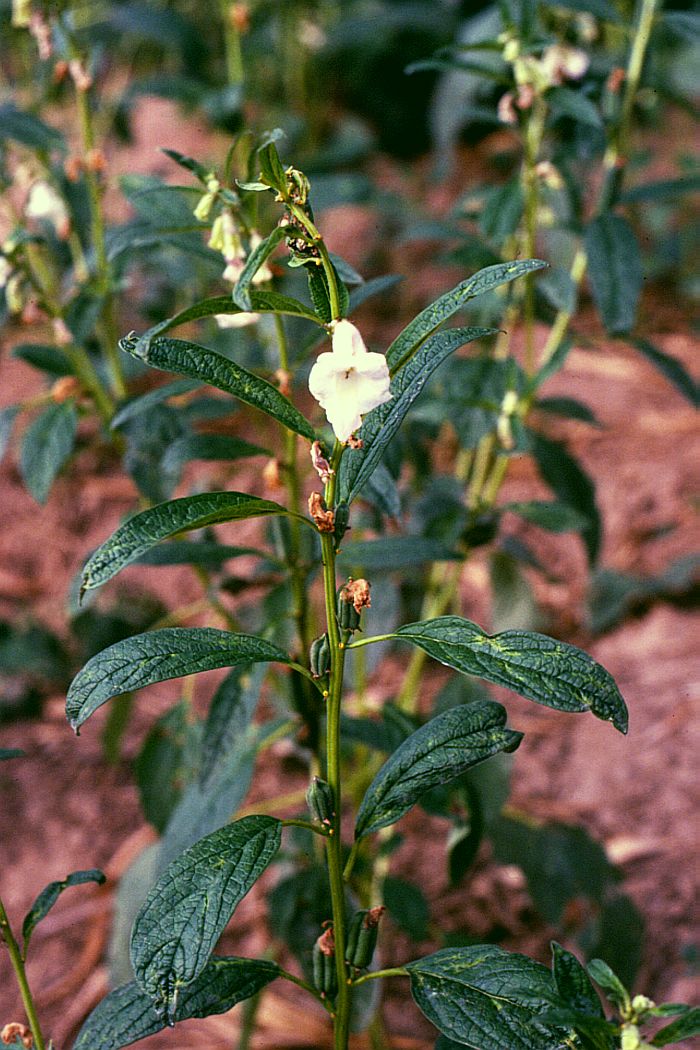
General Description

Numerous wild relatives occur in Africa and a smaller number in India. It is widely naturalized in tropical regions around the world and is cultivated for its edible seeds, which grow in pods. World production in 2024 was 6. 7 million tonnes, with India, Myanmar, and Sudan as the largest producers.

ⓘ Information
Description adapted from Wikipedia (CC BY-SA 4.0).

Family Context

The Pedaliaceae family is widely distributed. Notable medicinal members include:

Geographic Distribution

Sesame has been recorded in 10 countries and territories worldwide, including Afghanistan, Australia, Bulgaria, China, India, and others.

Traditional Uses

Sesame has been traditionally used for digestive health, respiratory conditions, and skin and wound care, among other applications.

Digestive health.

  • Laxative
  • Diarrhea
  • Dysentery

For digestive complaints, the herb is typically prepared as a tea or decoction taken before meals. The bitter compounds stimulate digestive secretions and improve nutrient absorption. Some traditions use the powdered root or leaves in small doses as a stomachic tonic.

Respiratory conditions.

  • Catarrh
  • Cold
  • Cough

Respiratory conditions are addressed through steam inhalation of the herb’s vapors or internal use as a warm tea. The hot infusion acts as an expectorant, helping to loosen phlegm and clear congestion. Some traditions combine it with honey for coughs.

Skin and wound care.

  • Skin
  • Burn
  • Eruption

For skin conditions, the fresh or dried plant is applied topically as a poultice, wash, or compress. A strong decoction can be used to clean wounds and sores. The antimicrobial properties help prevent infection while promoting tissue repair.

Active Compounds

Phytochemical research has identified 30 compounds in this species, including a diverse array of phytochemical classes (see the Complete Chemical Inventory below for the full list).

The identified compounds include the following categories:

  • Flavonoid: antioxidant compounds that protect cells from oxidative damage
  • Phenolic: antioxidant compounds that neutralize free radicals
  • Sterol: cholesterol-like compounds with anti-inflammatory properties
ⓘ Information
Information on this page is compiled from Dr. Duke’s Phytochemical and Ethnobotanical Databases (USDA ARS), a public domain resource. Consult a healthcare professional before using any herbal preparation.
⚠ Caution
Traditional records: This plant has documented uses including Abortifacient. Self-medication with herbs carries risks including allergic reactions, drug interactions, and toxicity. Only use under the supervision of a qualified healthcare professional.

Distribution and Conservation

Reported distribution: Afghanistan, Australia, Bulgaria, China, India, Mexico, Saudi Arabia, Sudan, Turkey, Uzbekistan.

Complete Use Records

CategoryCultural Context
EmollientChina, Elsewhere, Haiti, Iraq, Turkey
EmmenagogueElsewhere, Haiti, Johore, Turkey
LactogogueHaiti, Mexico, Turkey, Venezuela
LaxativeChina, Elsewhere, Mexico, Turkey
TonicChina, Elsewhere, Japan*, Malaya
SkinChina, Elsewhere, Mexico
AphrodisiacDominican Republic, Elsewhere
CancerChina, Germany
CatarrhElsewhere, Venezuela
DemulcentElsewhere, Turkey
DiureticElsewhere, Turkey
KidneyChina, Elsewhere
LaborChina, Malaya
OphthalmiaElsewhere, Haiti
PediculicideAfrica, Elsewhere
PilesChina, Kurdistan
RheumatismChina, Malaya
AbortifacientDominican Republic, Turkey
AbortiveMalaya
Ache(Ear)Ethiopia
AlopeciaElsewhere
AperientElsewhere
BurnHaiti
ColdDominican Republic
CoughVenezuela
DebilityChina
DiarrheaChina
DysenteryTurkey
DysmenorrheaChina
EruptionMexico

Complete Chemical Inventory

CompoundFormulaMW
(+)-ASARININC₂₀H₁₈O₆354.4 Da
(+)-EPISESAMINC₂₀H₁₈O₆354.4 Da
(+)-EPISESAMINONEC₂₀H₁₈O₇370.4 Da
(+)-KOBUSINC₂₁H₂₂O₆370.4 Da
(+)-PINORESINOLC₂₀H₂₂O₆358.4 Da
(+)-PINORESINOL-4'-O-BETA-D-GLUCOPYRANOSYL(1,2)-O-(BETA-D-GLUCOPYRANOSYL(1,6)-BETA-D-GLUCOPYRANOSIDE
(+)-PIPERITOLC₂₀H₂₀O₆356.4 Da
(+)-SESAMINC₂₀H₁₈O₆354.4 Da
(+)-SESAMOLINC₂₀H₁₈O₇370.4 Da
(+)-SESAMOLINOLC₂₀H₂₀O₇372.4 Da
2-(4-METHYL-PENT-3-ENYL)-ANTHRAQUINONE
2-(4-METHYL-PENTA-1,3-DIENYL)-ANTHRAQUINONE
2-ACETYL-3-METHYL-FURAN
2-ACETYL-FURANC₆H₆O₂110.11 Da
2-ACETYL-PYRROLEC₆H₇NO109.13 Da
2-HEPTANALC₇H₁₄O114.19 Da
2-ISOPROPENYL-NAPHTHAZARIN-2,3-EPOXIDE
2-METHOXY-4-ETHYLPHENOLC₉H₁₂O₂152.19 Da
2-METHOXY-4-VINYL-PHENOLC₉H₁₀O₂150.17 Da
24-METHYLENE-CYCLOARTANOLC₃₁H₅₂O440.7 Da
24-METHYLENE-CYCLOARTENOL
3-BETA-(CIS-P-COUMAROYL-OXY)-2-ALPHA-23-DIHYDROXYURS-12-EN-28-OIC-ACID
3-BETA-(TRANS-P-COUMAROYL-OXY)-2-ALPHA-23-DIHYDROXYURS-12-EN-28-OIC-ACID
5-DEHYDRO-AVENASTEROLC₂₉H₄₆O410.7 Da
5-METHYLFURANC₅H₆O82.10 Da
7-DEHYDRO-AVENASTEROL
ACETYL-PYRAZINEC₆H₆N₂O122.12 Da
AGMATINEC₅H₁₄N₄130.19 Da
ALANINEC₃H₇NO₂89.09 Da
ALPHA-AMYRINC₃₀H₅₀O426.7 Da

Data from PubChem (NIH/NLM, public domain).


References & Further Reading

External Research Links

Data Sources