Botanical Overview
Sicklepod (Senna obtusifolia) is a species in the Fabaceae family. The legume family (Fabaceae) includes trees, shrubs, and herbs that produce pods (legumes) and form nitrogen-fixing root nodules through symbiosis with bacteria. The flowers are typically pea-shaped with five petals. This large family provides food staples, timber, and numerous medicinal species. Although comprehensive ethnobotanical records are limited, phytochemical studies have identified 30 compounds in this species, suggesting potential medicinal value.
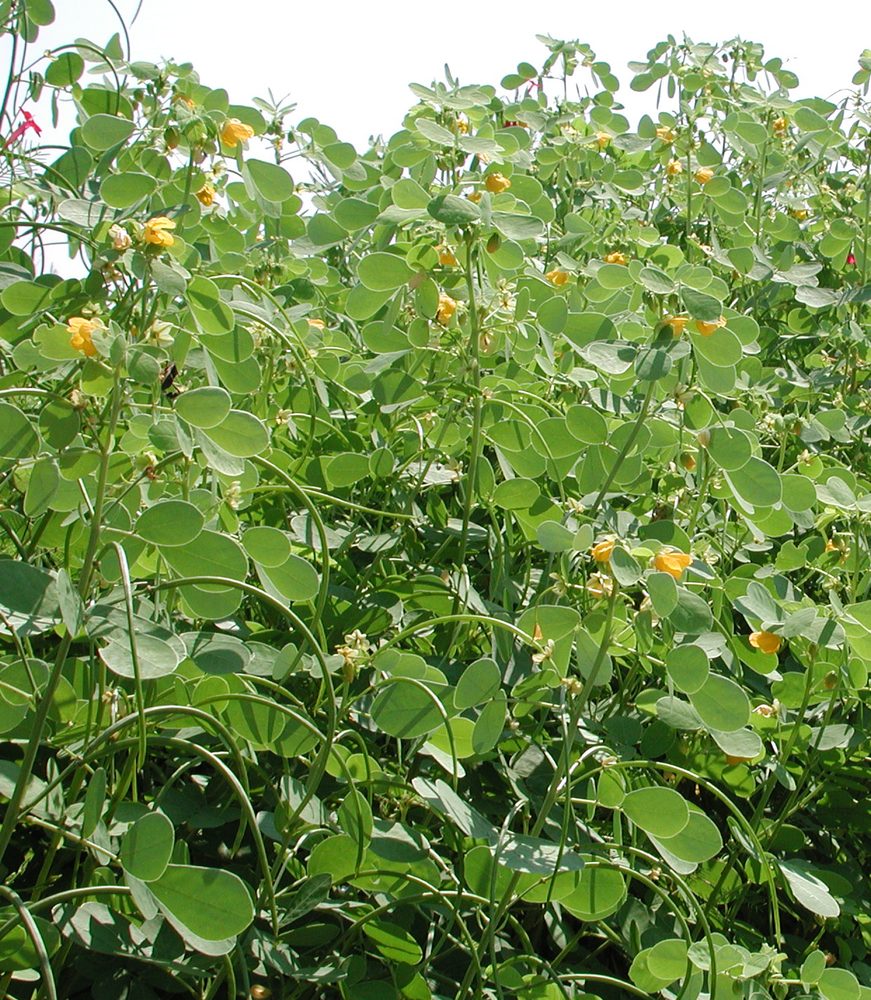
General Description
It grows wild in North, Central, and South America, Asia, Africa, and Oceania, and is considered a particularly problematic weed in many places. It has a long-standing history of confusion with Senna tora and that taxon in many sources actually refers to the present species. In the traditional medicine of Eastern Asia, the seeds are called jué míng zǐ in Chinese (simplified: 决明子; traditional: 決明子), gyeolmyeongja in Korean, and ketsumeishi in Japanese. The green leaves of the plant are fermented to produce a high-protein food product called kawal which is eaten by many people in Sudan as a meat substitute. Its leaves, seeds, and root are also used in folk medicine, primarily in Asia. It is believed to possess a laxative effect, as well as to be beneficial for the eyes. As a folk remedy, the seeds are often roasted, then boiled in water to produce sicklepod tea. The plant’s seeds are a commercial source of cassia gum, a food additive usually used as a thickener and named for the Chinese Senna’s former placement in the genus Cassia. Roasted and ground, the seeds have also been used as a substitute for coffee. In vitro cultures of S. obtusifolia such as hairy roots may be a source of valuable secondary metabolites with medical applications.
Family Context
The Fabaceae family is large and globally distributed. Notable medicinal members include:
- Soybean — 76 documented uses
- Crab’s Eye — 73 documented uses
- Tamarind — 59 documented uses
- Common Indigo — 51 documented uses
Geographic Distribution
Sicklepod has been recorded in 10 countries and territories worldwide, including Australia, Burkina Faso, Benin, Brazil, Cameroon, and others.
Active Compounds
Phytochemical research has identified 30 compounds in this species, including a diverse array of phytochemical classes (see the Complete Chemical Inventory below for the full list).
The identified compounds include the following categories:
- Flavonoid: antioxidant compounds that protect cells from oxidative damage
- Sterol: cholesterol-like compounds with anti-inflammatory properties
- Alkaloid: nitrogenous compounds with diverse pharmacological activities
Research Status
Although this species has documented phytochemical constituents, its ethnobotanical and clinical documentation remains incomplete. Additional phytochemical investigation could identify novel bioactive compounds in this plant.