Botanical Overview
Marsh Skullcap (Scutellaria galericulata) belongs to the Lamiaceae family. While not among the most extensively documented medicinal plants, this species has recorded uses that warrant attention from researchers and practitioners. The mint family (Lamiaceae) includes aromatic herbs and shrubs with square stems, opposite leaves, and two-lipped flowers. Many species produce essential oils in glandular trichomes on their leaves and stems. This family is one of the most important sources of culinary and medicinal herbs worldwide.
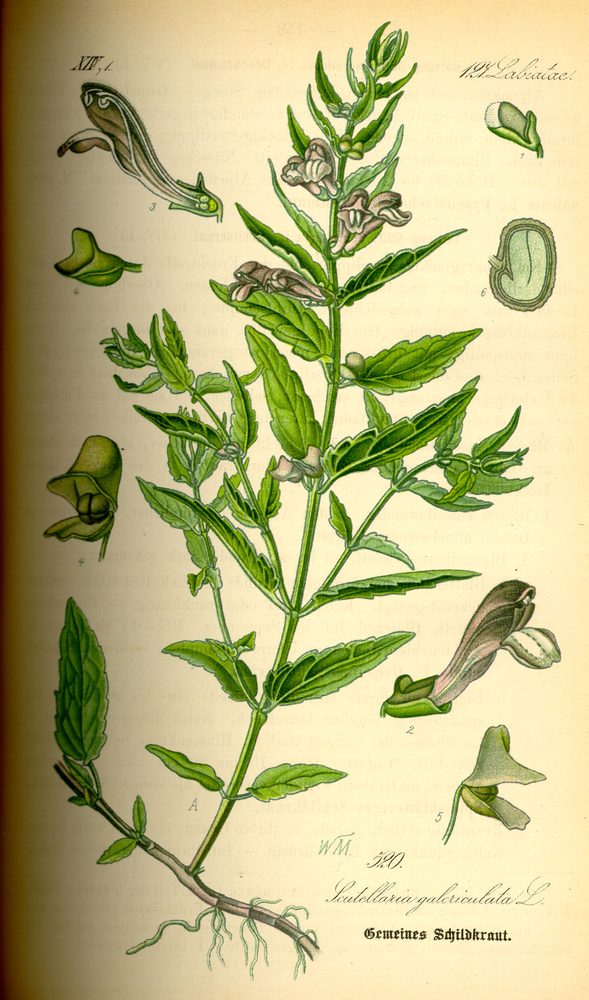
General Description
It is a member of the mint family. The form is upright and is usually 20-45 centimeters in height, sometimes reaching up to 80 cm. It is a wetland-loving species and grows along fens and shorelines. The blue flowers are 1 to 2 centimeters long. The flowers are in pairs and are all on the same side of the stem. The flowers do not appear at the top of the stem. The plant is native to many parts of the world and, as such, is known by a variety of names. The Latin galericulata means “hooded”, relating to the length of the flower’s tube being much longer than the calyx. The variation epilobiifolia translates as leaves like willow-herb, and refers to the slightly serrated long thin leaves which look similar to those of the genus Epilobium.
Family Context
The Lamiaceae family is large and widely distributed. Notable medicinal members include:
- Basil — 86 documented uses
- Rosemary — 60 documented uses
- Agbo — 54 documented uses
- Sage — 49 documented uses
Geographic Distribution
Marsh Skullcap has been recorded in 10 countries and territories worldwide, including Belgium, Germany, Denmark, Finland, France, and others.
Traditional Uses
Marsh Skullcap has been traditionally used for digestive health, skin and wound care, and pain and inflammation, among other applications.
Digestive health.
- Laxative
- Stomachic
For digestive complaints, the herb is typically prepared as a tea or decoction taken before meals. The bitter compounds stimulate digestive secretions and improve nutrient absorption. Some traditions use the powdered root or leaves in small doses as a stomachic tonic.
Skin and wound care.
- Sore
For skin conditions, the fresh or dried plant is applied topically as a poultice, wash, or compress. A strong decoction can be used to clean wounds and sores. The antimicrobial properties help prevent infection while promoting tissue repair.
Pain and inflammation.
- Anodyne
For pain and inflammation, preparations are applied both topically as compresses and taken internally. A warm poultice draws blood to the area and promotes healing, while internal preparations address systemic inflammation.
Active Compounds
Phytochemical research has identified 21 compounds in this species, including a diverse array of phytochemical classes (see the Complete Chemical Inventory below for the full list).
The identified compounds include the following categories:
- Flavonoid: antioxidant compounds that protect cells from oxidative damage
- Tannin: astringent compounds that tighten tissues and resist infection