Botanical Overview
Scopolia (Scopolia carniolica) belongs to the Solanaceae family. While not among the most extensively documented medicinal plants, this species has recorded uses that warrant attention from researchers and practitioners. The nightshade family (Solanaceae) includes herbs, shrubs, and small trees with alternate leaves and star-shaped or trumpet-shaped flowers. The fruits are typically berries or capsules. Many species produce potent alkaloids including tropanes, solanines, and nicotine, making this family both medicinally valuable and potentially toxic.
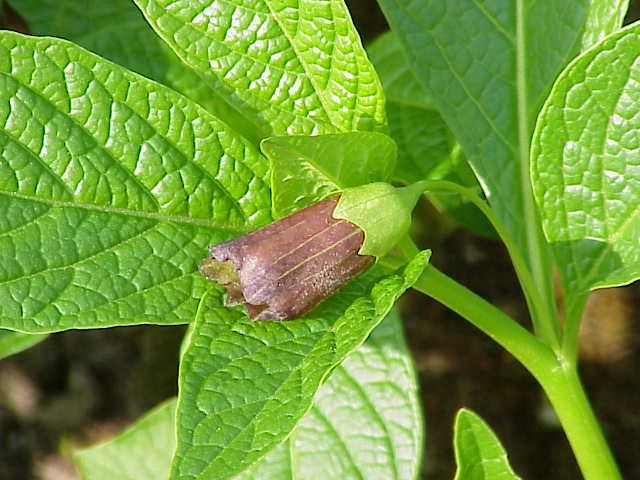
General Description
It bears dark brownish-violet nodding flowers on long, slender pedicels. It grows to 60 centimetres (24 in) in height. Its toxicity derives from its high levels of tropane alkaloids, particularly atropine. The concentration of atropine is highest in the roots. Scopolia carniolica grows on wet soils in beech forests of Southeastern Europe from lowlands to the mountainous zones, being native to a region stretching from the eastern Alps to the eastern Carpathians and also naturalised farther east in southwestern Russia. The rare form Scopolia carniolica f. hladnikiana (which differs from the common form in having a corolla that is greenish yellow, both inside and out) is native to Slovenia. Scopolia carniolica was first described by the botanist Carl Linnaeus and named in honour of the physician Giovanni Antonio Scopoli as Hyoscyamus scopolia. Nikolaus Joseph von Jacquin classified it to the genus Scopolia. The specific name carniolica signifies ‘of Carniola’, a historical region that comprised parts of modern-day Slovenia (see also Duchy of Carniola and March of Carniola). Scopolia carniolica is the symbol of the Slovene Society of Anaesthesiology and Intensive Care Medicine. The plant is a source of scopolamine, which was used as an anesthetic in the past. It is native to Austria, the Baltic States, Czechoslovakia, Hungary, Italy, North Caucasus, Poland, Romania, Transcaucasus, Ukraine, Yugoslavia.
Family Context
The Solanaceae family is widely distributed worldwide. Notable medicinal members include:
- Black Nightshade — 100 documented uses
- Tobacco — 80 documented uses
- Jimsonweed — 66 documented uses
- Hindu Datura — 65 documented uses
Geographic Distribution
Scopolia has been recorded in 10 countries and territories worldwide, including Croatia, Hungary, Norway, Poland, Russia, and others.
Traditional Uses
Scopolia has been traditionally used for urinary tract health, pain and inflammation, and nervous system disorders.
Urinary tract health.
- Diuretic
Urinary tract applications typically involve drinking the herb as a mild tea, which increases urine production and helps flush the urinary system. It may be combined with other demulcent herbs to soothe irritated tissues.
Pain and inflammation.
- Anodyne
For pain and inflammation, preparations are applied both topically as compresses and taken internally. A warm poultice draws blood to the area and promotes healing, while internal preparations address systemic inflammation.
Nervous system disorders.
- Narcotic
- Sedative
Nervous system support involves taking the herb as a warm tea, often in the evening or before bed. The calming compounds interact with neurotransmitter systems to promote relaxation and restful sleep.
Active Compounds
Phytochemical research has identified 19 compounds in this species, including a diverse array of phytochemical classes (see the Complete Chemical Inventory below for the full list).
The identified compounds include the following categories:
- Alkaloid: nitrogenous compounds with diverse pharmacological activities