Botanical Overview
Scoparia dulcis belongs to the Scrophulariaceae family. Traditional healers across continents have independently recognized the medicinal value of this species, leading to one of the most extensive ethnobotanical records available. The figwort family (Scrophulariaceae) includes herbs and shrubs with alternate or opposite leaves and two-lipped, often showy flowers. The fruits are typically capsules with many small seeds. Many species contain iridoid glycosides and cardiac glycosides with medicinal properties.
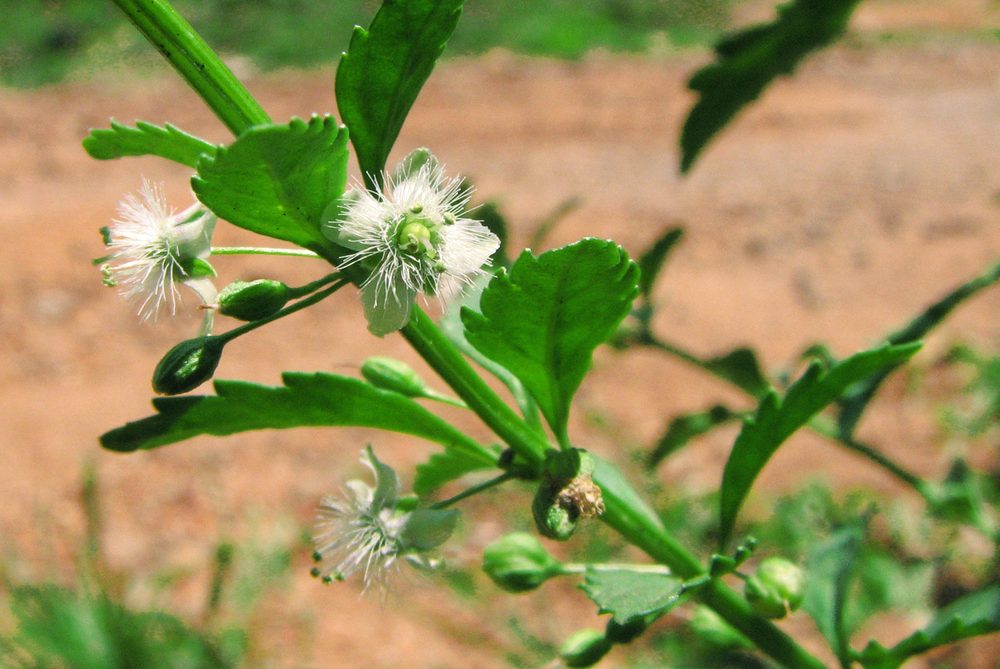
General Description
Common names include licorice weed, goatweed, scoparia-weed and sweet-broom in English, tapeiçava, tapixaba, and vassourinha in Portuguese, escobillo in Spanish, and tipychä kuratu in Guarani. It is native to the Neotropics but it can be found throughout the tropical and subtropical world. Although S. dulcis is considered a weed in many parts of India and Bangladesh, its use in traditional medicine has led to overexploitation. The plant is also found as a weed in American citrus groves.
Family Context
The Scrophulariaceae family is widely distributed. Notable medicinal members include:
- Chinese Foxglove — 53 documented uses
- Mullein — 50 documented uses
- Common Speedwell — 24 documented uses
- Purple Foxglove — 19 documented uses
Geographic Distribution
Scoparia dulcis has been recorded in 10 countries and territories worldwide, including Australia, Brazil, Colombia, Costa Rica, India, and others.
Traditional Uses
Scoparia dulcis has been traditionally used for digestive health, respiratory conditions, and skin and wound care, among other applications.
Digestive health.
- Diarrhea
- Dysentery
For digestive complaints, the herb is typically prepared as a tea or decoction taken before meals. The bitter compounds stimulate digestive secretions and improve nutrient absorption. Some traditions use the powdered root or leaves in small doses as a stomachic tonic.
Respiratory conditions.
- Cough
- Expectorant
Respiratory conditions are addressed through steam inhalation of the herb’s vapors or internal use as a warm tea. The hot infusion acts as an expectorant, helping to loosen phlegm and clear congestion. Some traditions combine it with honey for coughs.
Skin and wound care.
- Sore
- Eczema
For skin conditions, the fresh or dried plant is applied topically as a poultice, wash, or compress. A strong decoction can be used to clean wounds and sores. The antimicrobial properties help prevent infection while promoting tissue repair.
Active Compounds
Phytochemical research has identified 1 compound in this species: betulinic-acid.