Botanical Overview
Sarracenia psittacina is a species in the Sarraceniaceae family. This species belongs to the Sarraceniaceae family, a group of flowering plants. Phytochemical data for this species are limited at present.
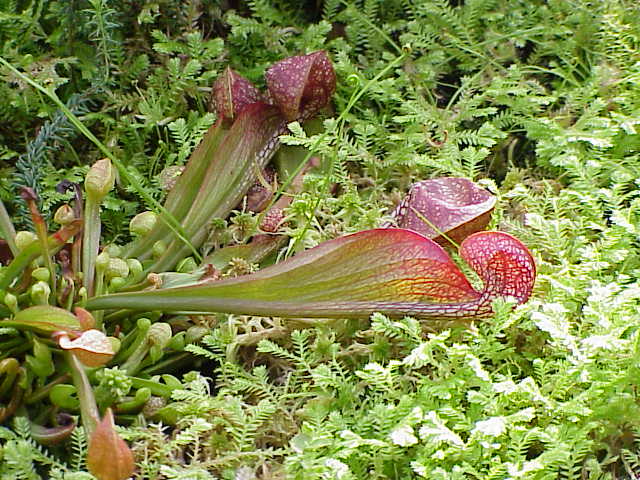
General Description
Like all the Sarracenia, it is native to North America, in the Southeastern United States. Sarracenia psittacina employs the same trapping mechanism as Darlingtonia californica, using a small entrance in the pitcher mouth, which prey goes through in search of more nectar that was produced by the plant on the rim of the pitcher mouth. The prey is then confused by light shining through what appear to be false exits (or “windows”) and crawls toward the brighter area down into the pitcher. Criss-crossed downward-facing hairs densely line the interior of the pitcher, forcing the prey further into the pitcher to an area where digestive enzymes such as proteases are prevalent in the liquid. This species is frequently submerged in its native habitat and will capture water arthropods and tadpoles, for example, while submerged.
Family Context
The Sarraceniaceae family is widely distributed. Notable medicinal members include:
- Sarracenia purpurea — 7 documented uses
- Sarracenia flava — 5 documented uses
Geographic Distribution
Sarracenia psittacina has been recorded in 7 countries and territories worldwide, including Belgium, United Kingdom, Georgia, Sweden, Ukraine, and others.
Active Compounds
Phytochemical research has identified 4 compounds in this species, including a diverse array of phytochemical classes (see the Complete Chemical Inventory below for the full list).
The identified compounds include the following categories:
- Flavonoid: antioxidant compounds that protect cells from oxidative damage
Research Status
Although this species has documented phytochemical constituents, its ethnobotanical and clinical documentation remains incomplete. Additional phytochemical investigation could identify novel bioactive compounds in this plant.