Botanical Overview
Sarracenia oreophila is a species in the Sarraceniaceae family. This species belongs to the Sarraceniaceae family, a group of flowering plants. Phytochemical data for this species are limited at present.
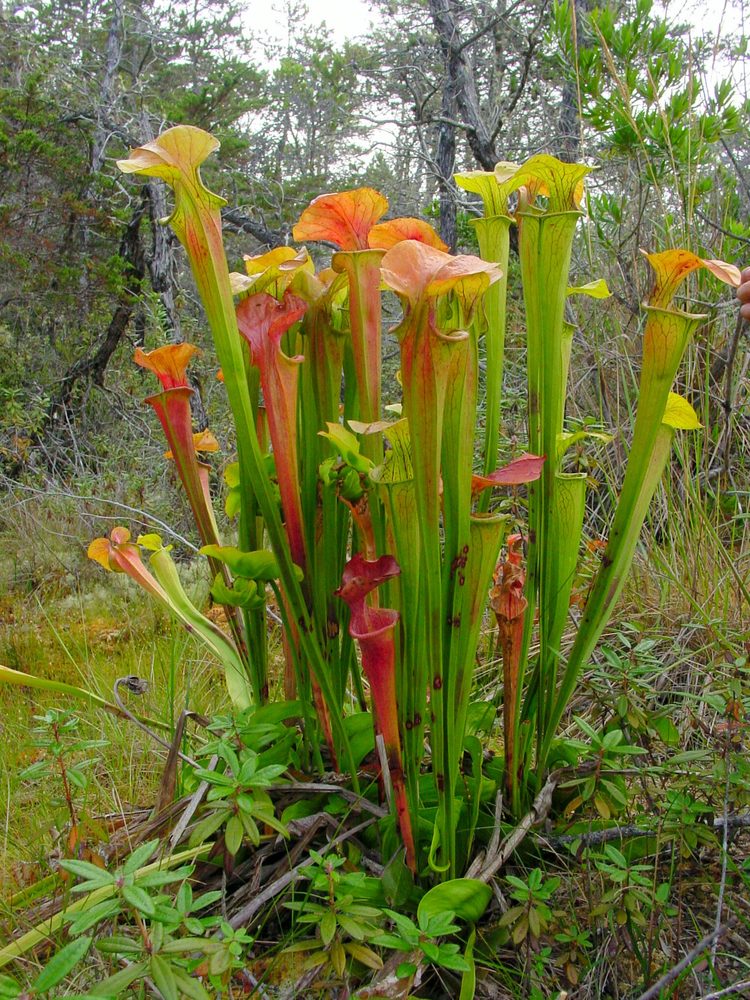
General Description
It has highly modified leaves in the form of pitchers that act as pitfall traps for prey. The narrow pitcher leaves are tapered tubes that rise up to 75 centimetres (30 in) from the ground, with a mouth 6 to 10 centimetres (2. 4 to 3. 9 in) in circumference Like all the Sarracenia, it is native to North America. Sarracenia oreophila is the most endangered of all Sarracenia species, its range limited to a handful of sites in northern Alabama, North Carolina, Georgia, and—historically—Tennessee.
Family Context
The Sarraceniaceae family is widely distributed. Notable medicinal members include:
- Sarracenia purpurea — 7 documented uses
- Sarracenia flava — 5 documented uses
Geographic Distribution
Sarracenia oreophila has been recorded in Belgium, India, and United States.
Active Compounds
Phytochemical research has identified 2 compounds in this species: foeniculin, hyperoside.
The identified compounds include the following categories:
- Flavonoid: antioxidant compounds that protect cells from oxidative damage
Research Status
Although this species has documented phytochemical constituents, its ethnobotanical and clinical documentation remains incomplete. Systematic pharmacological studies are needed to validate the traditional uses attributed to this species.