Botanical Overview
Small Burnet (Sanguisorba minor) belongs to the Rosaceae family. Limited but reliable traditional records indicate this plant has recognized medicinal applications in one or more healing traditions. The rose family (Rosaceae) includes trees, shrubs, and herbs with five-petaled flowers and numerous stamens. Many species produce edible fruits such as apples, pears, cherries, and berries. The family includes both ornamental roses and many species with astringent and medicinal properties.
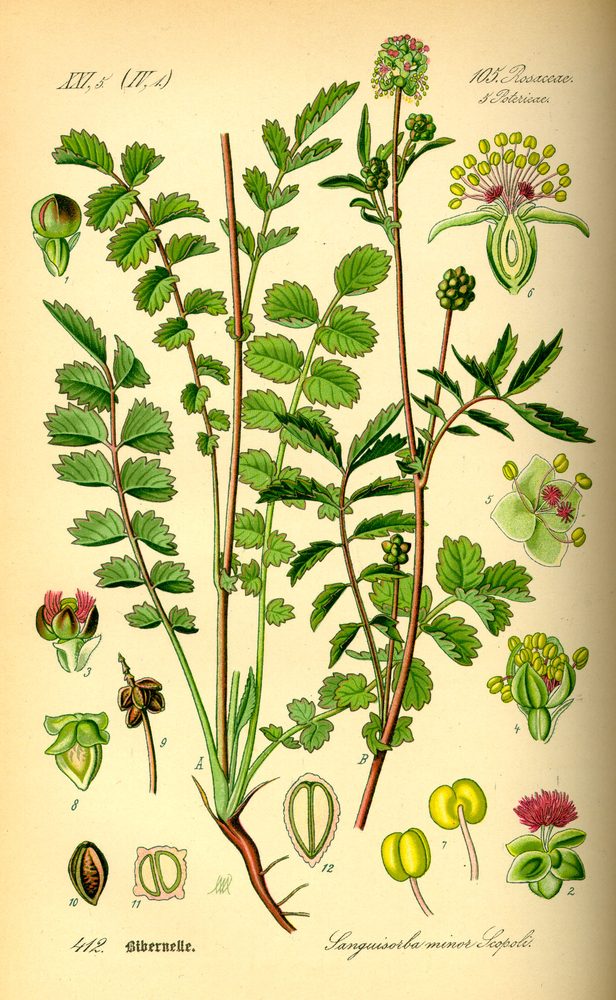
General Description
It has ferny, toothed-leaf foliage; the unusual crimson, spherical flower clusters rise well above the leaves on thin stems. It generally grows to 25–55 cm tall. The large, long, taproots store water, making it drought-tolerant.
Family Context
The Rosaceae family is widely distributed in temperate regions. Notable medicinal members include:
- Peach — 51 documented uses
- Apricot — 37 documented uses
- Almond — 34 documented uses
- Greater Burnet — 29 documented uses
Geographic Distribution
Small Burnet has been recorded in 10 countries and territories worldwide, including Austria, Switzerland, Czech Republic, Germany, Spain, and others.
Traditional Uses
Small Burnet has been traditionally used for immune system support.
Immune system support.
- Cancer
Immune support involves taking the herb as a decoction or tincture over extended periods. The active compounds stimulate immune cell activity and provide antimicrobial protection.
Active Compounds
Phytochemical research has identified 15 compounds in this species, including a diverse array of phytochemical classes (see the Complete Chemical Inventory below for the full list).
The identified compounds include the following categories:
- Sterol: cholesterol-like compounds with anti-inflammatory properties
- Tannin: astringent compounds that tighten tissues and resist infection