American Elder

Also known as: Elderberry, American Elderberry, Sweet Elder

Botanical Overview

American Elder (Sambucus canadensis) is a flowering plant in the Adoxaceae family. This plant has earned a place in traditional medicine through its consistent therapeutic benefits, recorded across multiple cultures. This species belongs to the Adoxaceae family, a group of flowering plants.
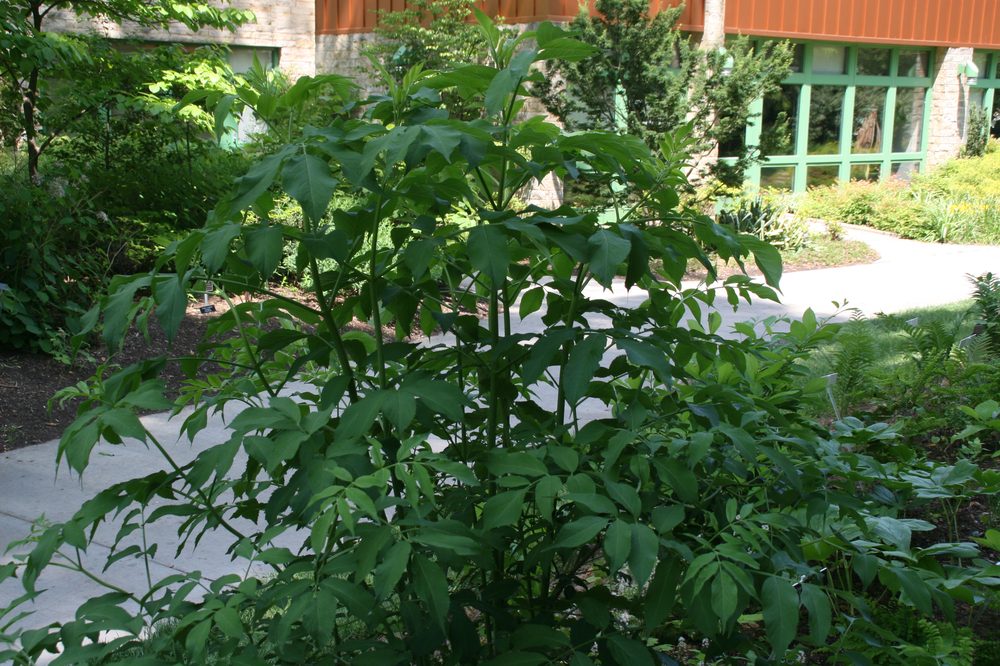
General Description

Although many parts of the plant are toxic, including the seeds, the flower and ripe berries are edible—most safely after cooking.

ⓘ Information
Description adapted from Wikipedia (CC BY-SA 4.0).

Family Context

The Adoxaceae family is widely distributed. Notable medicinal members include:

Geographic Distribution

American Elder has been recorded in 10 countries and territories worldwide, including Belgium, Brazil, Canada, Colombia, Costa Rica, and others.

Traditional Uses

American Elder has been traditionally used for digestive health, respiratory conditions, and skin and wound care, among other applications.

Digestive health.

  • Laxative
  • Carminative

For digestive complaints, the herb is typically prepared as a tea or decoction taken before meals. The bitter compounds stimulate digestive secretions and improve nutrient absorption. Some traditions use the powdered root or leaves in small doses as a stomachic tonic.

Respiratory conditions.

  • Bronchitis

Respiratory conditions are addressed through steam inhalation of the herb’s vapors or internal use as a warm tea. The hot infusion acts as an expectorant, helping to loosen phlegm and clear congestion. Some traditions combine it with honey for coughs.

Skin and wound care.

  • Psoriasis

For skin conditions, the fresh or dried plant is applied topically as a poultice, wash, or compress. A strong decoction can be used to clean wounds and sores. The antimicrobial properties help prevent infection while promoting tissue repair.

Active Compounds

Phytochemical research has identified 30 compounds in this species, including a diverse array of phytochemical classes (see the Complete Chemical Inventory below for the full list).

The identified compounds include the following categories:

  • Flavonoid: antioxidant compounds that protect cells from oxidative damage
  • Sterol: cholesterol-like compounds with anti-inflammatory properties
  • Alkaloid: nitrogenous compounds with diverse pharmacological activities
ⓘ Information
Information on this page is compiled from Dr. Duke’s Phytochemical and Ethnobotanical Databases (USDA ARS), a public domain resource. Consult a healthcare professional before using any herbal preparation.
⚠ Caution
Traditional records: This plant has documented uses including Emetic, Poison. Self-medication with herbs carries risks including allergic reactions, drug interactions, and toxicity. Only use under the supervision of a qualified healthcare professional.

Distribution and Conservation

Reported distribution: Belgium, Brazil, Canada, Colombia, Costa Rica, France, United Kingdom, Mexico, United States, Unknown.

Complete Use Records

CategoryCultural Context
DiaphoreticElsewhere, US, USA
DiureticElsewhere, Turkey, US
PoulticeUS, US(Amerindian), US(Appalachia)
RheumatismElsewhere, US, USA
SudorificElsewhere, Turkey, USA
AperientElsewhere, USA
DepurativeElsewhere, Turkey
DropsyUS, USA
EmeticElsewhere, Turkey
EpilepsyElsewhere, USA
FeverTurkey, US(Colonial)
LaxativeElsewhere, Turkey
PoisonElsewhere, US
Ache(Tooth)US(Amerindian), US(Appalachia)
Ache(Head)US
AlterativeElsewhere
BronchitisElsewhere
BruiseUS
CancerUS(Penobscot)
CarminativeUS
CatharticUSA
CollyriumUS
CyanogeneticElsewhere
ExcitantUSA
GoutElsewhere
HydragogueUSA
IntoxicantUS(Colonial)
MouthwashElsewhere
NeuralgiaElsewhere
PsoriasisElsewhere

Complete Chemical Inventory

CompoundFormulaMW
ALANINEC₃H₇NO₂89.09 Da
ALPHA-AMYRIN-PALMITATEC₄₆H₈₀O₂665.1 Da
ARACHIDIC-ACIDC₂₀H₄₀O₂312.5 Da
ARGININEC₆H₁₄N₄O₂174.20 Da
ASCORBIC-ACIDC₆H₈O₆176.12 Da
ASH
ASPARTIC-ACIDC₄H₇NO₄133.10 Da
BALANOPHORIN
BALDRIANIC-ACID
BETA-AMYRIN-PALMITATEC₄₆H₈₀O₂665.1 Da
BETA-CAROTENEC₄₀H₅₆536.9 Da
BETA-SITOSTEROLC₂₉H₅₀O414.7 Da
CALCIUMCa40.08 Da
CAMPESTEROLC₂₈H₄₈O400.7 Da
CARBOHYDRATES
CHRYSANTHEMINC₂₁H₂₁ClO₁₁484.8 Da
CYANIDIN-3,5-DI-O-BETA-D-DIGLUCOSIDE-P-COUMARATE
CYANIDIN-3-O-(6-O-CIS-P-COUMAROYL-2-O-BETA-D-XYLOPYRANOSYL)-BETA-D-GLUCOPYRANOSIDE-5-O-BETA-D-GLUCOPYRANOSIDE
CYANIDIN-3-O-(6-O-TRANS-P-COUMAROYL-2-O-BETA-D-XYLOPYRANOSYL)-BETA-D-GLUCOPYRANOSIDE
CYANIDIN-3-O-BETA-D-XYLOGLUCOSIDE-5-GLUCOSIDE
CYANIDIN-3-SAMBUBIOSIDEC₂₆H₂₉ClO₁₅616.9 Da
CYANIDIN-3-SAMBUBIOSIDE-5-GLUCOSIDEC₃₂H₃₉ClO₂₀779.1 Da
CYANIDIN-3-XYLOGLUCOSIDE-5-GLUCOSIDE-P-COUMARATE
CYANINC₂₇H₃₁O₁₆+611.5 Da
CYSTINEC₆H₁₂N₂O₄S₂240.3 Da
FATC₁₆H₃₂O₂256.42 Da
FIBER
GLUTAMIC-ACIDC₅H₉NO₄147.13 Da
GLYCINEC₂H₅NO₂75.07 Da
HISTIDINEC₆H₉N₃O₂155.15 Da

Data from PubChem (NIH/NLM, public domain).


References & Further Reading

External Research Links

Data Sources