Botanical Overview
Salvia mexicana belongs to the Lamiaceae family. While not among the most extensively documented medicinal plants, this species has recorded uses that warrant attention from researchers and practitioners. The mint family (Lamiaceae) includes aromatic herbs and shrubs with square stems, opposite leaves, and two-lipped flowers. Many species produce essential oils in glandular trichomes on their leaves and stems. This family is one of the most important sources of culinary and medicinal herbs worldwide.
General Description
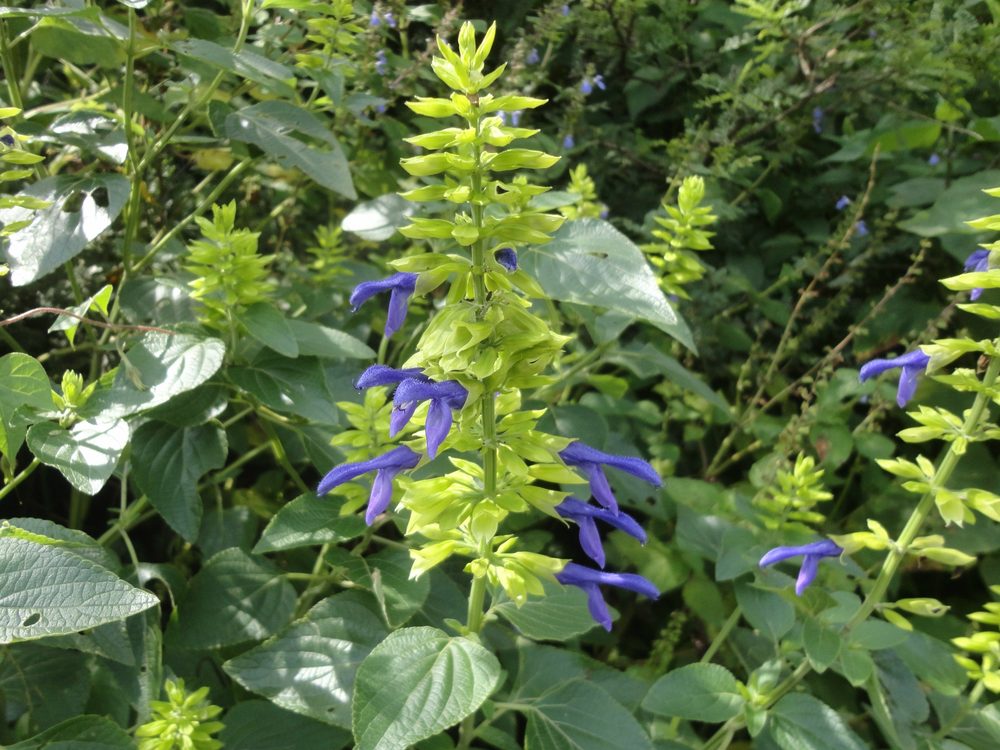
It grows in tropical areas in the south and arid subtropical habitats in the north, often at the edges of forests. Salvia mexicana grows 3 to 9 feet (0. 9 to 2. 7 metres) tall and 3 to 4 feet (0. 9 to 1. 2 metres) wide in cultivation, with leaves ranging from mid-green and glabrous, to gray green with short hairs. The inflorescences also vary, in length and in size of flower. The color of flowers and calyces range from midnight-purple to purple-blue. The flowers bloom in late summer, in whorls that are produced abundantly for several months. The earliest records of Salvia mexicana in horticulture are beginning in the 1970s at several botanical gardens. One popular cultivar is ‘Limelight’ (pictured at right), collected in the state of Querétaro, which has violet-blue flowers with large chartreuse-green calyces. ‘Lollie Jackson’ is a compact cultivar; ‘Ocampo’ is an upright cultivar growing to 7 feet (2 metres) — both are commonly sold in nurseries.
Family Context
The Lamiaceae family is large and widely distributed. Notable medicinal members include:
- Basil — 86 documented uses
- Rosemary — 60 documented uses
- Agbo — 54 documented uses
- Sage — 49 documented uses
Geographic Distribution
Salvia mexicana has been recorded in , and Mexico.
Active Compounds
Phytochemical research has identified 1 compound in this species: betulinic-acid.