Botanical Overview
Seer Sage (Salvia divinorum) belongs to the Lamiaceae family. Limited but reliable traditional records indicate this plant has recognized medicinal applications in one or more healing traditions. The mint family (Lamiaceae) includes aromatic herbs and shrubs with square stems, opposite leaves, and two-lipped flowers. Many species produce essential oils in glandular trichomes on their leaves and stems. This family is one of the most important sources of culinary and medicinal herbs worldwide.
General Description
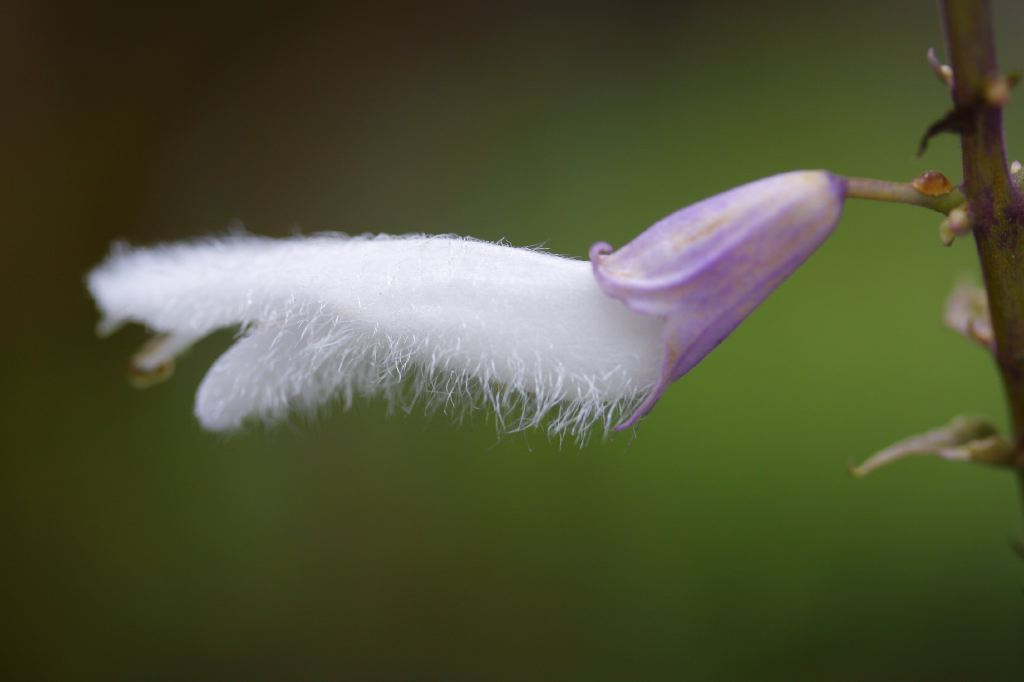
The leaves contain the potent compound salvinorin A and can induce a dissociative state and hallucinations. Mazatec shamans have a long and continuous tradition of religious use of S. divinorum to facilitate visionary states of consciousness during spiritual healing sessions. A media panic in the Western world, especially in the United States c. 2007, centered on reports of video sharing of drug use on the internet, legal teenage use of the drug, as well as a teenage suicide in Delaware, despite it being “unclear” what role the drug played in the incident. S. divinorum is legal in some countries, including the U. S. at the federal level; however over half of U. S. states have passed laws criminalizing it. Its native habitat is cloud forest in the isolated Sierra Mazateca of Oaxaca, Mexico, where it grows in shady, moist locations. The plant grows to over a meter high, has hollow square stems like others in the mint family Lamiaceae, large leaves, and occasional white flowers with violet calyxes. Botanists have not determined whether S. divinorum is a cultigen or a hybrid because native plants reproduce vegetatively and rarely produce viable seed. Because the plant has not been well-studied in high-quality clinical research, little is known about its toxicology, adverse effects, or safety over long-term consumption. Its chief active psychoactive constituent is a structurally unique diterpenoid called salvinorin A, a potent κ-opioid agonist. Although not thoroughly assessed, preliminary research indicates S. divinorum may have low toxicity (high LD50). Its effects are rapid but short-lived.
Family Context
The Lamiaceae family is large and widely distributed. Notable medicinal members include:
- Basil — 86 documented uses
- Rosemary — 60 documented uses
- Agbo — 54 documented uses
- Sage — 49 documented uses
Geographic Distribution
Seer Sage has been recorded in 7 countries and territories worldwide, including Chile, Colombia, Germany, United Kingdom, Mexico, and others.
Active Compounds
Phytochemical research has identified 1 compound in this species: salvinorin.