Botanical Overview
Multiflora Rose (Rosa multiflora) is a flowering plant in the Rosaceae family. The traditional uses of this species reflect its genuine medicinal value, validated by generations of practical experience. The rose family (Rosaceae) includes trees, shrubs, and herbs with five-petaled flowers and numerous stamens. Many species produce edible fruits such as apples, pears, cherries, and berries. The family includes both ornamental roses and many species with astringent and medicinal properties.
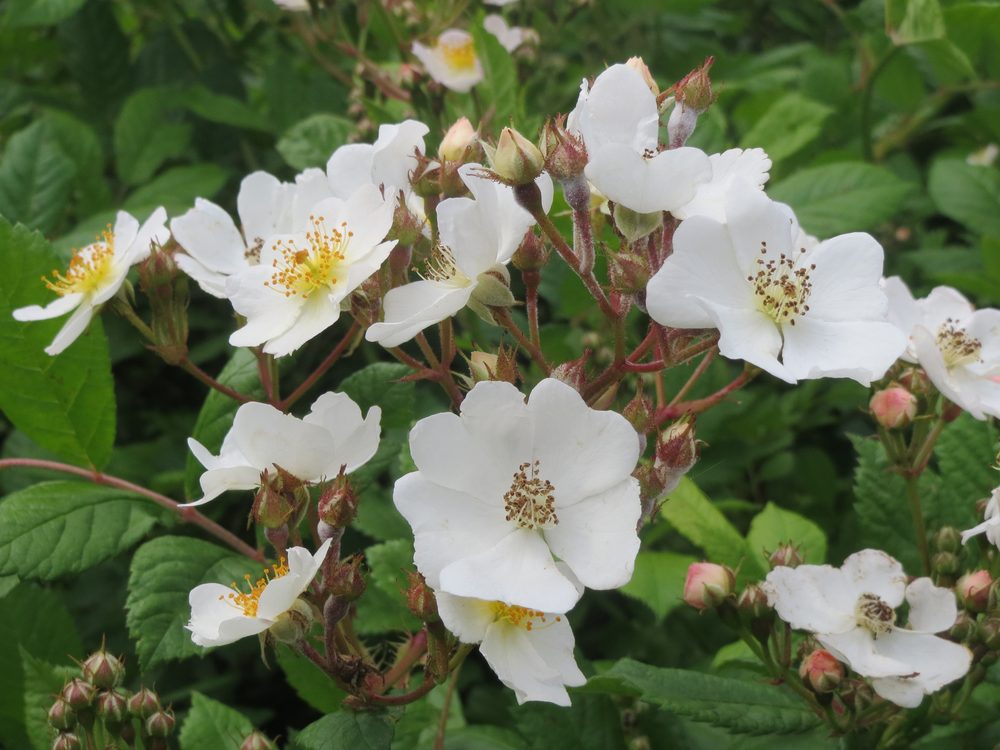
General Description
Rosa polyantha) is a species of rose known commonly as multiflora rose, baby rose, Japanese rose, many-flowered rose, seven-sisters rose, Eijitsu rose and rambler rose. It is native to eastern Asia, in China, Japan, and Korea. It should not be confused with Rosa rugosa, which is also known as “Japanese rose”, or with polyantha roses which are garden cultivars derived from hybrids of R. multiflora. It was introduced to North America, where it is an invasive species, forming extensive, impenetrable stands within forest understories, thickets, borders, and lowlands. It can be identified by its characteristic fringed stipules, which form pairs at the bases of leaf stalks bearing 3-9 leaves.
Family Context
The Rosaceae family is widely distributed in temperate regions. Notable medicinal members include:
- Peach — 51 documented uses
- Apricot — 37 documented uses
- Almond — 34 documented uses
- Greater Burnet — 29 documented uses
Geographic Distribution
Multiflora Rose has been recorded in 10 countries and territories worldwide, including Belgium, Canada, Switzerland, China, Germany, and others.
Traditional Uses
Multiflora Rose has been traditionally used for digestive health, skin and wound care, and urinary tract health, among other applications.
Digestive health.
- Laxative
- Carminative
- Purgative
For digestive complaints, the herb is typically prepared as a tea or decoction taken before meals. The bitter compounds stimulate digestive secretions and improve nutrient absorption. Some traditions use the powdered root or leaves in small doses as a stomachic tonic.
Skin and wound care.
- Sore
- Wound
- Skin
For skin conditions, the fresh or dried plant is applied topically as a poultice, wash, or compress. A strong decoction can be used to clean wounds and sores. The antimicrobial properties help prevent infection while promoting tissue repair.
Urinary tract health.
- Diuretic
Urinary tract applications typically involve drinking the herb as a mild tea, which increases urine production and helps flush the urinary system. It may be combined with other demulcent herbs to soothe irritated tissues.
Active Compounds
Phytochemical research has identified 28 compounds in this species, including a diverse array of phytochemical classes (see the Complete Chemical Inventory below for the full list).
The identified compounds include the following categories:
- Flavonoid: antioxidant compounds that protect cells from oxidative damage
- Phenolic: antioxidant compounds that neutralize free radicals
- Sterol: cholesterol-like compounds with anti-inflammatory properties