Botanical Overview
Black Locust (Robinia pseudoacacia) belongs to the Fabaceae family. While not among the most extensively documented medicinal plants, this species has recorded uses that warrant attention from researchers and practitioners. The legume family (Fabaceae) includes trees, shrubs, and herbs that produce pods (legumes) and form nitrogen-fixing root nodules through symbiosis with bacteria. The flowers are typically pea-shaped with five petals. This large family provides food staples, timber, and numerous medicinal species.
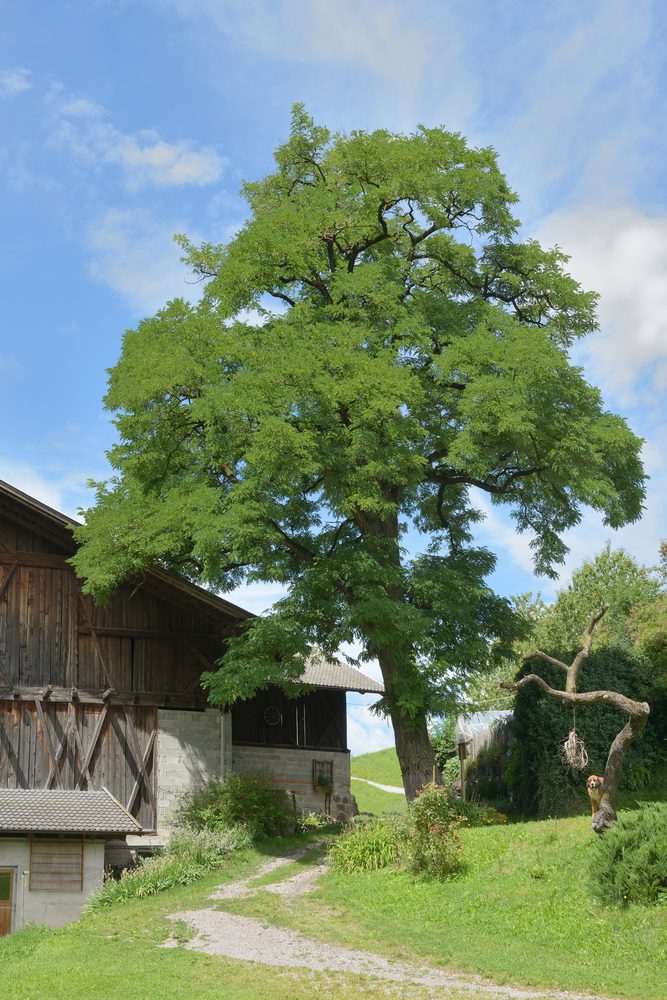
General Description
Another common name is false acacia, a literal translation of the specific name (pseudo [Greek ψευδο-] meaning ‘fake’ or ‘false’ and acacia referring to the genus of plants with the same name). Although fossilized traces of the genus were found in Europe, the species itself is native to a few small areas of the United States, but has been widely planted and naturalized elsewhere, including temperate North America, Eurasia, and Africa. It is considered an invasive species in some regions.
Family Context
The Fabaceae family is large and globally distributed. Notable medicinal members include:
- Soybean — 76 documented uses
- Crab’s Eye — 73 documented uses
- Tamarind — 59 documented uses
- Common Indigo — 51 documented uses
Geographic Distribution
Black Locust has been recorded in 10 countries and territories worldwide, including Belgium, Switzerland, Germany, Spain, France, and others.
Traditional Uses
Black Locust has been traditionally used for digestive health, urinary tract health, and nervous system disorders, among other applications.
Digestive health.
- Purgative
- Laxative
- Dyspepsia
For digestive complaints, the herb is typically prepared as a tea or decoction taken before meals. The bitter compounds stimulate digestive secretions and improve nutrient absorption. Some traditions use the powdered root or leaves in small doses as a stomachic tonic.
Urinary tract health.
- Diuretic
Urinary tract applications typically involve drinking the herb as a mild tea, which increases urine production and helps flush the urinary system. It may be combined with other demulcent herbs to soothe irritated tissues.
Nervous system disorders.
- Spasm
- Sedative
Nervous system support involves taking the herb as a warm tea, often in the evening or before bed. The calming compounds interact with neurotransmitter systems to promote relaxation and restful sleep.
Active Compounds
Phytochemical research has identified 30 compounds in this species, including a diverse array of phytochemical classes (see the Complete Chemical Inventory below for the full list).
The identified compounds include the following categories:
- Flavonoid: antioxidant compounds that protect cells from oxidative damage
- Sterol: cholesterol-like compounds with anti-inflammatory properties
- Alkaloid: nitrogenous compounds with diverse pharmacological activities