Botanical Overview
Four-Leaf Devilpepper (Rauvolfia tetraphylla) belongs to the Apocynaceae family. While not among the most extensively documented medicinal plants, this species has recorded uses that warrant attention from researchers and practitioners. The dogbane family (Apocynaceae) includes herbs, shrubs, vines, and trees with milky sap containing alkaloids and cardiac glycosides. The flowers are typically five-petaled and often showy with a tubular corolla. Many species in this family are highly toxic but also source of important cardiac medications.
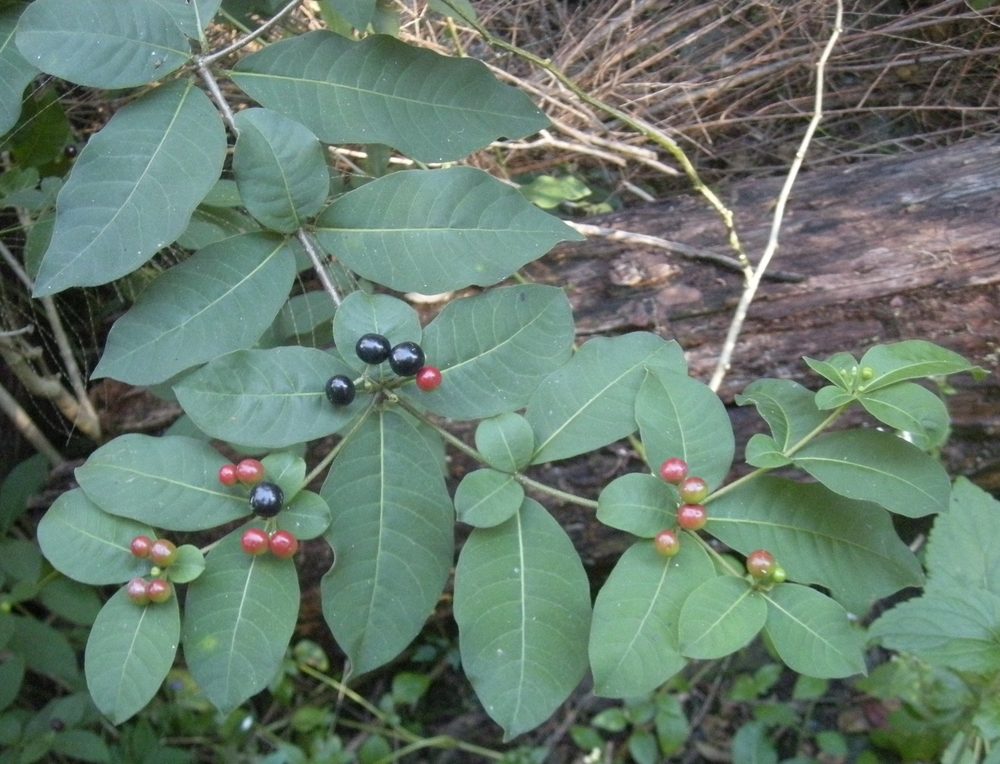
General Description
It is commonly known as the be still tree or devil-pepper. The plant is native to Mexico, Central America, West Indies, and northern South America. It has been cultivated widely as both an ornamental and for use in traditional medicine. It is now naturalized throughout the tropics including Australasia, Indochina, and India. Rauvolfia tetraphylla fruits are called devil-peppers and hold an important position in the Indian traditional system of medicine. The plant has various significances and it is widely used by South Indian tribes. Asima Chatterjee initiated chemical investigation of alkaloids in Rauvolfia tetraphylla then known as Rauwolfia canescens. Indole alkaloids including serpentine, reserpine, serpentinine, and other Rauwolfia alkaloids were identified in phytochemical study.
Family Context
The Apocynaceae family is primarily tropical and subtropical. Notable medicinal members include:
- Alstonia scholaris — 42 documented uses
- Madagascar Periwinkle — 40 documented uses
- Oleander — 30 documented uses
- African Snakeroot — 28 documented uses
Geographic Distribution
Four-Leaf Devilpepper has been recorded in 10 countries and territories worldwide, including Colombia, Costa Rica, Cuba, Ecuador, Guatemala, and others.
Traditional Uses
Four-Leaf Devilpepper has been traditionally used for skin and wound care.
Skin and wound care.
- Wound
- Skin
For skin conditions, the fresh or dried plant is applied topically as a poultice, wash, or compress. A strong decoction can be used to clean wounds and sores. The antimicrobial properties help prevent infection while promoting tissue repair.
Active Compounds
Phytochemical research has identified 30 compounds in this species, including a diverse array of phytochemical classes (see the Complete Chemical Inventory below for the full list).
The identified compounds include the following categories:
- Alkaloid: nitrogenous compounds with diverse pharmacological activities