Botanical Overview
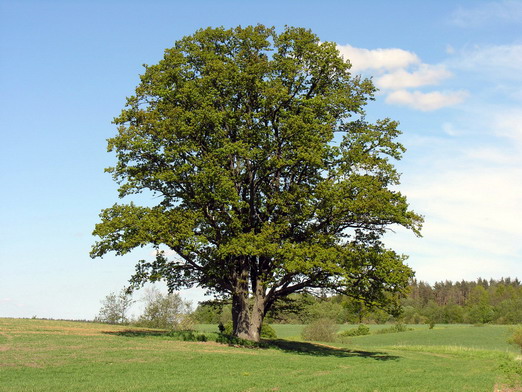
English Oak (Quercus robur) is a flowering plant in the Fagaceae family. Traditional medicine systems have documented several valuable applications for this species, supported by its observed therapeutic effects. The beech family (Fagaceae) includes trees with simple, alternate leaves and inconspicuous flowers arranged in catkins. The fruits are nuts partially enclosed in a woody cupule (acorns in oaks). This family dominates many temperate and subtropical forests and provides tannins with astringent medicinal properties.
General Description
It is a large tree, native to Europe and western Asia, and is widely cultivated in other temperate regions. It grows on soils of near neutral acidity in the lowlands and is notable for its value to natural ecosystems, supporting a diversity of herbivorous insects, acorn eating mammals and birds, and fungi. The common name pedunculate oak refers to the acorns being borne on a peduncule, or stalk English oaks can live to very old ages, often growing for over 500 years, with some specimens believed to be over 1,000 years old They are characterised by thick and heavily fissured bark.
Family Context
The Fagaceae family is widely distributed in the Northern Hemisphere. Notable medicinal members include:
- European Chestnut — 27 documented uses
- White Oak — 15 documented uses
- Black Oak — 9 documented uses
- Aleppo Oak — 7 documented uses
Geographic Distribution
English Oak has been recorded in 10 countries and territories worldwide, including Belgium, Germany, Denmark, France, United Kingdom, and others.
Traditional Uses
English Oak has been traditionally used for fever management, reproductive health, and metabolic and nutritional health, among other applications.
Fever management.
- Fever
Febrifuge preparations are typically administered as hot teas to induce perspiration, which helps the body regulate temperature. The patient is kept warm and encouraged to rest while the herb promotes sweating.
Reproductive health.
- Emmenagogue
In traditional contexts, reproductive health applications typically involve internal preparations such as teas or decoctions. The herb may be taken at specific times during the menstrual cycle.
Metabolic and nutritional health.
- Depurative
- Tonic
Metabolic applications include consuming the plant as a food, fresh juice, or herbal infusion. Regular use supports the body’s natural metabolic processes and nutritional status.
Active Compounds
Phytochemical research has identified 24 compounds in this species, including a diverse array of phytochemical classes (see the Complete Chemical Inventory below for the full list).
The identified compounds include the following categories:
- Phenolic: antioxidant compounds that neutralize free radicals
- Sterol: cholesterol-like compounds with anti-inflammatory properties
- Tannin: astringent compounds that tighten tissues and resist infection