Botanical Overview
Muira Puama (Ptychopetalum olacoides) belongs to the Olacaceae family. While not among the most extensively documented medicinal plants, this species has recorded uses that warrant attention from researchers and practitioners. This species belongs to the Olacaceae family, a group of flowering plants.
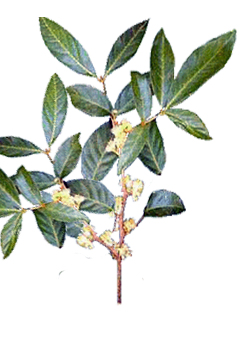
General Description
Indigenous name for the genus include marapuama, muirapuama and mirantã, translating roughly to ‘potency wood’. The species are shrubs or small trees growing to about 14 feet (4. 3 m) in height. Its leaves are short-petioled, up to 3 inches (7. 6 cm) in length and 2 inches (5. 1 cm) in breadth light green on upper surface, dark brown on lower surface. The inflorescences consist of short axillary racemes of four to six flowers each. The root is strongly tough and fibrous, internally light brown with thin bark and broad wood, has a faint odor, and tastes slightly saline and acrid.
Geographic Distribution
Muira Puama has been recorded in 9 countries and territories worldwide, including Brazil, Colombia, French Guiana, Guyana, Peru, and others.
Traditional Uses
Muira Puama has been traditionally used for nervous system disorders, reproductive health, and metabolic and nutritional health.
Nervous system disorders.
- Nervine
Nervous system support involves taking the herb as a warm tea, often in the evening or before bed. The calming compounds interact with neurotransmitter systems to promote relaxation and restful sleep.
Reproductive health.
- Aphrodisiac
In traditional contexts, reproductive health applications typically involve internal preparations such as teas or decoctions. The herb may be taken at specific times during the menstrual cycle.
Metabolic and nutritional health.
- Tonic
Metabolic applications include consuming the plant as a food, fresh juice, or herbal infusion. Regular use supports the body’s natural metabolic processes and nutritional status.
Active Compounds
Phytochemical research has identified 30 compounds in this species, including a diverse array of phytochemical classes (see the Complete Chemical Inventory below for the full list).
The identified compounds include the following categories:
- Coumarin: aromatic compounds with anticoagulant and anti-inflammatory effects
- Sterol: cholesterol-like compounds with anti-inflammatory properties
- Alkaloid: nitrogenous compounds with diverse pharmacological activities