Botanical Overview
Pterospermum suberifolium is a species in the Sterculiaceae family. The sterculia family (Sterculiaceae) includes trees and shrubs with alternate leaves, often with stellate hairs. The flowers have five sepals and petals, and the fruits are typically capsules or follicles. Many species produce mucilaginous substances and have traditional uses as demulcents. Phytochemical data for this species are limited at present.
General Description
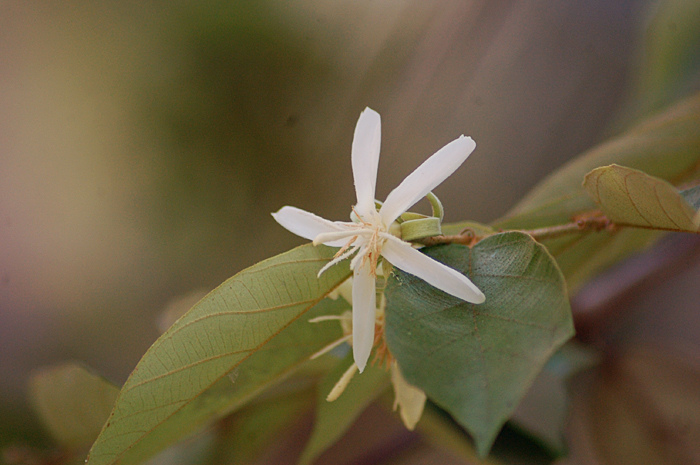
It is found only in India and Sri Lanka. Leaves are irregularly oblong; subcordate, rounded or oblique; apex acuminate; with irregularly serrated margin. Its flowers are yellowish white and fruit is a capsule. A famous nagaraja in Buddhism is named for the fruit of the P. suberifolium, mucalinda.
Family Context
The Sterculiaceae family is widely distributed. Notable medicinal members include:
- Bay Cedar — 30 documented uses
- Cacao — 22 documented uses
- Raichie — 16 documented uses
- Pterospermum acerifolium — 14 documented uses
Geographic Distribution
Pterospermum suberifolium has been recorded in China, India, and Sri Lanka.
Active Compounds
Phytochemical research has identified 1 compound in this species: betulin.
Research Status
Although this species has documented phytochemical constituents, its ethnobotanical and clinical documentation remains incomplete. Systematic pharmacological studies are needed to validate the traditional uses attributed to this species.