Botanical Overview
Pterospermum acerifolium belongs to the Sterculiaceae family. While not among the most extensively documented medicinal plants, this species has recorded uses that warrant attention from researchers and practitioners. The sterculia family (Sterculiaceae) includes trees and shrubs with alternate leaves, often with stellate hairs. The flowers have five sepals and petals, and the fruits are typically capsules or follicles. Many species produce mucilaginous substances and have traditional uses as demulcents.
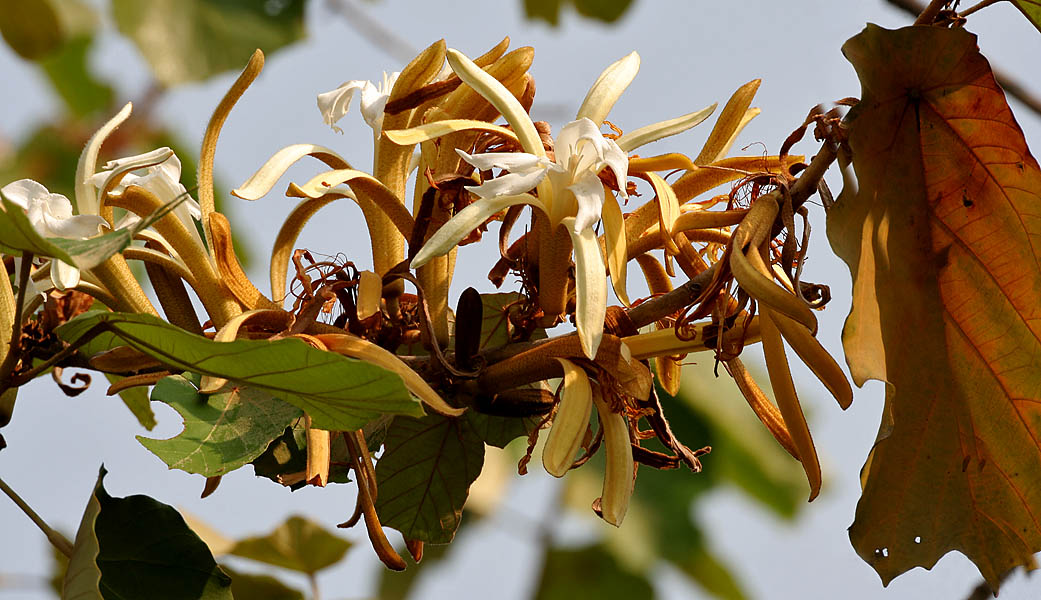
General Description
It is most likely to grow naturally along forested stream banks. The best growing conditions are a seasonally moist then dry climate with access to full sunlight. Pterospermum acerifolium is an angiosperm that is traditionally included in the family Sterculiaceae; however, it is grouped in the expanded family Malvaceae as well. The classification Pterospermum is based on two Greek words, Pteron and Sperma, meaning “winged seed” and the species name acerifolium indicates leaves shaped like a maple’s. There is an array of common names for Pterospermum acerifolium, depending on the region where it is grown. It is commonly referred to as Kanak Champa, Muchakunda or Karnikar Tree within its native range. In the Philippines, it is known as Bayog. Other common names include bayur tree, maple-leafed bayur tree, and dinner plate tree. It is a relatively a large tree, growing up to thirty meters tall. Mostly planted as an ornamental or shade tree, the leaves, flowers, and wood of a bayur tree can serve a variety of functions.
Family Context
The Sterculiaceae family is widely distributed. Notable medicinal members include:
- Bay Cedar — 30 documented uses
- Cacao — 22 documented uses
- Raichie — 16 documented uses
- Abata Cola — 11 documented uses
Geographic Distribution
Pterospermum acerifolium has been recorded in 10 countries and territories worldwide, including China, Indonesia, India, Madagascar, Myanmar, and others.
Traditional Uses
Pterospermum acerifolium has been traditionally used for skin and wound care, pain and inflammation, and fever management, among other applications.
Skin and wound care.
- Sore
- Eruption
- Leprosy
For skin conditions, the fresh or dried plant is applied topically as a poultice, wash, or compress. A strong decoction can be used to clean wounds and sores. The antimicrobial properties help prevent infection while promoting tissue repair.
Pain and inflammation.
- Inflammation
For pain and inflammation, preparations are applied both topically as compresses and taken internally. A warm poultice draws blood to the area and promotes healing, while internal preparations address systemic inflammation.
Fever management.
- Fever
Febrifuge preparations are typically administered as hot teas to induce perspiration, which helps the body regulate temperature. The patient is kept warm and encouraged to rest while the herb promotes sweating.
Active Compounds
Phytochemical research has identified 1 compound in this species: betulin.