Botanical Overview
Asparagus Pea (Psophocarpus tetragonolobus) belongs to the Fabaceae family. While not among the most extensively documented medicinal plants, this species has recorded uses that warrant attention from researchers and practitioners. The legume family (Fabaceae) includes trees, shrubs, and herbs that produce pods (legumes) and form nitrogen-fixing root nodules through symbiosis with bacteria. The flowers are typically pea-shaped with five petals. This large family provides food staples, timber, and numerous medicinal species.
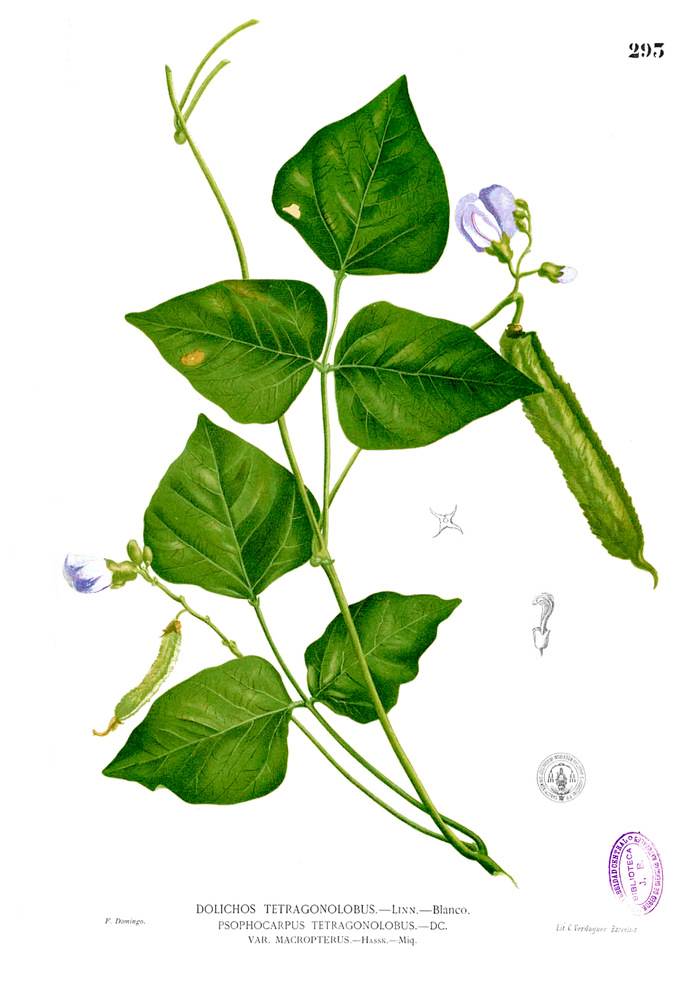
General Description
The winged bean, also known as cigarillas, Goa bean, four-angled bean, four-cornered bean, manila bean, princess bean, star bean, kamrangi bean, pea, or dragon bean, is a tropical herbaceous legume plant.
Family Context
The Fabaceae family is large and globally distributed. Notable medicinal members include:
- Soybean — 76 documented uses
- Crab’s Eye — 73 documented uses
- Tamarind — 59 documented uses
- Common Indigo — 51 documented uses
Geographic Distribution
Asparagus Pea has been recorded in 10 countries and territories worldwide, including Bangladesh, Indonesia, India, Malaysia, Nigeria, and others.
Traditional Uses
Asparagus Pea has been traditionally used for skin and wound care, nervous system disorders, and immune system support.
Skin and wound care.
- Boil
For skin conditions, the fresh or dried plant is applied topically as a poultice, wash, or compress. A strong decoction can be used to clean wounds and sores. The antimicrobial properties help prevent infection while promoting tissue repair.
Nervous system disorders.
- Vertigo
Nervous system support involves taking the herb as a warm tea, often in the evening or before bed. The calming compounds interact with neurotransmitter systems to promote relaxation and restful sleep.
Immune system support.
- Tumor
Immune support involves taking the herb as a decoction or tincture over extended periods. The active compounds stimulate immune cell activity and provide antimicrobial protection.
Active Compounds
Phytochemical research has identified 30 compounds in this species, including a diverse array of phytochemical classes (see the Complete Chemical Inventory below for the full list).
The identified compounds include the following categories:
- Alkaloid: nitrogenous compounds with diverse pharmacological activities