Botanical Overview
Tree Grape (Pourouma cecropiaefolia) belongs to the Cecropiaceae family. Limited but reliable traditional records indicate this plant has recognized medicinal applications in one or more healing traditions. This species belongs to the Cecropiaceae family, a group of flowering plants.
General Description
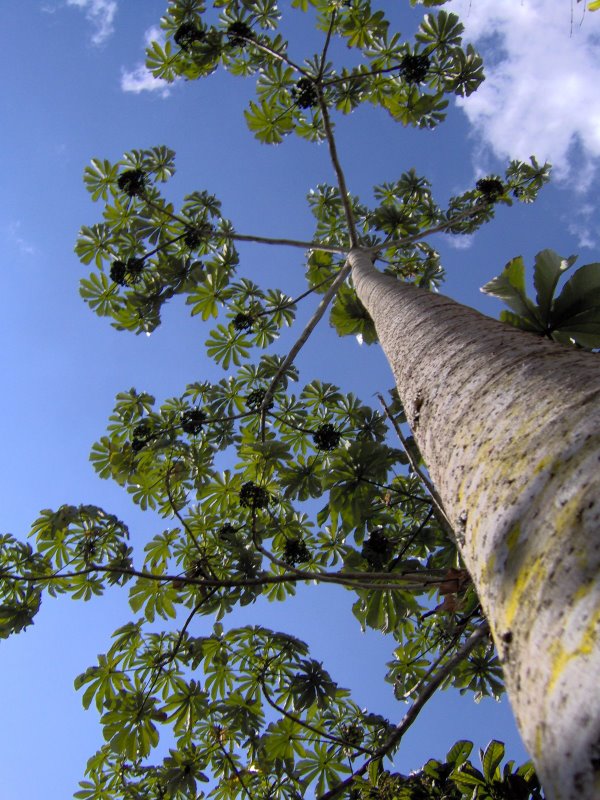
It is a medium-sized evergreen tree growing to 20 m tall. The leaves are palmately compound, with 9–11 leaflets 10–20 cm long and 2. 5–4 cm broad, on a 20 cm petiole. The flowers are white, produced 20 or more together in a 10 cm long inflorescence; it is dioecious, with male and female flowers on separate trees. The fruit is ovoid, 1–2 cm long, purple when ripe, grape-like in appearance but with a wintergreen smell and a root beer flavour; the skin is rough, inedible but easily peeled.
Active Compounds
Phytochemical research has identified 15 compounds in this species, including a diverse array of phytochemical classes (see the Complete Chemical Inventory below for the full list).
The identified compounds include the following categories:
- Alkaloid: nitrogenous compounds with diverse pharmacological activities