Purslane

Also known as: Verdolaga

Botanical Overview

Commonly known as Purslane, this species belongs to the Portulacaceae family. This species holds a prominent place in the global materia medica, with an extensive record of traditional use spanning diverse cultures and medical systems. This species belongs to the Portulacaceae family, a group of flowering plants.
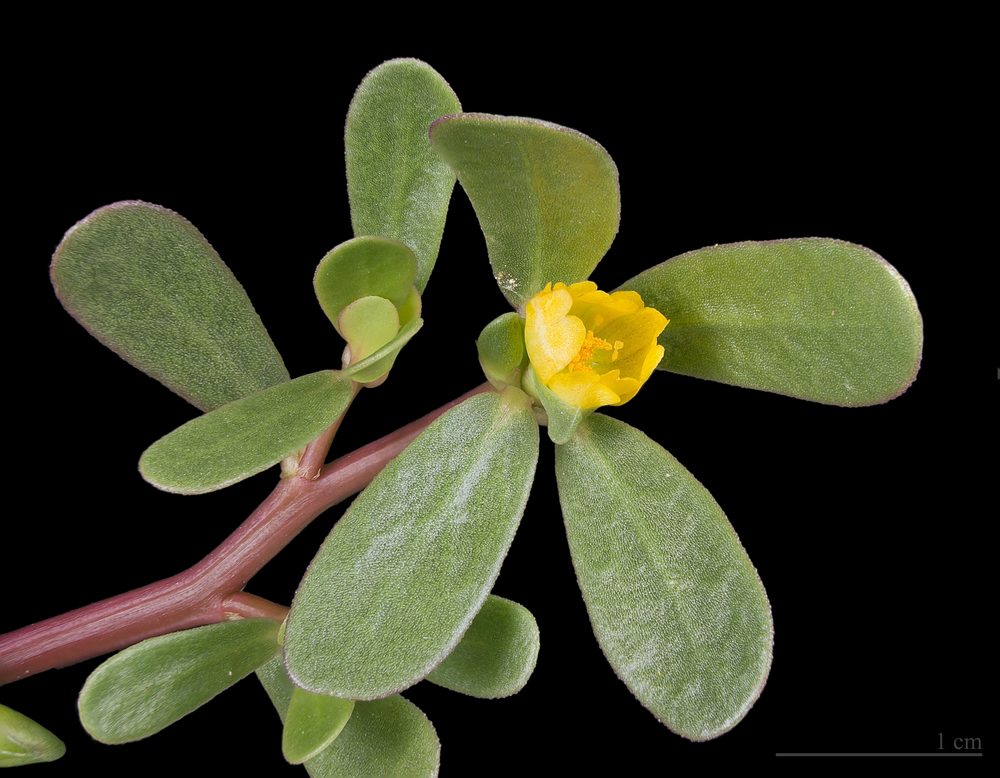
General Description

All parts of the plant are edible raw or cooked.

ⓘ Information
Description adapted from Wikipedia (CC BY-SA 4.0).

Geographic Distribution

Purslane has been recorded in 10 countries and territories worldwide, including Australia, Belgium, Switzerland, Germany, Spain, and others.

Traditional Uses

Purslane has been traditionally used for digestive health, skin and wound care, and urinary tract health, among other applications.

Digestive health.

  • Vermifuge
  • Dysentery
  • Dyspepsia

For digestive complaints, the herb is typically prepared as a tea or decoction taken before meals. The bitter compounds stimulate digestive secretions and improve nutrient absorption. Some traditions use the powdered root or leaves in small doses as a stomachic tonic.

Skin and wound care.

  • Sore
  • Boil

For skin conditions, the fresh or dried plant is applied topically as a poultice, wash, or compress. A strong decoction can be used to clean wounds and sores. The antimicrobial properties help prevent infection while promoting tissue repair.

Urinary tract health.

  • Diuretic
  • Kidney
  • Bladder

Urinary tract applications typically involve drinking the herb as a mild tea, which increases urine production and helps flush the urinary system. It may be combined with other demulcent herbs to soothe irritated tissues.

Active Compounds

Phytochemical research has identified 30 compounds in this species, including a diverse array of phytochemical classes (see the Complete Chemical Inventory below for the full list).

The identified compounds include the following categories:

  • Phenolic: antioxidant compounds that neutralize free radicals
  • Coumarin: aromatic compounds with anticoagulant and anti-inflammatory effects
  • Sterol: cholesterol-like compounds with anti-inflammatory properties
ⓘ Information
Information on this page is compiled from Dr. Duke’s Phytochemical and Ethnobotanical Databases (USDA ARS), a public domain resource. Consult a healthcare professional before using any herbal preparation.
⚠ Caution
Traditional records: This plant has documented uses including Poison. Self-medication with herbs carries risks including allergic reactions, drug interactions, and toxicity. Only use under the supervision of a qualified healthcare professional.

Distribution and Conservation

Reported distribution: Australia, Belgium, Switzerland, Germany, Spain, France, Italy, Netherlands, Portugal, United States.

Complete Use Records

CategoryCultural Context
VermifugeChina, Dominican Republic, Elsewhere, Iraq, Java, Trinidad, Venezuela
DiureticChina, Elsewhere, Haiti, India, Sudan, Turkey
RefrigerantChina, Elsewhere, Haiti, India, Turkey
ScurvyChina, Elsewhere, Haiti, India, Turkey
TumorBrazil, China, Colombia, Gabon
AstringentElsewhere, India, Sudan
EmollientChina, Dominican Republic, Turkey
KidneyElsewhere, Haiti, India
UrogenitalChina, Kurdistan, Spain
WartJapan, Mexico, Peru
BactericideChina, Elsewhere
BladderElsewhere, India
DysenteryChina, Elsewhere
DyspepsiaChina, Haiti
ErysipelasChina, Elsewhere
SoreChina, Elsewhere
SwellingChina, Elsewhere
VulneraryElsewhere, India
AperientElsewhere, Java
HypotensionElsewhere, Trinidad
PoisonAustralia, Elsewhere
SedativeElsewhere, Turkey
AlexitericChina
AnthraxChina
AntidoteElsewhere
AntiphlogisticChina
ArdorTurkey
Bite(Bug)China
Bite(Snake)China
BoilChina

Complete Chemical Inventory

CompoundFormulaMW
3-(3,4-DIHYDROXYPHENYL)ALANINE
ALANINEC₃H₇NO₂89.09 Da
ALKALOIDS
ALPHA-LINOLENIC-ACIDC₁₈H₃₀O₂278.4 Da
ARABINOSEC₅H₁₀O₅150.13 Da
ARGININEC₆H₁₄N₄O₂174.20 Da
ASCORBATEC₆H₇O₆-175.12 Da
ASCORBIC-ACIDC₆H₈O₆176.12 Da
ASH
ASPARAGIC-ACIDC₄H₇NO₄133.10 Da
ASPARTIC-ACIDC₄H₇NO₄133.10 Da
BEHENIC-ACIDC₂₂H₄₄O₂340.6 Da
BETA-CAROTENEC₄₀H₅₆536.9 Da
BETA-CYANIN
BETA-SITOSTEROLC₂₉H₅₀O414.7 Da
CAFFEIC-ACIDC₉H₈O₄180.16 Da
CALCIUMCa40.08 Da
CALCIUM-OXALATEC₂CaO₄128.10 Da
CARBOHYDRATE
CATECHOLC₆H₆O₂110.11 Da
CELLULOSE
CHLORINECl₂70.90 Da
CHLOROPHYLLC₅₅H₇₄MgN₄O₅+₂895.5 Da
CITRIC-ACIDC₆H₈O₇192.12 Da
COPPERCu63.55 Da
COUMARINSC₁₉H₁₆O₄308.3 Da
CYSTINEC₆H₁₂N₂O₄S₂240.3 Da
DIGALACTOSYLDIACYLGLYCEROLC₄₉H₈₈O₁₅917.2 Da
DOCOSAHEXAENOIC-ACIDC₂₂H₃₂O₂328.5 Da
DOPAC₉H₁₁NO₄197.19 Da

Data from PubChem (NIH/NLM, public domain).


References & Further Reading

External Research Links

Data Sources