Botanical Overview
Polygonum plebeium belongs to the Polygonaceae family. While not among the most extensively documented medicinal plants, this species has recorded uses that warrant attention from researchers and practitioners. The buckwheat family (Polygonaceae) includes herbs, shrubs, and vines with swollen stem nodes (joints) and simple, alternate leaves with sheathing stipules called ochreae. The flowers are small and clustered. Many species contain anthraquinone glycosides and tannins.
General Description
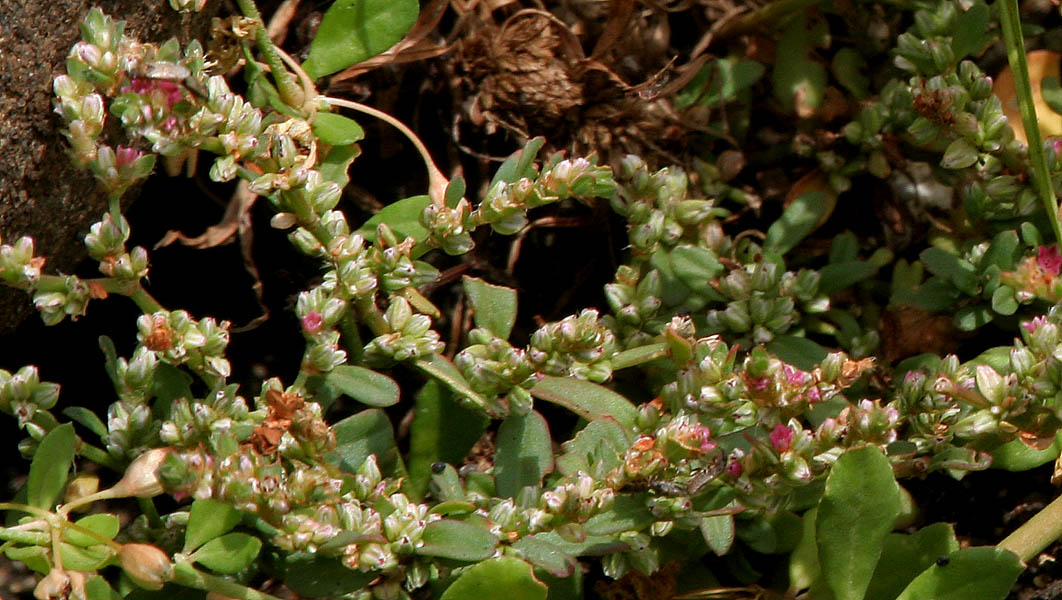
Polygonum plebeium, (common name - common knotweed), is a species of flowering plant in the knotweed family, first described in 1810 by Robert Brown from a specimen collected in Port Jackson, Australia.
Family Context
The Polygonaceae family is widely distributed. Notable medicinal members include:
- Prostrate Knotweed — 50 documented uses
- Chinese Cornbind — 45 documented uses
- Common Smartweed — 41 documented uses
- Curly Dock — 31 documented uses
Geographic Distribution
Polygonum plebeium has been recorded in 10 countries and territories worldwide, including Australia, Benin, China, India, Namibia, and others.
Traditional Uses
Polygonum plebeium has been traditionally used for respiratory conditions.
Respiratory conditions.
- Pneumonia
Respiratory conditions are addressed through steam inhalation of the herb’s vapors or internal use as a warm tea. The hot infusion acts as an expectorant, helping to loosen phlegm and clear congestion. Some traditions combine it with honey for coughs.
Active Compounds
Phytochemical research has identified 1 compound in this species: betulinic-acid.