Botanical Overview
Mayapple (Podophyllum peltatum) is a flowering plant in the Berberidaceae family. This plant has earned a place in traditional medicine through its consistent therapeutic benefits, recorded across multiple cultures. The barberry family (Berberidaceae) includes shrubs and herbs with alternate or basal leaves and yellow wood or roots due to alkaloid content. The flowers have six sepals and six petals arranged in whorls, and the fruits are berries or capsules. Many species produce isoquinoline alkaloids like berberine with antimicrobial activity.
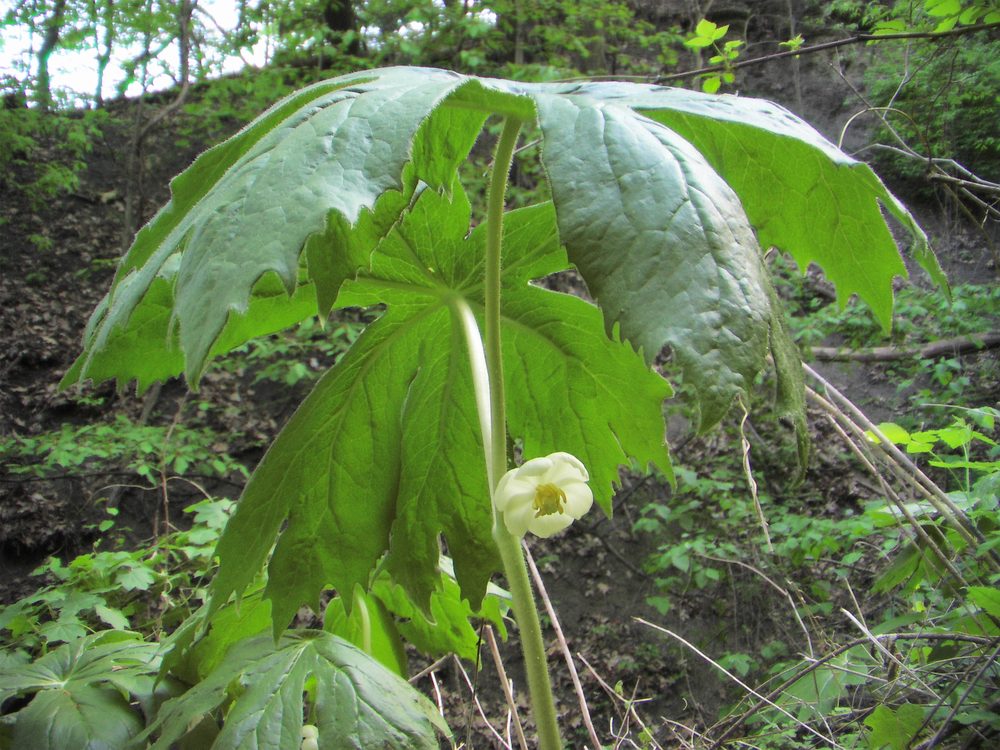
General Description
Its common names are mayapple, American mandrake, wild mandrake, and ground lemon.
Family Context
The Berberidaceae family is widely distributed in temperate regions. Notable medicinal members include:
- Heavenly Bamboo — 24 documented uses
- Barberry — 17 documented uses
- Japanese Ashberry — 13 documented uses
- Himalayan Mayapple — 12 documented uses
Geographic Distribution
Mayapple has been recorded in 10 countries and territories worldwide, including Belgium, Canada, China, Germany, France, and others.
Traditional Uses
Mayapple has been traditionally used for digestive health, fever management, and reproductive health, among other applications.
Digestive health.
- Purgative
- Vermifuge
- Laxative
For digestive complaints, the herb is typically prepared as a tea or decoction taken before meals. The bitter compounds stimulate digestive secretions and improve nutrient absorption. Some traditions use the powdered root or leaves in small doses as a stomachic tonic.
Fever management.
- Fever
Febrifuge preparations are typically administered as hot teas to induce perspiration, which helps the body regulate temperature. The patient is kept warm and encouraged to rest while the herb promotes sweating.
Reproductive health.
- Syphilis
In traditional contexts, reproductive health applications typically involve internal preparations such as teas or decoctions. The herb may be taken at specific times during the menstrual cycle.
Active Compounds
Phytochemical research has identified 28 compounds in this species, including a diverse array of phytochemical classes (see the Complete Chemical Inventory below for the full list).
The identified compounds include the following categories:
- Flavonoid: antioxidant compounds that protect cells from oxidative damage
- Alkaloid: nitrogenous compounds with diverse pharmacological activities