Common Plantain

Botanical Overview

Commonly known as Common Plantain, this species belongs to the Plantaginaceae family. Across multiple healing traditions, this plant has earned recognition as a versatile medicinal species with applications ranging from first-aid to chronic disease management. This species belongs to the Plantaginaceae family, a group of flowering plants.
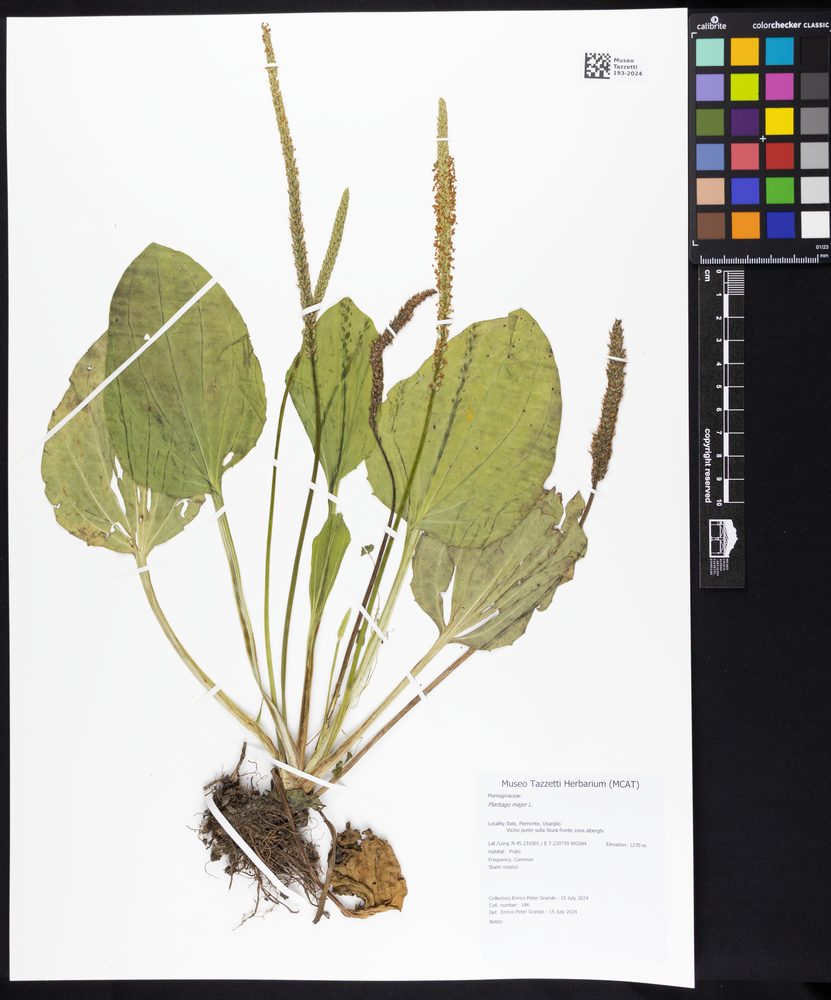
General Description

It is native to Eurasia and temperate Africa, and widely naturalised elsewhere.

ⓘ Information
Description adapted from Wikipedia (CC BY-SA 4.0).

Family Context

The Plantaginaceae family is widely distributed. Notable medicinal members include:

Geographic Distribution

Common Plantain has been recorded in 10 countries and territories worldwide, including Belgium, Switzerland, Germany, Finland, France, and others.

Traditional Uses

Common Plantain has been traditionally used for digestive health, respiratory conditions, and skin and wound care, among other applications.

Digestive health.

  • Dysentery
  • Diarrhea

For digestive complaints, the herb is typically prepared as a tea or decoction taken before meals. The bitter compounds stimulate digestive secretions and improve nutrient absorption. Some traditions use the powdered root or leaves in small doses as a stomachic tonic.

Respiratory conditions.

  • Cough
  • Expectorant

Respiratory conditions are addressed through steam inhalation of the herb’s vapors or internal use as a warm tea. The hot infusion acts as an expectorant, helping to loosen phlegm and clear congestion. Some traditions combine it with honey for coughs.

Skin and wound care.

  • Wound
  • Sore

For skin conditions, the fresh or dried plant is applied topically as a poultice, wash, or compress. A strong decoction can be used to clean wounds and sores. The antimicrobial properties help prevent infection while promoting tissue repair.

Active Compounds

Phytochemical research has identified 30 compounds in this species, including a diverse array of phytochemical classes (see the Complete Chemical Inventory below for the full list).

The identified compounds include the following categories:

  • Flavonoid: antioxidant compounds that protect cells from oxidative damage
  • Alkaloid: nitrogenous compounds with diverse pharmacological activities
ⓘ Information
Information on this page is compiled from Dr. Duke’s Phytochemical and Ethnobotanical Databases (USDA ARS), a public domain resource. Consult a healthcare professional before using any herbal preparation.

Distribution and Conservation

Reported distribution: Belgium, Switzerland, Germany, Finland, France, United Kingdom, Netherlands, Poland, Russia, Sweden.

Complete Use Records

CategoryCultural Context
DiureticChina, Dominican Republic, Japan*, Java, Turkey, Venezuela
CancerAlgeria, Ecuador, Iran, Panama, Poland
TumorChile, Europe(Prussia), Japan, Venezuela
WoundCanada(Kwakiutl), China, Elsewhere, US(Flathead)
AstringentChina, Turkey, Venezuela
DysenteryIraq, Malaya, Mexico
FeverChina, Dominican Republic, Elsewhere
HemostatDominican Republic, Elsewhere, Venezuela
PoulticeIraq, US(Appalachia), US(Flathead)
RefrigerantChina, Elsewhere, Turkey
SoreDominican Republic, Mexico, US(Flathead)
BacteriostatElsewhere, Trinidad
BruiseMexico, UK
Cancer(Mouth)Canary I, Germany
CollyriumDominican Republic, Trinidad
CoughElsewhere, Malaya
DemulcentElsewhere, Turkey
DepurativeJava, Turkey
DiarrheaChina, Iraq
ExpectorantChina, Turkey
InflammationElsewhere, Panama
NeuroblastomaPanama, Peru
OphthalmiaMexico, Trinidad
PilesJava, Panama
ProtisticideElsewhere, Trinidad
StingDominican Republic, UK
StomatitisHaiti, Mexico
TonicChina, Elsewhere
LiverChina, Panama
Ache(Ear)Elsewhere

Complete Chemical Inventory

CompoundFormulaMW
3,4-DIHYDROAUCUBINC₁₅H₂₄O₉348.34 Da
6'-0-BETA-GLUCOSYLAUCUBIN
9-HYDROXY-CIS-11-OCTADECANOIC-ACID
ACETOSIDEC₂₉H₃₆O₁₅624.6 Da
ADENINEC₅H₅N₅135.13 Da
ALKALOIDS
ALLANTOINC₄H₆N₄O₃158.12 Da
APIGENINC₁₅H₁₀O₅270.24 Da
APIGENIN-7-GLUCOSIDEC₂₁H₂₀O₁₀432.4 Da
ASCORBIC-ACIDC₆H₈O₆176.12 Da
ASH
ASPERULOSIDEC₁₈H₂₂O₁₁414.4 Da
AUCUBINC₁₅H₂₂O₉346.33 Da
BAICALEINC₁₅H₁₀O₅270.24 Da
BAICALINC₂₁H₁₈O₁₁446.4 Da
BENZOIC-ACIDC₇H₆O₂122.12 Da
BETA-CAROTENEC₄₀H₅₆536.9 Da
CAFFEIC-ACIDC₉H₈O₄180.16 Da
CALCIUMCa40.08 Da
CATALPOLC₁₅H₂₂O₁₀362.33 Da
CHLOROGENIC-ACIDC₁₆H₁₈O₉354.31 Da
CHOLINEC₅H₁₄NO+104.17 Da
CHROMIUMCr51.996 Da
CINNAMIC-ACIDC₉H₈O₂148.16 Da
CITRIC-ACIDC₆H₈O₇192.12 Da
COBALTCo58.93319 Da
D-GLUCOSEC₆H₁₂O₆180.16 Da
D-XYLOSEC₅H₁₀O₅150.13 Da
DI-O-METHYLGALACTOSE
EMULSIN

Data from PubChem (NIH/NLM, public domain).


References & Further Reading

External Research Links

Data Sources