Botanical Overview
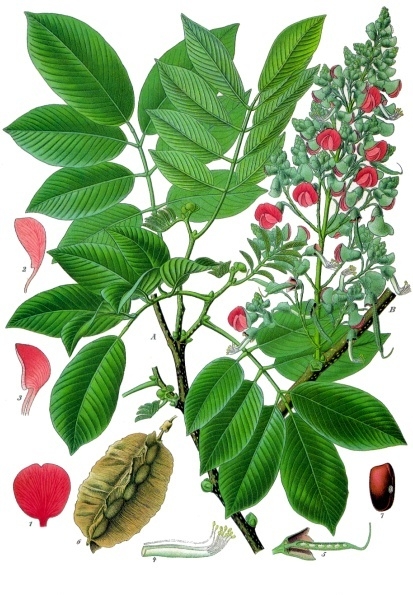
Jamaica Dogwood (Piscidia piscipula) is a flowering plant in the Fabaceae family. This plant has earned a place in traditional medicine through its consistent therapeutic benefits, recorded across multiple cultures. The legume family (Fabaceae) includes trees, shrubs, and herbs that produce pods (legumes) and form nitrogen-fixing root nodules through symbiosis with bacteria. The flowers are typically pea-shaped with five petals. This large family provides food staples, timber, and numerous medicinal species.
General Description
It is native to the Greater Antilles (except Puerto Rico), extreme southern Florida (primarily the Florida Keys) and the Bahamas, and the coastal region from Panama northward to the vicinity of Ocampo, Tamaulipas, Mexico. The native Taino of the West Indies discovered that extracts from the tree could sedate fish, allowing them to be caught by hand. This practice led to the tree’s common names—fishpoison and fishfuddle. The tree has medicinal value as an analgesic and sedative. The generic name is Latin for “fish killer”, and the specific epithet is Latin for “little fish”.
Family Context
The Fabaceae family is large and globally distributed. Notable medicinal members include:
- Soybean — 76 documented uses
- Crab’s Eye — 73 documented uses
- Tamarind — 59 documented uses
- Common Indigo — 51 documented uses
Geographic Distribution
Jamaica Dogwood has been recorded in 10 countries and territories worldwide, including Bahamas, Belize, Cuba, Ecuador, Guatemala, and others.
Traditional Uses
Jamaica Dogwood has been traditionally used for pain and inflammation, nervous system disorders, and metabolic and nutritional health.
Pain and inflammation.
- Anodyne
- Neuralgia
- Ache(Head)
For pain and inflammation, preparations are applied both topically as compresses and taken internally. A warm poultice draws blood to the area and promotes healing, while internal preparations address systemic inflammation.
Nervous system disorders.
- Narcotic
- Sedative
- Spasm
Nervous system support involves taking the herb as a warm tea, often in the evening or before bed. The calming compounds interact with neurotransmitter systems to promote relaxation and restful sleep.
Metabolic and nutritional health.
- Sudorific
Metabolic applications include consuming the plant as a food, fresh juice, or herbal infusion. Regular use supports the body’s natural metabolic processes and nutritional status.
Active Compounds
Phytochemical research has identified 23 compounds in this species, including a diverse array of phytochemical classes (see the Complete Chemical Inventory below for the full list).
The identified compounds include the following categories:
- Sterol: cholesterol-like compounds with anti-inflammatory properties
- Tannin: astringent compounds that tighten tissues and resist infection
- Saponin: soap-like compounds with immune-modulating activity