Botanical Overview
Piscidia erythrina belongs to the Fabaceae family. Limited but reliable traditional records indicate this plant has recognized medicinal applications in one or more healing traditions. The legume family (Fabaceae) includes trees, shrubs, and herbs that produce pods (legumes) and form nitrogen-fixing root nodules through symbiosis with bacteria. The flowers are typically pea-shaped with five petals. This large family provides food staples, timber, and numerous medicinal species.
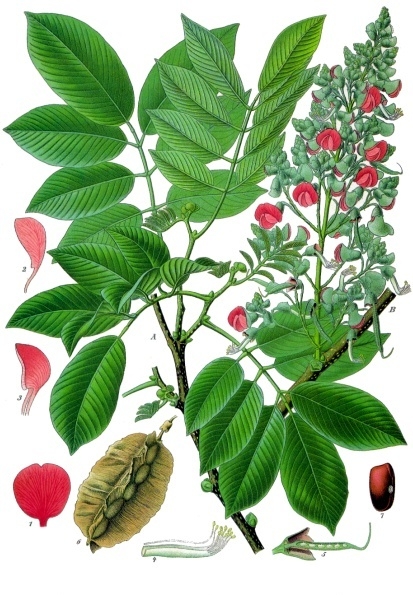
General Description
It is native to the Greater Antilles, extreme southern Florida and the Bahamas, and the coastal region from Panama northward to the vicinity of Ocampo, Tamaulipas, Mexico. The native Taino of the West Indies discovered that extracts from the tree could sedate fish, allowing them to be caught by hand. This practice led to the tree’s common names—fishpoison and fishfuddle. The tree has medicinal value as an analgesic and sedative.
Family Context
The Fabaceae family is large and globally distributed. Notable medicinal members include:
- Soybean — 76 documented uses
- Crab’s Eye — 73 documented uses
- Tamarind — 59 documented uses
- Common Indigo — 51 documented uses
Geographic Distribution
Piscidia erythrina has been recorded in 10 countries and territories worldwide, including Argentina, Saint Barthelemy, Belize, Ecuador, Fiji, and others.
Traditional Uses
Piscidia erythrina has been traditionally used for urinary tract health, pain and inflammation, and nervous system disorders.
Urinary tract health.
- Diuretic
Urinary tract applications typically involve drinking the herb as a mild tea, which increases urine production and helps flush the urinary system. It may be combined with other demulcent herbs to soothe irritated tissues.
Pain and inflammation.
- Anodyne
For pain and inflammation, preparations are applied both topically as compresses and taken internally. A warm poultice draws blood to the area and promotes healing, while internal preparations address systemic inflammation.
Nervous system disorders.
- Sedative
- Spasm
- Narcotic
Nervous system support involves taking the herb as a warm tea, often in the evening or before bed. The calming compounds interact with neurotransmitter systems to promote relaxation and restful sleep.
Active Compounds
Phytochemical research has identified 1 compound in this species: 3’,5’-diprenylgenistein.