Botanical Overview
Eastern White Pine (Pinus strobus) belongs to the Pinaceae family. While not among the most extensively documented medicinal plants, this species has recorded uses that warrant attention from researchers and practitioners. The pine family (Pinaceae) includes coniferous trees with needle-like leaves arranged in bundles or spirally along the branches. They produce male and female cones and are wind-pollinated. The resin contains turpentine and other terpenes with traditional medicinal uses for respiratory conditions.
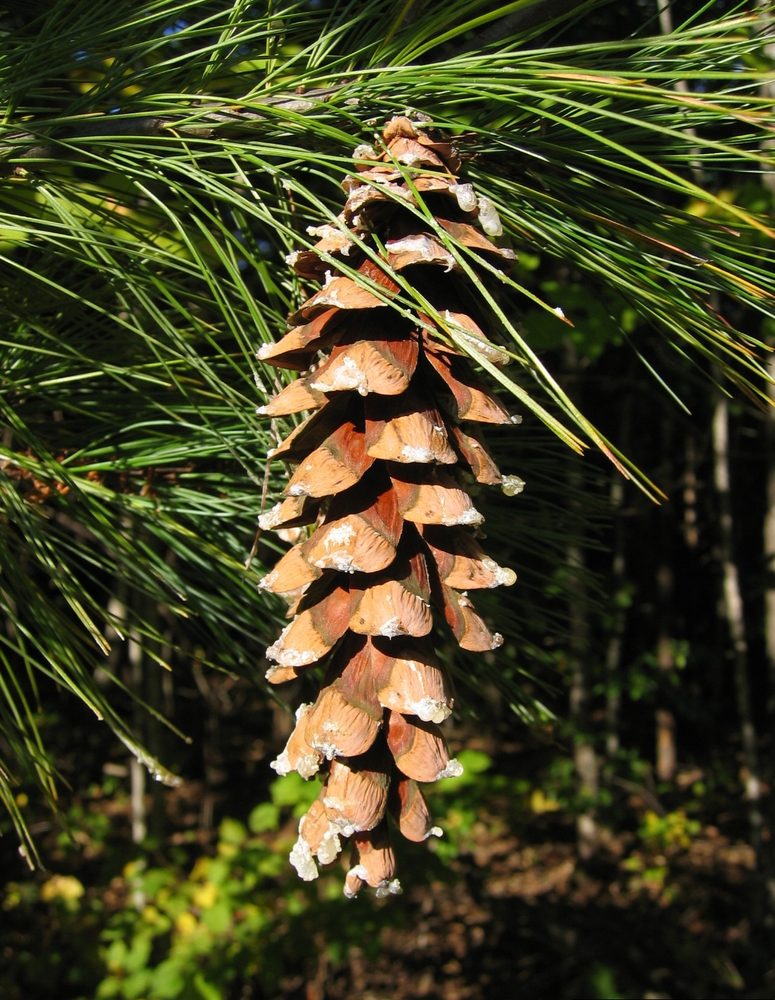
General Description
It occurs from Newfoundland, Canada, west through the Great Lakes region to southeastern Manitoba and Minnesota, United States, and south along the Appalachian Mountains and upper Piedmont to northernmost Georgia and very rare in some of the higher elevations in northeastern Alabama. It is considered rare in Indiana. The Haudenosaunee maintain the tree as the central symbol of their multinational confederation, calling it the “Tree of Peace”, where the Seneca use the name o’sóä’ and the Mohawk people call it onerahtase’ko:wa. Within the Wabanaki Confederacy, the Mi’kmaq use the term guow to name the tree, both the Wolastoqewiyik and Peskotomuhkatiyik call it kuw or kuwes, and the Abenaki use the term kowa. It is known as the “Weymouth pine” in the United Kingdom, after Captain George Weymouth of the British Royal Navy, who brought its seeds to England from Maine in 1605.
Family Context
The Pinaceae family is widely distributed in the Northern Hemisphere. Notable medicinal members include:
- Longleaf Pine — 29 documented uses
- Chir Pine — 27 documented uses
- Silver-Fir — 20 documented uses
- Pinyon Pine — 15 documented uses
Geographic Distribution
Eastern White Pine has been recorded in 10 countries and territories worldwide, including Belgium, Canada, Switzerland, Germany, France, and others.
Traditional Uses
Eastern White Pine has been traditionally used for digestive health, respiratory conditions, and skin and wound care, among other applications.
Digestive health.
- Dysentery
- Laxative
For digestive complaints, the herb is typically prepared as a tea or decoction taken before meals. The bitter compounds stimulate digestive secretions and improve nutrient absorption. Some traditions use the powdered root or leaves in small doses as a stomachic tonic.
Respiratory conditions.
- Expectorant
- Pectoral
Respiratory conditions are addressed through steam inhalation of the herb’s vapors or internal use as a warm tea. The hot infusion acts as an expectorant, helping to loosen phlegm and clear congestion. Some traditions combine it with honey for coughs.
Skin and wound care.
- Burn
- Itch
- Wound
For skin conditions, the fresh or dried plant is applied topically as a poultice, wash, or compress. A strong decoction can be used to clean wounds and sores. The antimicrobial properties help prevent infection while promoting tissue repair.
Active Compounds
Phytochemical research has identified 30 compounds in this species, including a diverse array of phytochemical classes (see the Complete Chemical Inventory below for the full list).
The identified compounds include the following categories:
- Alkaloid: nitrogenous compounds with diverse pharmacological activities