Botanical Overview
Bolsa Mullaca (Physalis angulata) is a flowering plant in the Solanaceae family. This plant has earned a place in traditional medicine through its consistent therapeutic benefits, recorded across multiple cultures. The nightshade family (Solanaceae) includes herbs, shrubs, and small trees with alternate leaves and star-shaped or trumpet-shaped flowers. The fruits are typically berries or capsules. Many species produce potent alkaloids including tropanes, solanines, and nicotine, making this family both medicinally valuable and potentially toxic.
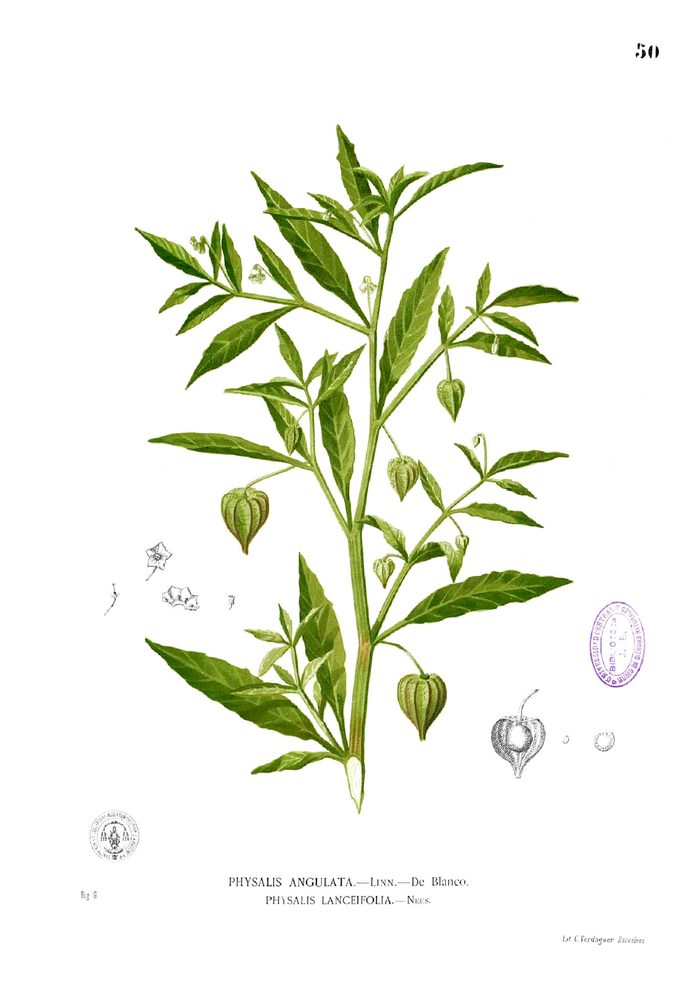
General Description
Its leaves are dark green and roughly ovate, often with serrate margins. The flowers are five-sided and pale yellow; the yellow-orange fruits are borne inside a balloon-like calyx. The exact native range is uncertain. The species may be naturally endemic to Australia or the Americas or the native range may encompass both the Americas and Australia. It is now widely distributed and naturalized in tropical and subtropical regions worldwide.
Family Context
The Solanaceae family is widely distributed worldwide. Notable medicinal members include:
- Black Nightshade — 100 documented uses
- Tobacco — 80 documented uses
- Jimsonweed — 66 documented uses
- Hindu Datura — 65 documented uses
Geographic Distribution
Bolsa Mullaca has been recorded in 10 countries and territories worldwide, including Australia, Benin, Brazil, China, Indonesia, and others.
Traditional Uses
Bolsa Mullaca has been traditionally used for digestive health, respiratory conditions, and skin and wound care, among other applications.
Digestive health.
- Diarrhea
For digestive complaints, the herb is typically prepared as a tea or decoction taken before meals. The bitter compounds stimulate digestive secretions and improve nutrient absorption. Some traditions use the powdered root or leaves in small doses as a stomachic tonic.
Respiratory conditions.
- Asthma
- Expectorant
- Cold
Respiratory conditions are addressed through steam inhalation of the herb’s vapors or internal use as a warm tea. The hot infusion acts as an expectorant, helping to loosen phlegm and clear congestion. Some traditions combine it with honey for coughs.
Skin and wound care.
- Boil
For skin conditions, the fresh or dried plant is applied topically as a poultice, wash, or compress. A strong decoction can be used to clean wounds and sores. The antimicrobial properties help prevent infection while promoting tissue repair.
Active Compounds
Phytochemical research has identified 9 compounds in this species, including a diverse array of phytochemical classes (see the Complete Chemical Inventory below for the full list).